


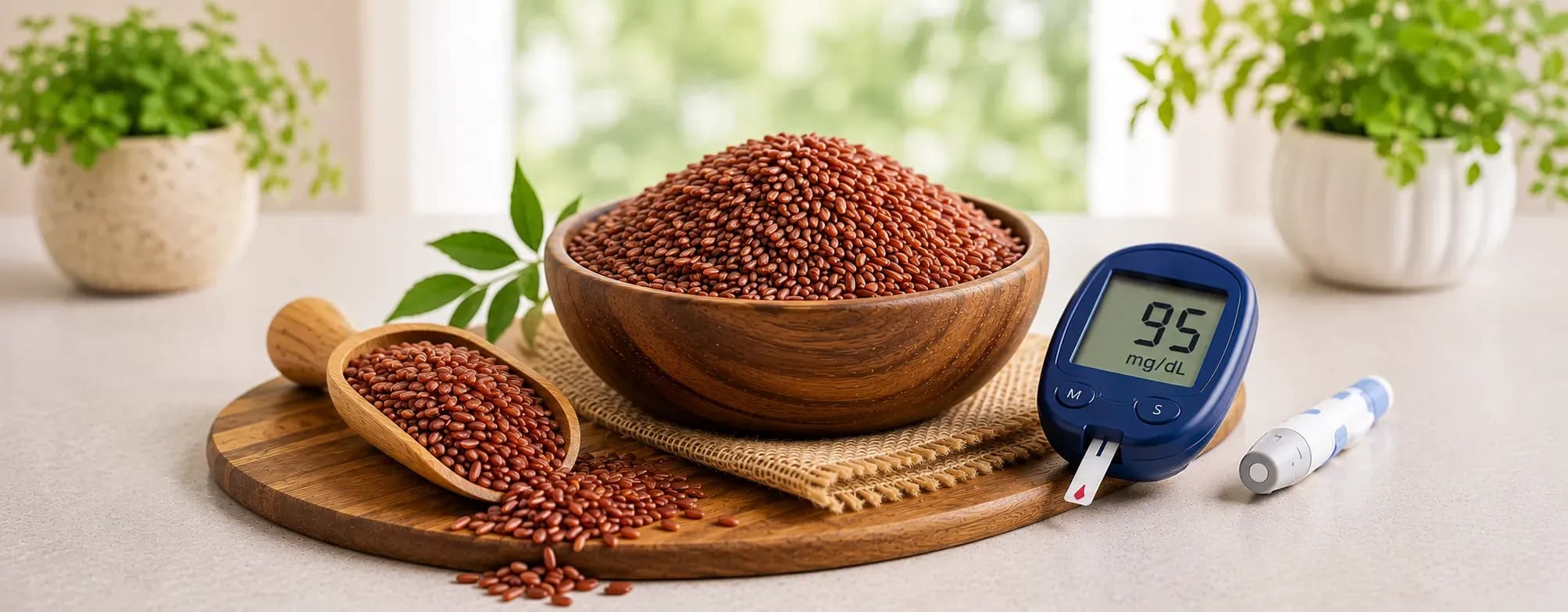
From north to south, east to west, rice and wheat are staples on every Indian household’s lunch or dinner table. So, typically when we say rice, we mean the white, regular one which we buy from the kirana shop or the local market. But did you know that there is a type of rice that is naturally red in colour? I still remember the first time I was invited to my Malayali friend’s home during Onam. I got to eat a delicious payasam made with red rice, which has a unique flavour, and I was surprised to know about its nutritional value. So, the big question for you, if you are reading this blog: Is red rice good for diabetes?
Before we find out if red rice is good for diabetes, let us first understand what red rice is, its glycemic index and the recipes made out of it.
What is Red rice?
Red rice is a whole-grain rice that naturally has a reddish-brown colour, which is due to a pigment called anthocyanin. It has a nutty, earthy taste and is also somewhat chewy. Unlike white rice, red rice retains its outer layers, including the bran (the outer layer) and germ (the nutrient-rich core), which preserve its nutritional benefits. Red rice is widely grown in Kerala and parts of Tamil Nadu, Karnataka, and the Northeast.
What is the Glycemic Index Of Red Rice?
Red rice GI is 63-65, and because of its medium glycemic index, the food is digested more slowly and releases glucose gradually into the bloodstream, which helps to maintain stable blood sugar levels. White rice has a high glycemic index, which causes a rapid spike in blood sugar.
Is Red Rice Good for People with Diabetes?
Yes, Red rice is good for people with diabetes because it has a lower impact on blood sugar compared to white rice.
Low Glycemic Index: Red rice has a lower GI than white rice, which means it releases sugar into the bloodstream more slowly, which helps to avoid a sudden rise in blood sugar levels.
High in Fibre: Red rice is high in fibre, which slows down digestion and sugar absorption. Keeps you feeling full, so you eat less.
Nutritional and Medicinal Value: Red rice is a rich source of bioactive compounds, including phenolics, antioxidants, and essential fatty acids. The antioxidants present in red rice may help to reduce inflammation and improve heart health, which is particularly important for individuals with diabetes.
Supports Weight Management: High fibre and a low glycemic index help to control cravings and maintain a healthy weight, which is important for managing diabetes.
How to Check if Red Rice Works for You?
The best way to know if red rice, or for that matter, any food, suits your body is to track how your blood sugar responds after eating it. If you use a Continuous Glucose Monitor(CGM), you can easily observe your Personal Glycemic Response(PGR).
If you don’t use a CGM, you can still check your response with a simple post-prandial blood sugar test. Eat your usual portion of red rice as part of a regular meal, then test your blood sugar two hours after eating.
Important Note: Portion control is the most important thing to keep in mind while eating anything. Even if it is a healthy food item, eating in larger quantities will, by default, spike your blood sugar levels. Pairing red rice with vegetables, salad, dal, and curd further helps in stabilising glucose levels.
What Are Red Rice Recipes for Blood Sugar Control?
| Recipe | Ingredients | Method | Tips |
|---|---|---|---|
| Red rice & vegetable pulao | ½ cup red rice 1 cup mixed veggies(carrot, beans, peas, bell peppers), and paneer or soya chunks. I tsp olive oil ½ cumin seeds, 1 small onion, chopped, 1 clove garlic, minced, salt, pepper & coriander leaves. |
Wash and soak rice for 20 minutes. Heat oil, sauté cumin, onion and garlic. Add veggies and paneer or soya chunks, peas to make a protein-rich and diabetic-friendly meal. Add rice+1 cup water, cook on low for 25- 30 minutes. Garnish with coriander. | Light, nutritious, good for lunch and dinner. |
| Red rice khichdi | ¼ cup red rice 2 tbsp moong dal ½ tsp turmeric ½ tsp cumin seeds Ghee/oil Salt to taste |
Wash rice and dal. Heat oil or ghee in a minimal amount. Add cumin & turmeric. Add rice-dal mix. Add 2 cups of water. Cook for 2-3 whistles. Serve with cucumber salad and curd. | Comfort meal, easy to digest. |
| Red rice salad | ½ cup cooked red rice, and keep it aside for cooling. ½ cup chopped cucumber, tomato, bell peppers, boiled chickpeas or rajma. 1 tbsp lemon juice. 1 tsp olive oil, salt, pepper, mint and coriander. |
Mix all ingredients in a bowl. Chill for 10 minutes. Serve, and for dressing, add yoghurt on top. | Refreshing and light, perfect as a snack or lunch. |
Does Red Rice Interfere With Diabetes Medication?
Red rice contains essential vitamins and minerals and is usually recommended for people with diabetes. However, it is always important to consult a healthcare professional or dietitian before making changes to your diet.
What are the Best Grain Alternatives for People with Diabetes?
Along with red rice, people with diabetes can also include a variety of other healthy whole grains in their diet, such as steel-cut oats, barley, quinoa, whole brown rice and buckwheat.
Also Read: Top 10 Foods That Raise Blood Sugar Quickly
Conclusion
Red rice is an alternative to white rice with a medium glycemic index, making it a better option for people with diabetes. However, the final call depends on how your body responds, either through PGR or post-prandial testing. Eating red rice along with vegetables, protein, and curd makes it an even smarter choice. In short, red rice can be part of a balanced, diabetes-friendly diet when eaten mindfully.
How PB Health Can Support You
When someone in your family needs medical care, you should not have to worry about what comes next or who will take care of each step.
At PB Health, we believe good healthcare depends on proper planning and regular follow-ups. Our doctors and care teams work together, supported by technology that helps track progress, organise follow-ups, and keep all information clear and accessible. From prevention to recovery, every stage is managed carefully so that nothing important is overlooked.
To learn more about our approach, visit the PB Health website .