


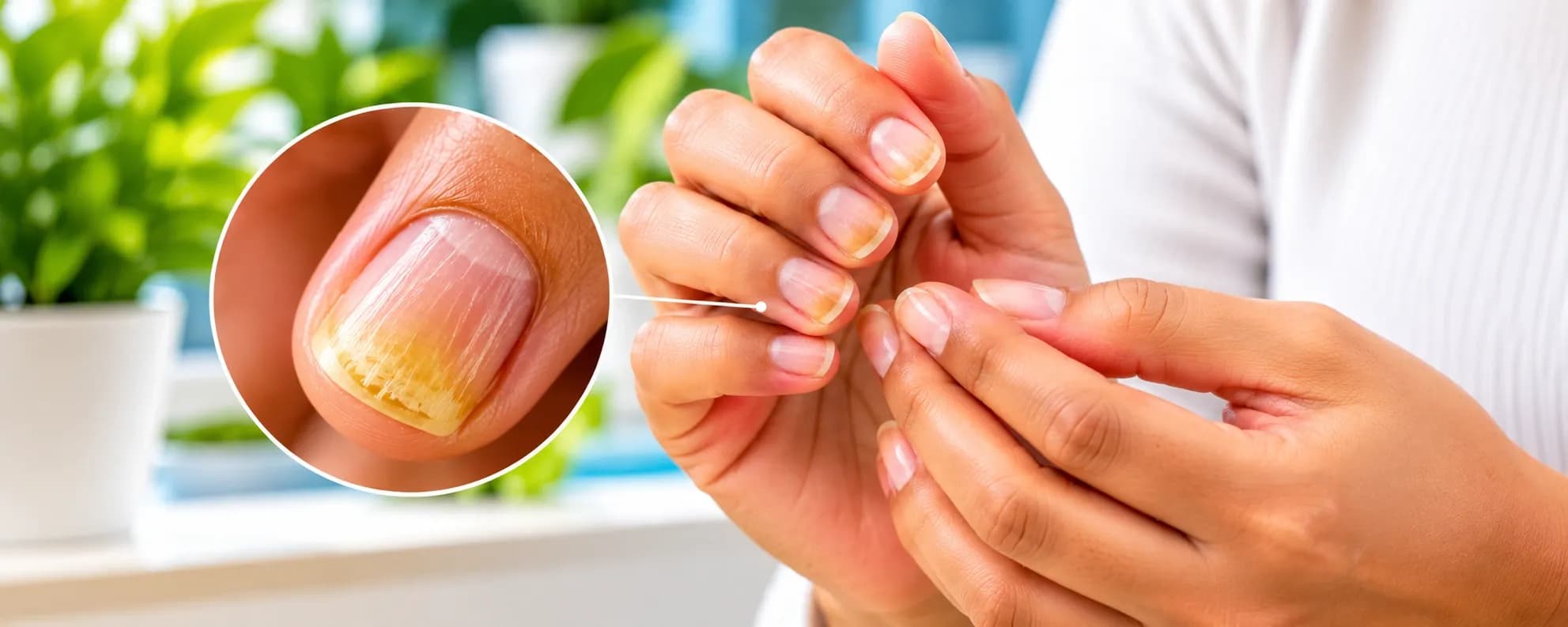
They say you can tell a lot about a person by the shoe. But do you know what can tell you about that person’s health?
It’s the NAILS!
Our nails provide protection to the sensitive tips of our fingers and toes, and anything not normal with our nails can be a sign of an underlying health issue. This is particularly true for people with diabetes, who are at an increased risk of developing various infections.
That’s why it’s important to understand the connection between diabetes and nail health to prevent these infections or their early detection. You will also get to know how to take care of your nails in diabetes; read on!
Types of nail infection & their characteristics
| Type of Nail Infection | Characteristics and Symptoms | Common Causes |
|---|---|---|
| Fungal Nail Infections (Onychomycosis) | Thick, discoloured, brittle nails. White or yellow spots, separation from the nail bed | Exposure to fungi (e.g., wet environments) |
| Bacterial Nail Infections (Paronychia) | Redness, swelling, tenderness around the nails. Pus or discharge may be present | Bacteria enter through a cut or injury |
| Viral Nail Infections (Herpetic Whitlow) | Painful blisters around nails, sometimes fever | Herpes simplex virus (HSV) infection |
| Mixed Infections | Combination of fungal and bacterial symptoms | Combination of fungal and bacterial microbes |
Risk factors for developing infections
People with diabetes are more susceptible to nail infections due to several risk factors associated with the disease.
- High blood sugar levels
- Poor blood circulation
- Lack of sensation (nerve damage)
- Lack of foot & nail care hygiene (regular nail trimming)
Diagnosis of infections
Diagnosing fungal infections in people with diabetes involves a combination of visual examination and laboratory tests such as nail sampling, microscopic examination, fungal culture, etc.
Treatment options
Before opting for any treatment option, consult your doctor for a proper diagnosis and treatment to control your blood sugar levels.
Topical antifungal medications such as antifungal cream/powder are often the first line of treatment for mild to moderate fungal infections.
How to take care of your nails in diabetes
- Keep your nails clean
- Trim your nails regularly
- Use good quality nail products and services (manicure/pedicure)
- Avoid nail biting
- Look for any changes in the colour or shape of your nails
How Can PB Health Support You?
When someone in your family needs care, you should not have to worry about what happens next or who is responsible for each step.
At PB Health Hospital, IFFCO Chowk, Gurgaon, we believe wellness requires continuity, coordination, and consistent follow-through. Our doctors and care teams work together, supported by technology that helps track progress, organise follow-ups, and keep information clear and accessible. From prevention to recovery, every stage is managed thoughtfully so that nothing important is missed and nothing is left unclear.
For personalised diabetes management, PB Health can help you seek medical guidance on blood sugar control and the importance of recognising changes in nail and foot health.
To understand more about our approach, you can visit our website, PB Health.
Conclusion
Diabetes can increase the risk of nail infections, especially when blood sugar levels are not well controlled or when circulation and sensation are affected. Regular nail care and checking for changes in the nails can help with early detection of problems. If you notice persistent changes, redness, swelling, pain, discharge, or other signs of infection, consult your doctor for appropriate evaluation and treatment.