


Spread the love
Upma… that one dish no one can agree on!
Is it breakfast? Or the “oh-no-not-again” tiffin? Or the “just-make-anything” snack? Or that
surprise comfort classic we secretly love? To settle this debate, we conducted a fun poll in our
office: “Do you like upma?”
60% cheered. The rest had…opinions!
One didn’t like the name 😁
Another was scarred by years of picking out curry leaves.😆
Some just blamed the dry, ‘cement’ version made at home.🙃
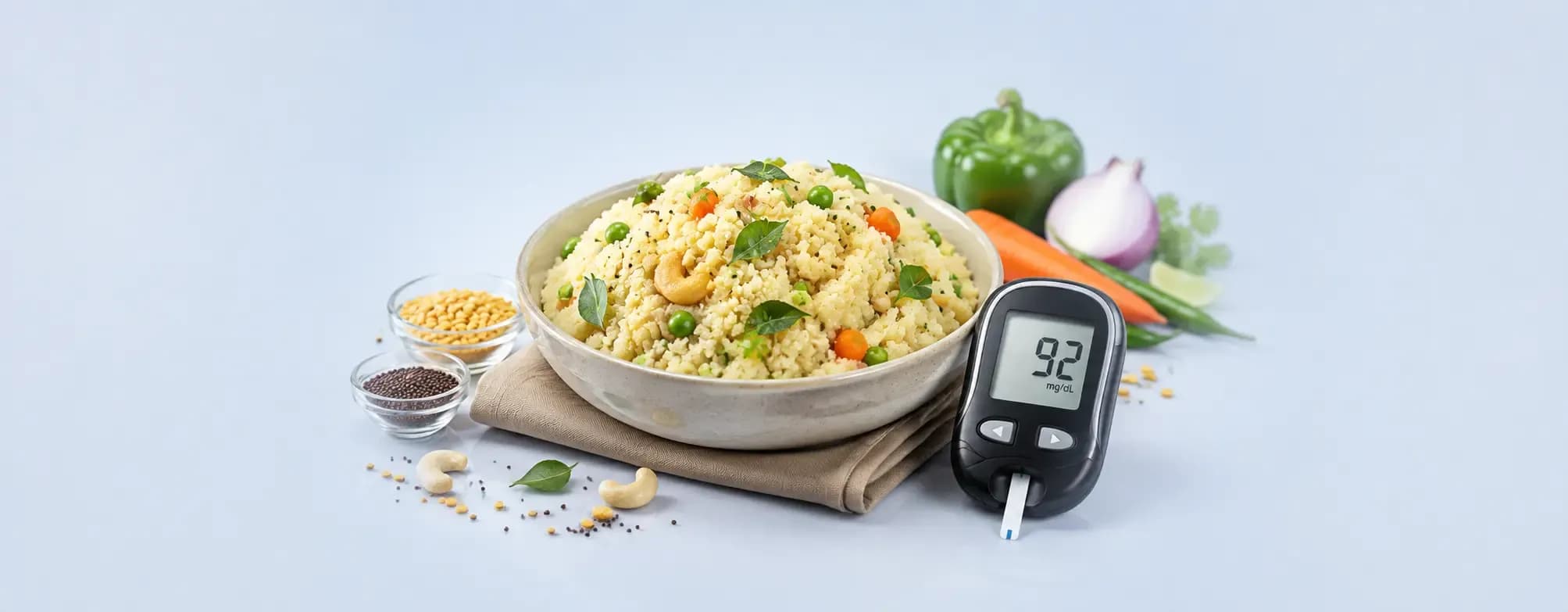
But if you are living with diabetes, there’s one question that matters: Is upma good for people with diabetes? Because with diabetes, even everyday favourites can feel like a puzzle.
Now let’s dig right back into our dreamy world of upma . 🙂
What is Upma?
The word “Upma” is a Sanskrit word, where “Uppu” means “salt” and “Maavu” or “Ma” means “flour”. Upma is a traditional South Indian dish typically made by cooking dry-roasted sooji with water, followed by a simple tempering. Sometimes, vegetables like peas, carrots, and beans are added. It is a warm and savoury meal usually eaten for breakfast or as a light snack. However, upma made of sooji is the most common. In Karnataka and Maharashtra, there is a sweet version of upma, known as “Sheera” or “Kesari bath”. There is a famous breakfast dish from Karnataka called “Chow Chow Bath.” It consists of two types of upma served together on one plate: the spicy one is called Khara Bath, and the sweet one is called Kesari Bath. Upma can be prepared with other ingredients, such as broken wheat, oats, millet, like bajra or foxtail, and even with poha (flattened rice), known as poha upma.
What is the Nutritional value of Upma(made of Sooji)?
In Upma(sooji), Sooji is high in carbohydrates. It raises blood sugar quickly, so eat in smaller portions. The nutritional value of Upma made of sooji without using ghee per 100g is: ( values are taken from the Ntuitive app)
| Nutrient | Amount (100g) |
|---|---|
| Energy | 120g |
| Carbohydrates | 15g |
| Protein | 2-3g |
| Fat | 4.8g |
These values can vary depending on how it’s cooked, the amount of oil or ghee used, and the addition of other ingredients, among other factors.
So, is upma made with sooji good for people with diabetes? The answer is: not really. You can eat upma occasionally in small portions, provided it’s paired with enough fibre and protein, such as adding vegetables. You can also eat it along with curd or sprouts for protein, or eat an egg separately. Always monitor your blood sugar levels after eating. For everyday meals, it’s smart to choose healthier options like oats upma, millets, and broken wheat, which provide energy without causing a rise in blood sugar levels.
Can People with Diabetes Eat Upma?
Upma made with sooji (a refined wheat product) has a high glycemic index. So, it can cause a rapid rise in blood sugar levels if consumed in large portions. However, you can eat upma in smaller portions and replace sooji with other ingredients, such as dalia, oats, millets, or quinoa, which can be much better for people with diabetes.
What are the other ingredients that can be used to make an upma?
Oats Upma:
Use steel-cut oats, which contain Beta-glucan, an essential component of dietary fibre. It is also the major active compound in oats with proven cholesterol-lowering and antidiabetic effects. This fibre helps slow down digestion, keeping you full for longer hours. You can cook oats upma almost like the traditional one. Dry roast oats with a small amount of oil and a simple tempering of mustard seeds, a little ginger, curry leaves, green chillies, and a pinch of asafoetida (hing). Add chopped vegetables like carrots, beans, capsicum and peas. To give it a protein boost, add boiled moong dal and sprouts.
Dalia (Broken Wheat) Upma:
Dalia is a wholesome, unrefined grain that is more filling than regular sooji; it has a lower glycemic index than sooji. Cook the dalia(broken wheat) with plenty of non-starchy vegetables, such as beans, carrots, peas, and capsicum. These vegetables add fibre. For a protein boost, add some boiled moong dal, sprouts, and/or peanuts.
Bajra Upma (Pearl Millet):
Bajra has a low to medium glycemic index (54) and a high fibre content. Soak the bajra overnight to prepare. Cook it with a tempering of mustard seeds, curry leaves, ginger and green chillies, then add chopped vegetables like onions, carrots, peas, and capsicum. Add boiled moong dal, sprouts, or paneer cubes for a protein boost. Bajra upma is a satisfying meal for people with diabetes.
Foxtail millet(kangni):
It is highly nutritious and perfect for people with diabetes. It has a low glycemic index. Soaking millet for 15-30 minutes before cooking helps it soften and cook faster. You can cook foxtail millet upma just like regular upma, and the tempering of mustard seeds, curry leaves, and green chillies, along with the addition of a variety of vegetables, including carrots, peas, and beans. For additional protein, you can add boiled moong dal or paneer cubes.
Quinoa Upma:
Quinoa is often mistaken for a grain, but it is a nutrient-rich seed. The glycemic index is around 53, so it doesn’t cause a quick rise in blood sugar levels, making it suitable for people with diabetes. To prepare, add mixed beans or cooked chana, peas, carrots and capsicum to make it more filling.
For the above-mentioned types of upma, you can pair them with curd to add a good source of protein and make the meal more balanced.
So, why might eating upma not be ideal for people with diabetes?
A fast rise in blood sugar: Upma is refined and low in fibre and protein, so it gets digested quickly, leading to a fast rise in blood sugar.
Low amounts of fibre and protein: It doesn’t have enough fibre or protein to stop sugar from rising fast or to keep blood sugar steady for long.
Often prepared with high-carb ingredients: Dishes like upma (made with sooji) are often made with oil, ghee, and starchy vegetables, which add extra carbohydrates and can further raise blood sugar levels.
Who should be cautious about eating Upma(sooji)?
People with diabetes should be careful with Sooji Upma because it gets digested quickly. It can cause a quick rise in blood sugar levels, which may be a concern if your sugar levels are already high or not under control.
If you are trying to lose weight, sooji upma may not be the best choice, as it gives quick energy but doesn’t keep you full for long, which can leave you feeling hungry again.
How PB Health Can Support You
When someone in your family needs medical care, you should not have to worry about what comes next or who will take care of each step.
At PB Health, we believe good healthcare depends on proper planning and regular follow-ups. Our doctors and care teams work together, supported by technology that helps track progress, organise follow-ups, and keep all information clear and accessible. From prevention to recovery, every stage is managed carefully so that nothing important is overlooked.
To learn more about our approach, visit the PB Health website.