


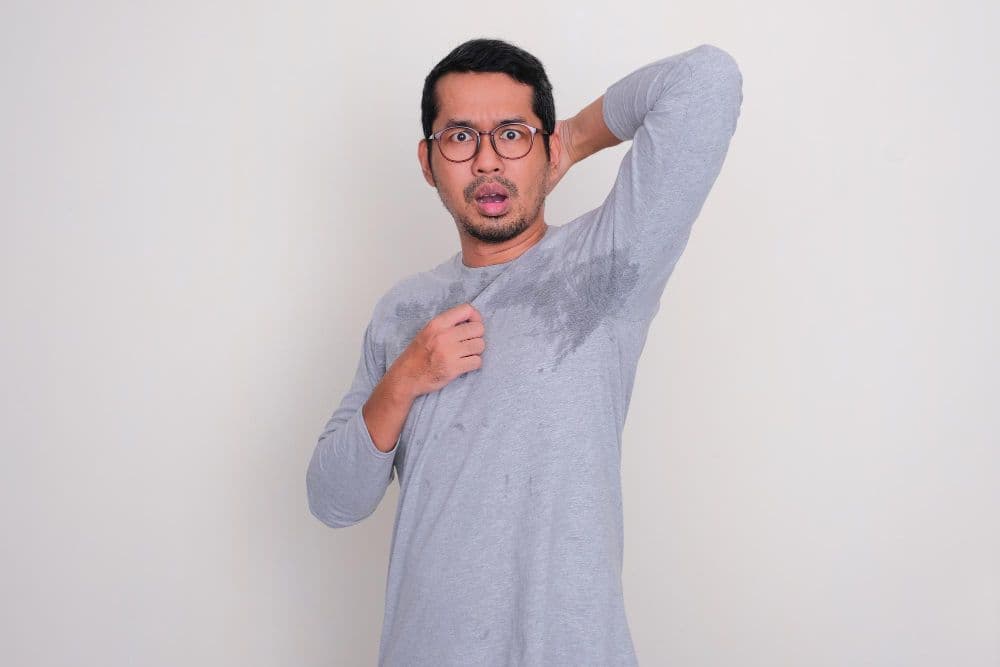


Sweating helps your body regulate its temperature during hot weather, exercise and stressful situations. But what if your palms stay damp even at rest, your underarms soak without much activity, or you wake up with wet bedsheets?
Excessive sweating may be caused by heat, stress, an overactive sweat-regulating system or an underlying medical condition. Understanding the possible reasons can help you decide when to try simple measures and when to consult a doctor.
What Is Excessive Sweating?
Excessive sweating, medically known as hyperhidrosis, occurs when the body produces more sweat than necessary to regulate its temperature. It commonly affects the underarms, palms, soles of the feet and face, although it can involve the entire body.
There are two main types:
- Primary focal hyperhidrosis: Excessive sweating occurs in specific areas without an identifiable underlying medical condition. It often begins during childhood or adolescence and may run in families.
- Secondary hyperhidrosis: Sweating results from an underlying illness, medication or another identifiable cause. It may affect larger areas of the body.
What Are the Common Reasons for Excessive Sweating?
1. Heat, exercise and stress: Hot weather, physical activity, anxiety and nervousness can increase sweat production. This is generally a normal response and usually settles when the trigger passes.
2. Primary hyperhidrosis: Some people experience excessive sweating even in cool surroundings or while resting. It often affects both palms, both feet or both underarms. Overactive nerve signals to the sweat glands are thought to contribute to this condition.
3. Thyroid problems and blood sugar changes: An overactive thyroid can cause sweating, heat intolerance, a rapid heartbeat and unexplained weight loss. Low blood sugar may cause sudden sweating, shakiness, hunger and dizziness, particularly in people taking diabetes medication.
4. Infections and other medical conditions: Certain infections and hormonal changes can trigger sweating.
For example, tuberculosis may cause night sweats alongside a persistent cough, fever or unexplained weight loss.
5. Medicines and hormonal changes: Some antidepressants and other prescription medicines can increase sweating. Menopause may also cause sweating episodes and hot flushes. If symptoms start after you begin a medicine or change its dose, consult your doctor rather than stopping the medication yourself.
When Is Excessive Sweating a Warning Sign?
Sweating is not always a cause for concern. However, certain symptoms may indicate you need medical evaluation.
Watch for:
- Sudden onset: Sweating increases noticeably without an obvious reason.
- Repeated night sweats: Your clothes or bedsheets become soaked despite a cool sleeping environment.
- Other unexplained symptoms: Sweating occurs with fever, weight loss, persistent fatigue or a racing heartbeat.
- Interference with daily life: Wet hands make it hard to write or use a phone, or underarm sweating repeatedly soaks your clothes.
Seek emergency medical care if heavy sweating occurs with chest pain, difficulty breathing, fainting or severe dizziness.
How Is Excessive Sweating Diagnosed?
Your doctor will ask when the sweating started, which areas are affected, whether it occurs at night and whether you have other symptoms. They will also review your medical history and medications.
Depending on the findings, tests may include blood glucose or thyroid function tests to investigate possible underlying causes. Not everyone needs laboratory investigations.
Excessive Sweating Treatment: What Can Help?
Treatment depends on the cause and severity of sweating.
Lifestyle changes
- Wear loose, breathable clothing.
- Keep affected areas clean and dry.
- Identify triggers such as heat, stress, caffeine and spicy foods.
- Stay hydrated, especially in hot weather.
Medical treatments
If these measures are insufficient, a doctor may recommend:
- Antiperspirants: Aluminium chloride products to reduce sweat production.
- Prescription medicines: Topical or oral treatments for selected cases.
- Iontophoresis: Uses a mild electrical current to treat sweating of the hands and feet.
- Botulinum toxin injections: Temporarily reduce sweating, particularly in the underarms.
- Procedures: Considered for severe cases that do not respond to other treatments.
If an underlying condition or medication is causing the sweating, addressing the cause may help.
How Can PB Health Support You?
PB Health Hospital, IFFCO Chowk, Gurgaon, can help you seek medical evaluation for persistent or unexplained sweating. A consultation can help identify possible causes and guide appropriate investigations and treatment.
Visit PB Health to learn more about its healthcare services.
For ongoing or unexplained sweating, our Internal Medicine specialists can help evaluate potential underlying causes.
Conclusion
Excessive sweating may result from heat, stress, hyperhidrosis, medication or an underlying medical condition. If it begins suddenly, repeatedly disrupts sleep or affects daily activities, consult a doctor to identify the cause and discuss suitable treatment.
Early evaluation can help you manage symptoms and improve your comfort and quality of life.