


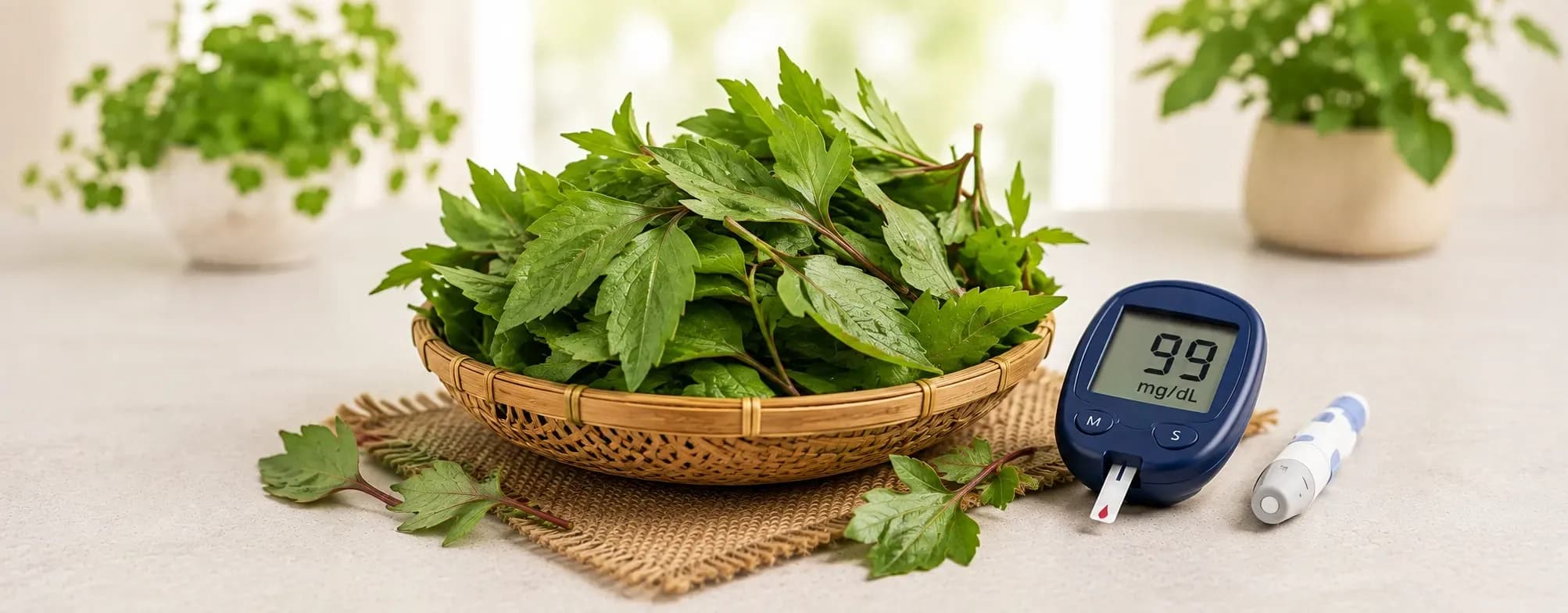
If you have ever tasted a tangy gongura pickle or a bowl of spicy gongura pappu, you know how unforgettable its flavour is! But beyond that punch of sourness lies a leafy green packed with nutrients and surprising health benefits, especially for those managing diabetes. So, is gongura good for diabetes? Here is what you need to know.
What is Gongura?
Gongura, also known as sorrel or roselle, is a leafy vegetable known for its tangy flavour and distinctive aroma. It’s most common in Andhra Pradesh and Telangana, but also loved in Maharashtra, Tamil Nadu and Karnataka.
Our Nutrition Expert, Shilpa Joshi, calls it a “super vegetable”, rich in antioxidants, full of nutrients, and with a taste that truly has no substitute.
That’s why we often encourage our members to choose more local, indigenous greens, such as gongura, instead of imported ones like kale or iceberg lettuce. There is nothing wrong with those, but when we already have fresher, more nutritious, easier-to-find, and far more affordable vegetables, why not choose them?
Our VP Nutrition, Shilpa Joshi, says: “Let’s create a demand for local varieties from different parts of India instead of relying on vegetables that have travelled halfway across the world. The closer it’s grown, the fresher and better it is for your plate and for the planet.”
What is the Nutritional Profile of Gongura?
The nutritional value of gongura per 100 g is approximately, based on IFCT 2017
| Nutrient | Amount |
|---|---|
| Energy | 36.3 kcal |
| Carbohydrates | 4.06 g |
| Proteins | 2 g |
| Fiber | 4.59 g |
| Fat | 1.09 g |
What is the Glycemic Index of Gongura?
Gongura is a leafy green vegetable, and most leafy vegetables have a very low glycemic index, which is practically negligible. This means it does not cause a noticeable rise in blood sugar when consumed.
Its high fibre content further helps slow down sugar absorption, making it a diabetes-friendly option.
Gongura and Diabetes: How They Are Connected.
Gongura is a low-calorie, high-fibre, antioxidant-rich leafy vegetable. These properties make it particularly good for people with diabetes, and some of the gongura leaves’ benefits are
Helps Control Blood Sugar: The fibre in gongura slows the absorption of sugar into the bloodstream, helping prevent sudden spikes in blood sugar levels.
Protects the Cell from Damage: Gongura is rich in antioxidants, which help the body fight harmful free radicals. High blood sugar in diabetes can increase the levels of these molecules, which can lead to cell damage. So, include gongura in your diet, which may help protect cells, support overall health, and lower the risk of diabetes-related problems.
Supports Heart Health: Gongura may help lower blood pressure and support heart health. A review of human clinical trials showed that people who consumed it regularly experienced reduced blood pressure and improved cholesterol levels, which can help protect the heart and reduce the risk of heart disease.
Tips: When making gongura pachadi or pickles, try to reduce the amount of oil and salt. Add garlic and onion while cooking gongura, as they not only improve taste but also neutralise the sharp sourness.
How To Include Gongura in Your Meal?
Below are the diabetes-friendly dishes made with gongura from various states. These are high in fibre, low in unhealthy fats and balanced with protein to manage blood sugar levels in the body.
Gongura Pappu ( Andhra Pradesh / Telangana): Lentils + gongura = a protein and fibre combo that keeps your blood sugar steady and keeps you full.
Ambadi Bhaji (Maharashtra): Toor dal or moong dal + gongura = the combination of lentils and gongura adds protein and fibre, making it a nutritious and diabetes freindly diet.
Gongura Saaru (Karnataka): Gongura saaru, or rasam, enriched with toor dal or moong dal, adds protein while keeping it light and tangy.
Gongura Palya with Lentils (Karnataka): Gongura stir-fried with coconut and curry leaves, served with moong dal or chickpeas, making it a protein-rich and blood sugar-friendly dish.
Tip: Add green leafy vegetables to your omelettes, chillas, parathas, dals, or salads (after boiling). You can prepare gongura rice and chutney, and cook them as a sabzi or mix them into chicken and non-vegetarian dishes.
What are the Side Effects of Eating Gongura?
Gongura is highly nutritious and good for people with diabetes, but can have some side effects if eaten in excess amounts.
It is rich in oxalate, which may lead to kidney stone formation and interfere with calcium absorption, potentially affecting bone health over time.
Overeating gongura may also cause stomach upset, acidity, or diarrhoea in sensitive people. Some people may experience allergic reactions, such as skin rashes. Therefore, it is best to enjoy it in moderate amounts and cooked well.
How PB Health Can Support You
When someone in your family needs medical care, you should not have to worry about what comes next or who will take care of each step.
At PB Health, we believe good healthcare depends on proper planning and regular follow-ups. Our doctors and care teams work together, supported by technology that helps track progress, organise follow-ups, and keep all information clear and accessible. From prevention to recovery, every stage is managed carefully so that nothing important is overlooked.
To learn more about our approach, visit the PB Health website.