


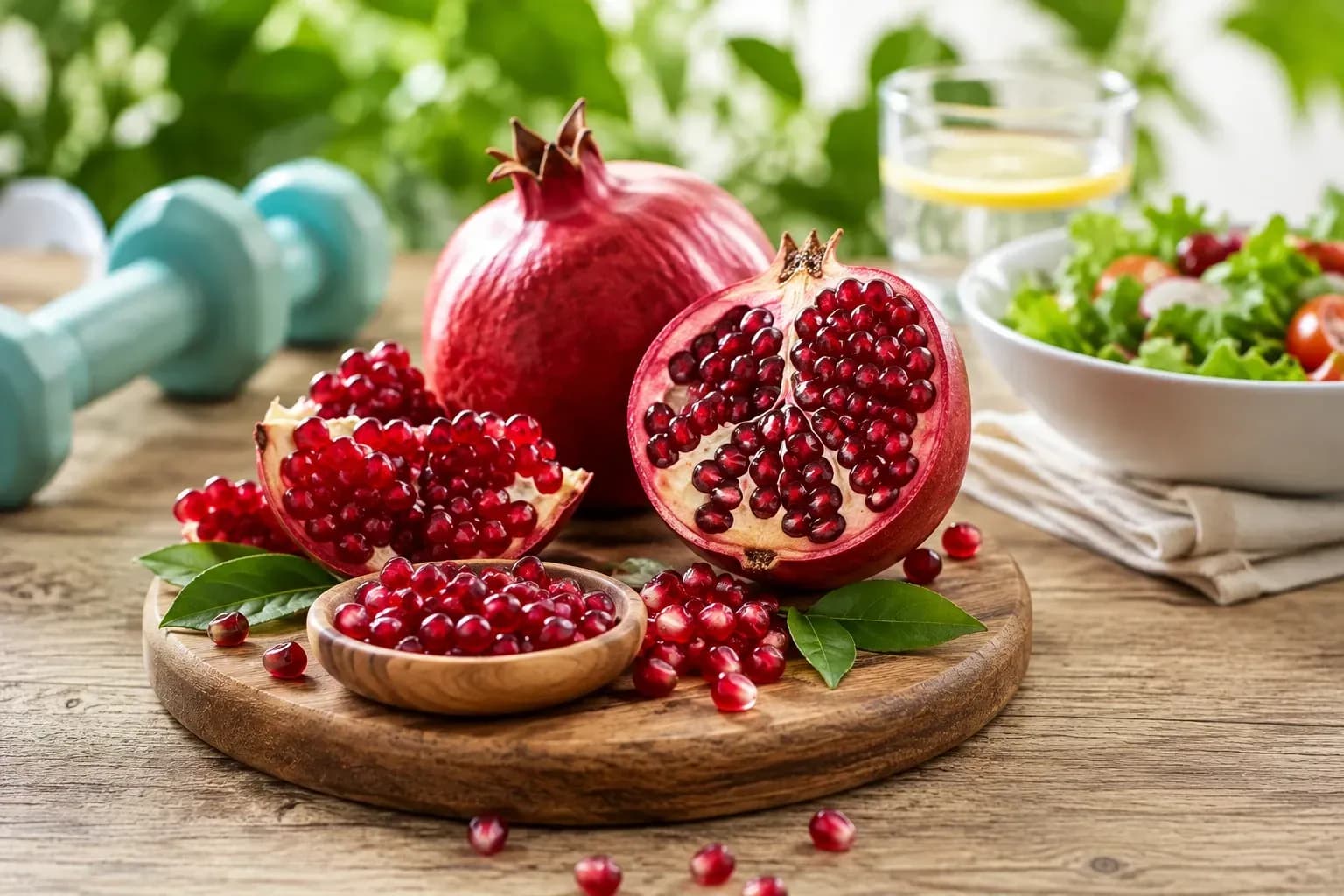
As kids, many of us remember sitting with a bowl of pomegranates; half the fun was popping those little seeds into our mouths and waiting for the sweet, tangy burst of juice. Popping them and applying the juice on the lips, pretending it was our “red lipstick.” And there was always that one friend who proudly showed off a pomegranate-seed “smile.
Pomegranate has a bright colour, a refreshing taste, and it is packed with nutrients. It is a good source of vitamin C, antioxidants, and fibre, which help in digestion, metabolism, and keeping you full.
Here comes our question: Is pomegranate good for weight loss?
The answer is a definite yes! Because:
- Low in calories: A cup of pomegranate seeds (about 174 g) has roughly 144 calories.
- High in fibre: Fibre helps you feel full, slowing down overeating.
So, just eating pomegranates won’t magically melt away belly fat overnight, but adding it to your planned balanced diet can definitely support weight loss when combined with regular exercise and a balanced diet.
Pomegranate, also called the “Jewel of fruits,” has been enjoyed by all, not just for its refreshing taste but also for its many good properties. It is enjoyed as fresh fruit, juice, chutneys, and even sprinkled over chaats. What makes pomegranate interesting for people with diabetes is its rich nutritional value.
What is the Nutritional Value of Pomegranate(per 100g)
The nutritional value of 100g of pomegranate, as per the IFCT.
| Nutrient | Amount |
|---|---|
| Energy | 54.7kcal |
| Carbohydrates | 11.5gm |
| Protein | 1.33gm |
| Fibre | 2.83gm |
Pomegranate is low in calories, high in fibre, and loaded with antioxidants, all of which make it a great fruit for weight management.
What is the Pomegranate’s Glycemic Index? And Why Does it Matter for Weight Loss?
Pomegranate is a low- to medium-glycemic-index fruit, with a GI of around 35-53.
Low-GI foods release sugar into the blood more slowly, keeping your energy steady.
This prevents sudden cravings and helps you feel fuller for longer, which is helpful for controlling hunger and sticking to your weight loss goals.
How Pomegranate Supports Metabolism and Fat Burning?
Pomegranates aren’t just delicious, but these fruits are loaded with nutrients that can help boost your metabolism and fat burning. Here is how:
- Packed with Antioxidants: Pomegranates are rich in antioxidants, including polyphenols and anthocyanins, which help reduce inflammation.
- Supports Healthy Cholesterol Levels: Eating pomegranates may help lower triglycerides and increase good cholesterol(HDL).
- Aids Digestion and Gut Health: The fibre content in pomegranates supports gut health, which is essential for good digestion and nutrient absorption.
- Unique Fat-Fighting Nutrient: A special omega-5 fatty acid called “Punicic acid” is present in pomegranate seeds, which helps to reduce fat storage by slowing down the formation of new fat cells.
- Helps to Control Hunger: Pomegranate helps in balancing hunger hormones(ghrelin and leptin), makes you feel full for longer and prevents overeating, which can support fat loss.
What Are the Other Benefits of Eating Pomegranates?
- Controls Blood Sugar: Eating pomegranate can improve key diabetes markers, which means having pomegranate may support better long-term sugar control.
- Slows Glucose Absorption: Pomegranate contains polyphenols, which reduce post-meal glucose spikes.
- Supports Heart Health: Pomegranate helps to reduce LDL (bad cholesterol) and increase HDL (good cholesterol), and it is a heart-friendly fruit that can lower cardiovascular risk in diabetics.
- Protects the Brain: Ellagitannins shield the brain from oxidative stress, thereby lowering the risk of diseases such as Alzheimer’s and Parkinson’s.
- Prevents Blood Clots: The pomegranate seeds are rich in fibre, vitamins, and minerals. They help prevent clot formation.
- Lowers Blood Pressure: Punicic acid is present in pomegranate seeds, which helps to reduce cholesterol and triglycerides, supporting healthy blood pressure levels.
What are the Ways to Include Pomegranate in Your Diet?
- Add to Salads: Sprinkle some pomegranate seeds generously over a green salad. They add sweetness and flavour.
- Sprinkle on Yoghurt: Sprinkle some pomegranate seeds on curd or yoghurt, which adds natural sweetness.
- Infuse water: Try adding pomegranate seeds to your water for a flavorful and antioxidant-rich hydration boost.
- Use as a Natural Sweetener: Replace artificial sweeteners with pomegranate seeds in recipes to make desserts healthier and more nutritious.
Pro Tip: Always choose fresh fruit. Pair pomegranate with protein or healthy fats (such as nuts, seeds, or yoghurt) to further slow down sugar absorption, keep you fuller for longer, and prevent cravings, making it easier to control your hunger and stay on your weight loss goals.
Best Time To Eat a Pomegranate:
Pomegranate is safe when eaten in the right amount and at the right time.
- Morning: On an empty stomach for antioxidant and detox benefits.
- Before/After Workouts: Boost energy naturally.
- Avoid: Late at night or just before bed to prevent digestion problems.
Risks of Overeating a Pomegranate:
Overeating usually doesn’t cause serious problems, but it may lead to acidity and constipation. People with kidney disease should monitor their intake due to high potassium content.
Conclusion
Pomegranate is a nutritious, low-calorie fruit packed with antioxidants, vitamins and fibre that can support weight loss through:
- Boosting metabolism and fat burning.
- Controlling hunger and cravings.
- Supporting blood sugar balance.
Enjoy fresh pomegranate or juice without added sugar with protein or healthy fats to maximise benefits. Even small, consistent changes like this make a big difference in your weight loss journey.
How PB Health Can Support You
When someone in your family needs medical care, you should not have to worry about what comes next or who will take care of each step.
At PB Health, we believe good healthcare depends on proper planning and regular follow-ups. Our doctors and care teams work together, supported by technology that helps track progress, organise follow-ups, and keep all information clear and accessible. From prevention to recovery, every stage is managed carefully so that nothing important is overlooked.
To learn more about our approach, visit the PB Health website.