


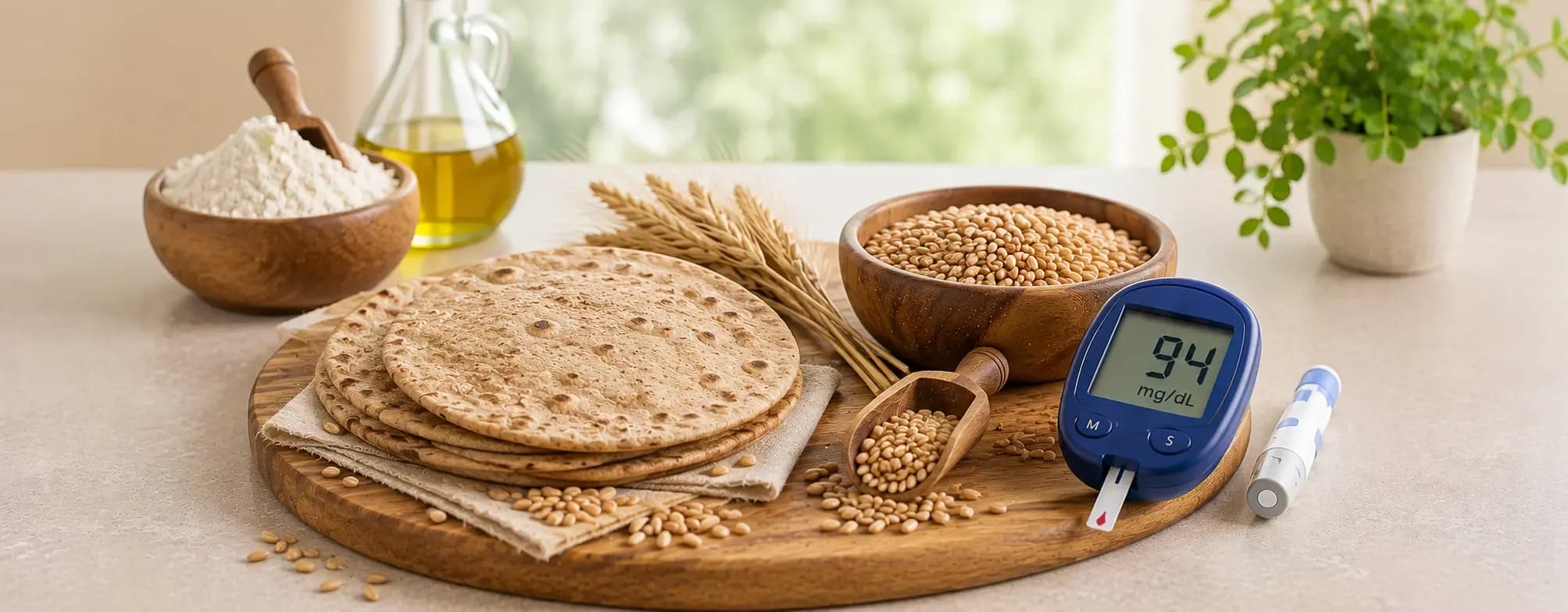
You all must have heard of common wheat, durum wheat or millet flour, which are commonly used for making chapatis. But have you ever heard of Khapli Wheat? Grown for thousands of years, this ancient grain is naturally rich in fibre, and its nutty flavour makes chapatis more tasty. It was once a staple in Indian kitchens, and has nearly been forgotten until now. Our health-conscious people are bringing it back into our kitchens.
What is Khapli Wheat?
Khapli wheat, also called Emmer wheat, is usually stone-ground, retaining more of its bran and thus higher in nutritional value.
What is the Nutritional Value of Khapli Wheat?
The nutritional value of khapli wheat per 100 g of wheat grain flour is approximately based on IFCT 2017.
| Nutrient | Amount |
|---|---|
| Calories | 340-360 kcal |
| Carbohydrates | 70-72 g |
| Fibre | 10-12 g |
| Protein | 13-14 g |
| Fat | 2-5 g |
| Calcium | 34 g |
What is Khapli Wheat Glycemic Index?
Glycemic index is a scale that shows us how quickly a food raises blood sugar levels after you eat. Khapli wheat’s glycemic index ranges from 40 to 55, which falls within the low to medium range, especially when the flour is stone-ground. When compared to rotis, which are made from whole wheat flour, and naans, which are made from refined wheat flour, they have a high glycemic value, resulting in a rise in blood sugar levels.
What are the Factors Affecting Khapli Wheat’s Glycemic Index?
The Glycemic index of Khapli wheat can vary depending on the grinding method and cooking time.
Stone-ground or coarsely ground whole-grain flour retains more of the bran (the outer layer) and germ (the nutrient-rich core) of a grain, which aids in slow digestion and glucose absorption.
When cooking methods like slow roasting are used, gentle cooking will also influence how quickly glucose enters the bloodstream.
What are the Benefits of Khapli Wheat for People with Diabetes?
Low Glycemic Index: Khapli wheat has a GI of 40-55, so it releases glucose slowly and helps in preventing blood sugar spikes.
High Fibre Content: It retains the bran and germ, which contain a high fibre content that helps to slow digestion, keeping you full longer and maintaining steady blood sugar levels.
Rich in Protein: Khapli wheat is Higher in protein compared to refined wheat, which helps in balancing blood sugar levels and keeps you full for longer hours.
What are the Recipes for People with Diabetes Using Khapli Wheat?
Khapli Roti + Mixed Vegetable Sabzi + Moong Dal: Prepare a roti using stone-ground whole wheat flour. Serve with stir-fried seasonal vegetables such as bell peppers, carrots, beans, and spinach, and pair it with protein-rich moong dal for a balanced meal.
Khapli Upma + Stir-Fired Broccoli & Beans + Tofu: Prepare the upma using coarsely ground khapli dalia, cooked with onions and green chilli. Serve it alongside lightly stir-fried broccoli and green beans to add fibre. Complete the meal with pan-fried tofu cubes, which provide a healthy dose of protein.
Khapli Roti + Lauki-Tomato Sabzi + Curd: Cook a roti, pair it with a lauki (bottle gourd) and tomato curry, prepared using minimal oil. For a protein boost, add curd.
Khapli Wheat vs. Regular Wheat
| Feature | Regular Modern Wheat | Khapli Wheat |
|---|---|---|
| Processing | Often processed using roller milling and refined | Usually stone-ground whole grain. |
| Glycemic Index | Between 55 – 70 (varies depending on milling and processing). | Between 40-55 |
| Fibre content | Moderate if whole and low if refined | High |
| Gluten | Strong, high elasticity | Lower, less elasticity |
| Texture | Fluffy chapatis | Slightly denser chapatis |
| Taste | Mild | Nutty |
Who should Not Eat Khapli Wheat?
People with a gluten allergy, severe gluten sensitivity or celiac disease should not eat khapli wheat because it still contains gluten, even though it is lower and easier to digest than modern wheat. That said, wheat itself contains gluten.
Conclusion
Khapli wheat is a nutrient-dense and low-glycemic index (GI) grain that can be a wise choice for individuals with diabetes. It is high in fibre and protein when compared to regular wheat, which helps to slow digestion and keep blood sugar steady. However, portion control remains key; even healthy grains add calories. Eat khapli wheat with vegetables and proteins like dal, pulses and salad for balanced meals, and also monitor your blood sugar levels regularly.
How PB Health Can Support You
When someone in your family needs medical care, you should not have to worry about what comes next or who will take care of each step.
At PB Health, we believe good healthcare depends on proper planning and regular follow-ups. Our doctors and care teams work together, supported by technology that helps track progress, organise follow-ups, and keep all information clear and accessible. From prevention to recovery, every stage is managed carefully so that nothing important is overlooked.
To learn more about our approach, visit the PB Health website.