


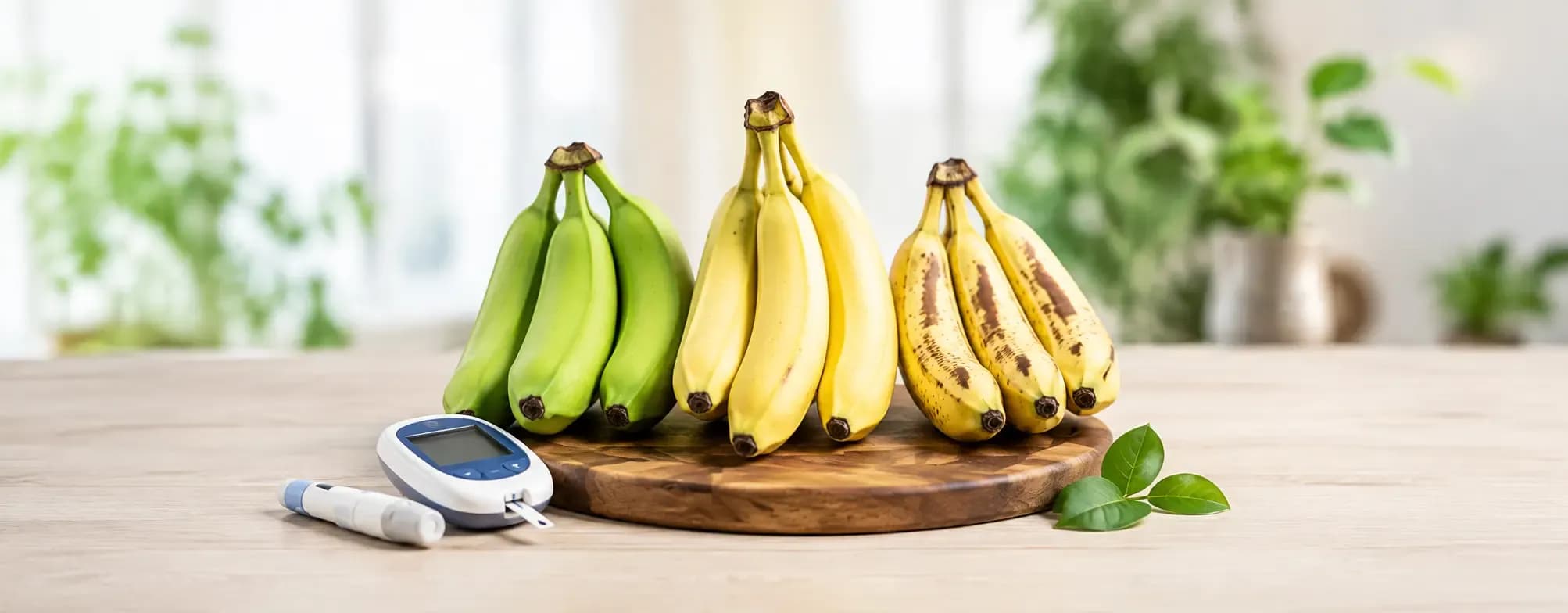
Bananas are one of India’s most loved fruits because of their easy availability, affordability, and natural sweetness. But for people with diabetes or prediabetes, there is always so much confusion. “Which banana is good for diabetes?” “Which banana is best for blood sugar control, yellow or red?”
Let us understand how bananas affect your blood sugar, their nutritional value, and how you can include them safely in a diabetic diet.
Different Varieties of Bananas
Globally, there are over 1,000 banana varieties, while India alone has around 20–25 commonly consumed types, each differing in taste, texture, colour, and sweetness.
The most commonly available are Montham, which is medium-sized and sweet; Poovam is small and creamy; Red has a reddish peel and rich sweetness; and Robusta is large, firm, and mildly sweet. These differences help you choose based on taste and blood sugar impact.
Glycemic Index of Bananas: How Ripeness Affects Blood Sugar
Managing diabetes is all about keeping blood sugar levels within a healthy range. This is where the Glycemic Index helps: it indicates how rapidly a food can raise your blood sugar levels.
Bananas fall within the moderate-to-low GI range, but their GI value varies with ripeness.
| Type of Banana | Glycemic Index Value | Effect on Blood Sugar Levels |
|---|---|---|
| Yellow (ripe) | 51 | Moderate rise |
| Overripe (brown spots) | 58–60 | Faster rise |
| Red banana | 45–50 | Moderate rise |
Banana Nutrition Facts
When you think of bananas, the first nutrient that often comes to mind is potassium. Bananas are rich in potassium and are especially good for people with high blood pressure.
Nutritional breakdown of banana varieties such as Montham, Poovam, Red, and Robusta (100 g), approximately based on IFCT 2017.
| Nutrient | Banana Montham (ripe) | Banana Poovam (ripe) | Banana Red (ripe) | Banana Robusta (ripe) |
|---|---|---|---|---|
| Energy | 111 kcal | 106.4 kcal | 105 kcal | 105.2 kcal |
| Carbohydrate | 24.95 g | 23.41 g | 25.21 g | 23.63 g |
| Fibre | 2.21 g | 2.33 g | 1.98 g | 1.94 g |
| Protein | 1.25 g | 1.49 g | 1.29 g | 1.23 g |
Yellow (Ripe) Banana: Eat in Moderation
The typical yellow banana is softer and sweeter because starch converts into sugar as it ripens. It offers instant energy but can raise blood sugar levels if eaten in excess.
Tips to Enjoy Safely:
- Choose small-sized bananas or eat half at a time.
- Pair with nuts, seeds, or curd to slow sugar absorption.
- Avoid overripe bananas, as they have a higher sugar content.
Red Banana: The Antioxidant-Rich
Red bananas (Chakkarakeli, Rakta Kela) are smaller, creamier, and sweeter than yellow ones, with a reddish-purple peel. They are packed with beta-carotene, vitamin C, and antioxidants that boost immunity and protect cells from damage.
Benefits of Red Banana:
- Rich in antioxidants.
- They are also high in fibre and potassium, which support heart health and regulate blood pressure.
- Contains a moderate amount of natural sugars, so portion control is key.
Tip: Eat half a red banana with nuts or after a balanced meal.
Banana and Diabetes
Is Banana Good for People with Diabetes?
Bananas are nutritious, convenient, and widely loved, but for people with diabetes, the key is how much, how ripe, and what you pair them with.
Though bananas contain natural sugars, they also provide fibre, vitamins, and minerals that can fit into a diabetes-friendly diet when eaten mindfully.
Ripeness Matters
- Very ripe bananas have a high glycemic index, are digested quickly, and can raise blood sugar more quickly.
- Slightly unripe or firm bananas have a lower glycemic index, digest slowly, and cause a gentler rise in blood sugar.
- Though bananas contain natural sugars, they also provide fibre, vitamins, and minerals that fit well in a diabetes-friendly diet when eaten mindfully.
Portion Control Is Key
- Stick to half or one small banana at a time.
- Do not eat large or overripe bananas if you have diabetes.
Pair Smartly for Better Sugar Control
Always pair bananas with protein or healthy fats, such as nuts, seeds, and curd.
These combinations slow sugar absorption and help prevent sudden spikes in blood glucose. Adding more fibre, protein, and healthy fats to your meal helps balance your overall blood sugar response.
Use Bananas as a Healthier Sweetener
Bananas can be used as a natural sweetener in baking, making them a healthier alternative to refined sugar.
Benefits of Eating Bananas
Due to the many nutrients present in the banana, this fruit offers several health benefits. These include:
- Good for Heart Health: Bananas are an excellent source of potassium and are heart-healthy. They help regulate blood pressure and lower the risk of heart disease.
- Provides Energy Boost: Bananas are a good source of healthy carbohydrates and provide an instant energy boost. The vitamin B6 in them also helps convert food into energy and enhances brain function.
- Promotes Digestion: The high fibre content in bananas promotes healthy digestion and regularises bowel movements. It is an excellent remedy for preventing constipation and for reducing acid reflux and ulcers.
- Supports the Immune System: Bananas are a rich source of Vitamin C, a powerful antioxidant that supports the immune system.
- Promotes Healthy Skin: The Vitamin C in bananas also helps boost collagen production, a protein essential for healthy skin and hair.
Conclusion
Bananas, whether yellow or red, can fit into a diabetic diet when eaten mindfully.
The secret lies in portion control, ripeness, and pairing with the right foods. So the next time you crave a banana, go for the slightly unripe one; your blood sugar will thank you!
How PB Health Can Support You
When someone in your family needs medical care, you should not have to worry about what comes next or who will take care of each step.
At PB Health, we believe good healthcare depends on proper planning and regular follow-ups. Our doctors and care teams work together, supported by technology that helps track progress, organise follow-ups, and keep all information clear and accessible. From prevention to recovery, every stage is managed carefully so that nothing important is overlooked.
To learn more about our approach, visit the PB Health website.