

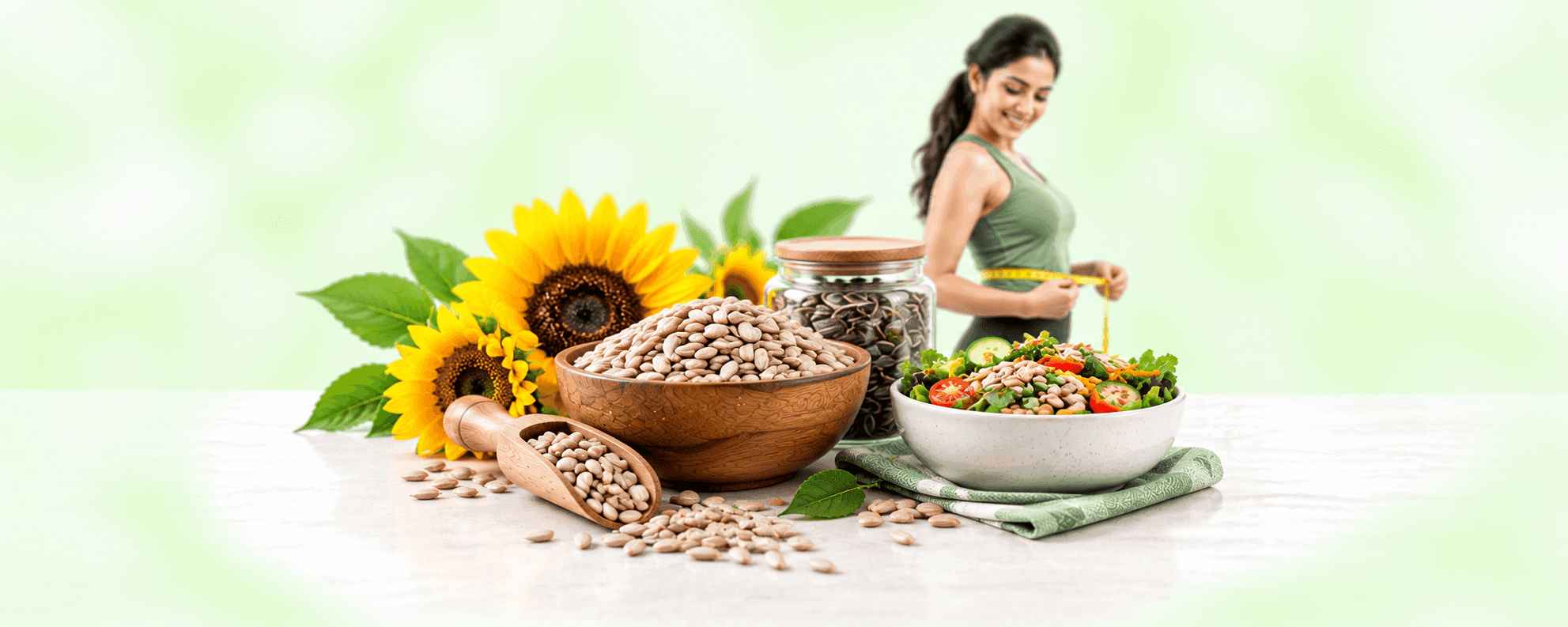
Sunflowers or सूरजमुखी (in Hindi) are more than just pretty flowers; they’re a symbol of warmth and positivity. When gifted, they have a way of making someone feel special and appreciated.
But did you know sunflower seeds are just as amazing? These little seeds are packed with nutrients and can be a great addition to support diabetes care and weight loss.
Let’s take a closer look at how sunflower seeds can benefit your health!
What Are Sunflower Seeds?
Sunflower seeds come from the vibrant sunflower plant, a familiar sight in Indian fields, especially during spring. Known locally as “Surajmukhi ke beej,” they’re a common ingredient in many Indian kitchens.
These seeds have a mild, nutty flavour and can be enjoyed raw, roasted, or sprinkled over your favourite dishes, like poha, salads, or even curd. Loved for their versatility and packed with nutrients, sunflower seeds are gaining popularity among those managing diabetes or trying to shed extra kilos.
What is the Nutritional Value of Sunflower Seeds?
Sunflower seeds are nutrient-dense, providing protein, healthy fats, and fibre, which contribute to satiety. They’re also rich in essential vitamins and minerals, including vitamin E, magnesium, and selenium.
A small handful provides a significant amount of these nutrients, making sunflower seeds a nutritious snack choice.
| Nutrient | Nutritional Value (per 100 grams)* |
|---|---|
| Energy | 586 kcal |
| Carbohydrate | 7 gm |
| Protein | 24 gm |
| Total Fat | 52 gm |
| Calcium | 176 mg |
| Phosphorus (P) | 752 mg |
| Iron | 6 mg |
| Total Fiber | 11 gm |
| Potassium | 559 mg |
| Natural Sugar | 3 gm |
| *as per IFCT, 2017 |
What are the Health Benefits of Sunflower Seeds in Diabetes & Weight Loss?
Sunflower seeds, often enjoyed as a crunchy snack, are filled with nutrients that can benefit both weight loss and diabetes management. Here’s a closer look at how these seeds can support your health goals.
Health Benefits of Sunflower Seeds for Diabetes
1. Low Glycemic Index (GI): Sunflower seeds have a low glycemic index, which means they release glucose slowly into the blood. This helps prevent sudden spikes in blood sugar levels, making them an excellent snack option for people managing diabetes.
2. Improved Insulin Sensitivity with Healthy Fats: The natural fats in sunflower seeds may enhance insulin sensitivity, allowing the body to manage blood sugar more effectively. These healthy fats also contribute to a sense of fullness, reducing the likelihood of overeating.
3. Magnesium for Blood Sugar Control: Magnesium is known to improve insulin response and blood sugar control, and sunflower seeds are a rich source of this mineral. Including sunflower seeds in a diabetes-friendly diet can support better management of blood sugar levels.
4. Antioxidants to Combat Inflammation: Vitamin E, abundant in sunflower seeds, has anti-inflammatory properties that support overall health. For people with diabetes, reducing inflammation can help protect against diabetes-related complications.
Health Benefits of Sunflower Seeds for Weight Loss
1. High Fibre Content for Satiety: The fibre in sunflower seeds aids digestion and promotes a feeling of fullness, which helps prevent cravings and supports weight loss. Fibre also helps stabilise blood sugar by slowing glucose absorption, adding an extra benefit for those seeking weight management.
2. Protein for Muscle Maintenance and Fullness: Sunflower seeds offer a plant-based protein source (especially in a vegetarian diet), which is essential for people who want to maintain muscle mass while losing weight. Protein also keeps you full for longer, reducing the need for snacking between meals.
3. Low-calorie, Nutrient-Dense Snack Option: Sunflower seeds are a low-carb, nutrient-rich snack option that can help curb hunger without adding unnecessary calories. They provide steady energy, allowing for mindful eating and helping avoid high-calorie or processed snacks.
4. Healthy Fats to Reduce Cravings: The healthy fats in sunflower seeds can contribute to sustained energy and reduce cravings, making them a great choice for those working toward weight loss goals.
Are there any Side Effects of Sunflower Seeds?
While sunflower seeds offer numerous benefits, consuming them in large quantities can lead to excessive calorie intake. They are also high in fibre, so eating too much at once can cause digestive discomfort.
Moderation is key to enjoying the benefits without adverse effects.
How to Eat Sunflower Seeds for Diabetes and Weight Loss?
Sunflower seeds are versatile, nutrient-dense, and easily incorporated into daily meals to support diabetes management and weight loss. Whether eaten as a snack, added to salads, or blended into smoothies, these seeds can help maintain steady blood sugar levels and provide lasting satiety.
Here’s how you can include them effectively:
1. As a Whole Seed or Lightly Toasted as a Snack: A small handful of unsalted, raw, or lightly toasted sunflower seeds makes for a low-glycemic, satisfying snack that helps keep blood sugar levels steady. Avoid salted or heavily roasted varieties to reduce sodium intake, which is essential for heart health.
2. Sprinkle on Salads: Adding a tablespoon of sunflower seeds to a salad increases its fibre and healthy fat content, promoting satiety and preventing blood sugar spikes after meals. The seeds add a nice crunch and make salads more filling without adding empty calories.
3. Blend into Vegetable Smoothies: Sunflower seeds are a fantastic addition to vegetable smoothies, boosting protein, fibre, and healthy fats. Try blending a spoonful of sunflower seeds into a spinach (palak) smoothie for a low-glycemic drink that helps regulate blood sugar and curbs hunger.
For a creamier twist, add sunflower seeds to a smoothie with curd (dahi). The curd combined with the seeds offers a filling, digestion-friendly drink that supports weight loss and keeps you full longer.
4. As a Yogurt/Curd Topper: Mixing sunflower seeds into plain yogurt/curd makes for a nutrient-rich, diabetes-friendly snack. This combination delivers protein, fibre, and healthy fats, making it both satisfying and easy to digest.
5. As part of Trail Mix: Combine sunflower seeds with other nuts and seeds in a homemade trail mix for a portion-controlled, nutrient-packed snack. This mix keeps you full and prevents overeating, making it a great on-the-go option.
6. Blend into Soups or Stews: Add sunflower seeds to soups or stews to enhance texture, protein, and fibre content. This addition makes meals more filling, helping to curb hunger and reduce the likelihood of overeating.
7. Top Roasted Vegetables: Sprinkle sunflower seeds over roasted vegetables for a crunchy, flavorful boost. This way, you enhance the dish’s nutrition and satisfaction level without relying on high-calorie toppings.
8. Thicken Your Sabzi Gravy: Grind sunflower seeds and add them to your sabzi gravy. The seeds act as a thickening agent and add a creamy texture, protein, and healthy fats, ideal for those aiming to manage weight and maintain steady blood sugar levels. You can use it instead of cashews.
How Can PB Health Support You?
When someone in your family needs medical care, you should not have to worry about what comes next or who will take care of each step.
At PB Health, we believe good healthcare depends on proper planning and regular follow-ups. Our doctors and care teams work together, supported by technology that helps track progress, organise follow-ups, and keep all information clear and accessible. From prevention to recovery, every stage is managed carefully so that nothing important is overlooked.
To learn more about our approach, visit the PB Health website.