

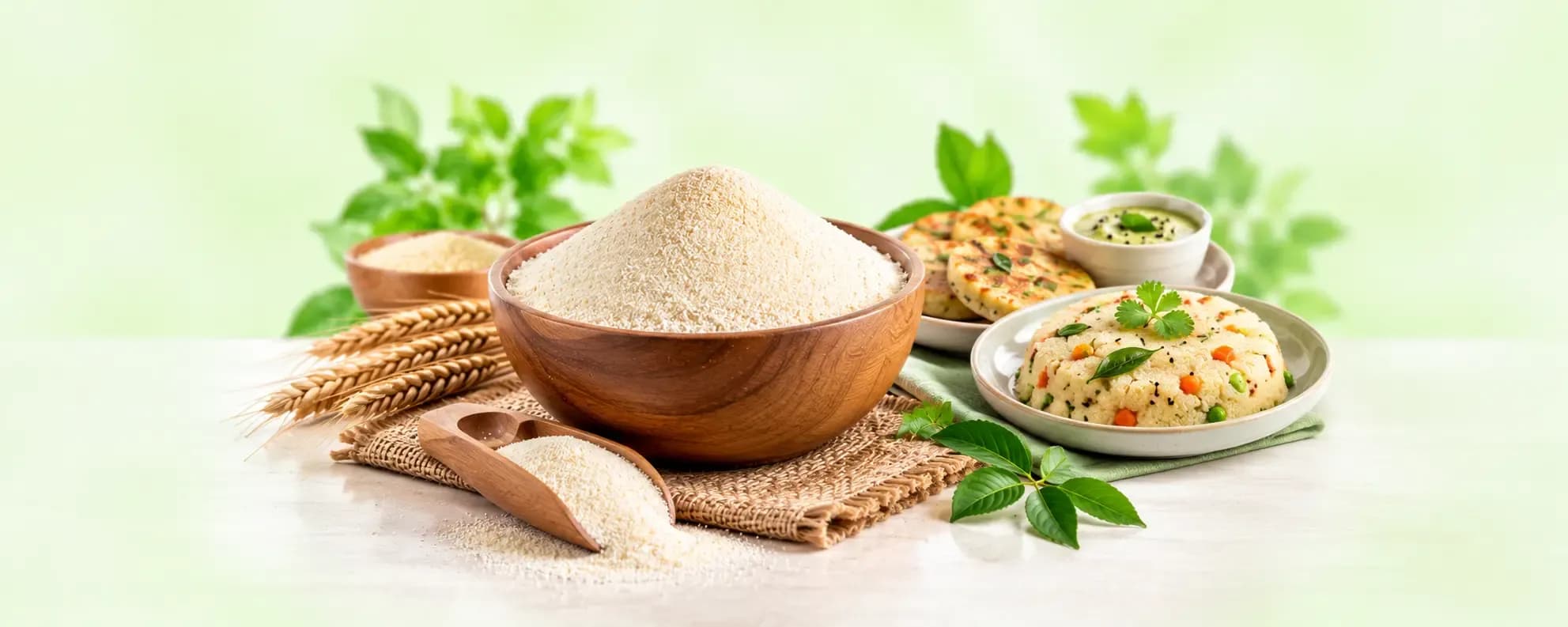
Just hearing the word “sooji” makes our mouths water for yummy upma with a tasty tempering. We all love eating upma for breakfast, as a quick snack, or even for dinner. When we want something light, upma is a smart pick since it’s easy and quick to make. The word “Sooji” is commonly used in Northern India, while “Rava” is used in Southern India.
But if you have diabetes, should you eat dishes like upma, halwa, kheer, rava idli, dhokla, chilla, or dosa made with sooji?
Are these sooji dishes safe for your blood sugar?
Since sooji is made from refined wheat and it raises blood sugar quickly, is it a good choice for people with diabetes?
To understand how sooji affects your blood sugar levels, we should first know what sooji is exactly.
What is Sooji?
Our popular grain, sooji, also known as rava or semolina, is processed from wheat and is widely used in many Indian households. It is available in fine and coarse-granulated forms. It is primarily made from durum wheat.
Sooji is easy to cook and can be used in a variety of dishes. Now, let’s look at what sooji gives to your body. Let’s break down the nutritional composition of sooji and understand what it provides when taken.
What is the Nutritional Value of Sooji?
Sooji is high in carbohydrates and low in fat. It gives less protein, so it is eaten with dal or yoghurt. As it has less fibre, add vegetables to make it healthier. It raises blood sugar quickly, so eat in smaller portions. Nutritional value of Sooji per 100g
| Nutrient | Amount (100g) |
|---|---|
| Energy | 333.6 kcal |
| Carbohydrates | 68 g |
| Fibre | 9.72 g |
| Protein | 11.38 g |
Sooji is rich in carbohydrates and contains a low amount of protein. It also provides essential nutrients such as calcium, magnesium, and phosphorus in smaller amounts. However, sooji is low in fibre, which is an important component of a diabetes-friendly diet and overall diabetes management.
What is the Glycemic Index of Sooji?
The glycemic index (GI) shows how fast food can raise your blood sugar levels. Foods with a high GI (above 70) cause quick spikes in blood sugar.
Sooji has a high glycemic index (GI), which means it can quickly raise blood sugar levels.
Sooji has a moderately high GI (63-78, depending on cooking time), which means it can quickly raise your blood sugar levels.
Can You Eat Sooji if You Have Diabetes?
When it comes to sooji and diabetes, things get a little complicated. Sooji (also known as rava or semolina) has a high glycemic index, which can lead to rapid spikes in blood sugar levels.
So, how does sooji affect blood sugar?
Quick glucose spike: Sooji is refined and low in fibre and protein, which means it gets digested fast, leading to sudden blood sugar spikes.
Low in fibre & protein: It doesn’t offer much in terms of nutrition to slow down glucose absorption or support long-term blood sugar balance.
Often prepared with high-carb ingredients: Dishes like upma or halwa are often made with oil, ghee, sugar, or starchy vegetables; all these ingredients add extra carbs, which can further raise blood sugar levels.
So, Who Should Be Cautious About Eating Sooji?
People with diabetes: Sooji can raise your blood sugar very quickly because it’s digested fast. This is risky if your sugar levels are already high or not well controlled.
Those trying to lose weight: Sooji gives quick energy but doesn’t keep you full for long, so you may feel hungry again soon.
What are some practical tips for including sooji in a diabetes-friendly diet?
Portion Control: Limit your serving to a small amount, about ½ cup of cooked sooji at a time. Pair it with fibre-rich veggies or curd, paneer, or nuts for a protein source to slow down the sugar spike.
Add Dals to Sooji for More Protein: Add dals to sooji to make it healthier and full of protein. Use moong dal, masoor dal, or chana dal. Soak and grind the dal, then mix it with sooji to make idlis or cheelas. And you can also cook the dal and add it to the sooji upma.
Monitor Blood Sugar: Keep track of your blood sugar levels after consuming sooji to understand how it affects you personally.
Sooji Recipes for Better Blood Sugar Control:
Vegetable Upma: Make your upma with a smaller portion of sooji and add fibre-rich vegetables like carrots, beans, peas, and capsicum. Use minimal oil and pair it with a protein source, such as plain yoghurt. For an extra boost of protein, you can even top it with some sprouts.
Dahi Sooji Cheela: Mix half a portion of sooji and half a portion of besan with water and homemade curd, and let it rest for about 10 minutes. Add finely chopped veggies such as onions, tomatoes, capsicum, cabbage, carrots, or peas. Spice it up with a tadka of rai (mustard seeds), curry leaves, chana dal, and fresh coriander. Make cheelas on a non-stick pan and serve hot with fresh mint, coriander, or tomato chutney.
Sooji Khichdi with dal: Take a smaller portion of sooji and add cooked moong dal for protein. Mix with fibre-rich vegetables like carrots, beans, peas and spinach. Use a small amount of oil for cooking and season it with a pinch of turmeric and a pinch of salt. Enjoy khichdi with plain yoghurt or top it with sprouts for a balanced meal.
Conclusion
So, is sooji suitable for people with diabetes?
The short answer is: Not really. You can have it once in a while, in a small portion, and only if you balance it with enough fibre and protein. Always monitor your blood sugar levels after eating. For everyday meals, it’s better to choose healthier grains like steel-cut oats and broken wheat (daliya), which give you energy without causing sugar spikes.
How PB Health Can Support You
When someone in your family needs medical care, you should not have to worry about what comes next or who will take care of each step.
At PB Health, we believe good healthcare depends on proper planning and regular follow-ups. Our doctors and care teams work together, supported by technology that helps track progress, organise follow-ups, and keep all information clear and accessible. From prevention to recovery, every stage is managed carefully so that nothing important is overlooked.
To learn more about our approach, visit the PB Health website.