

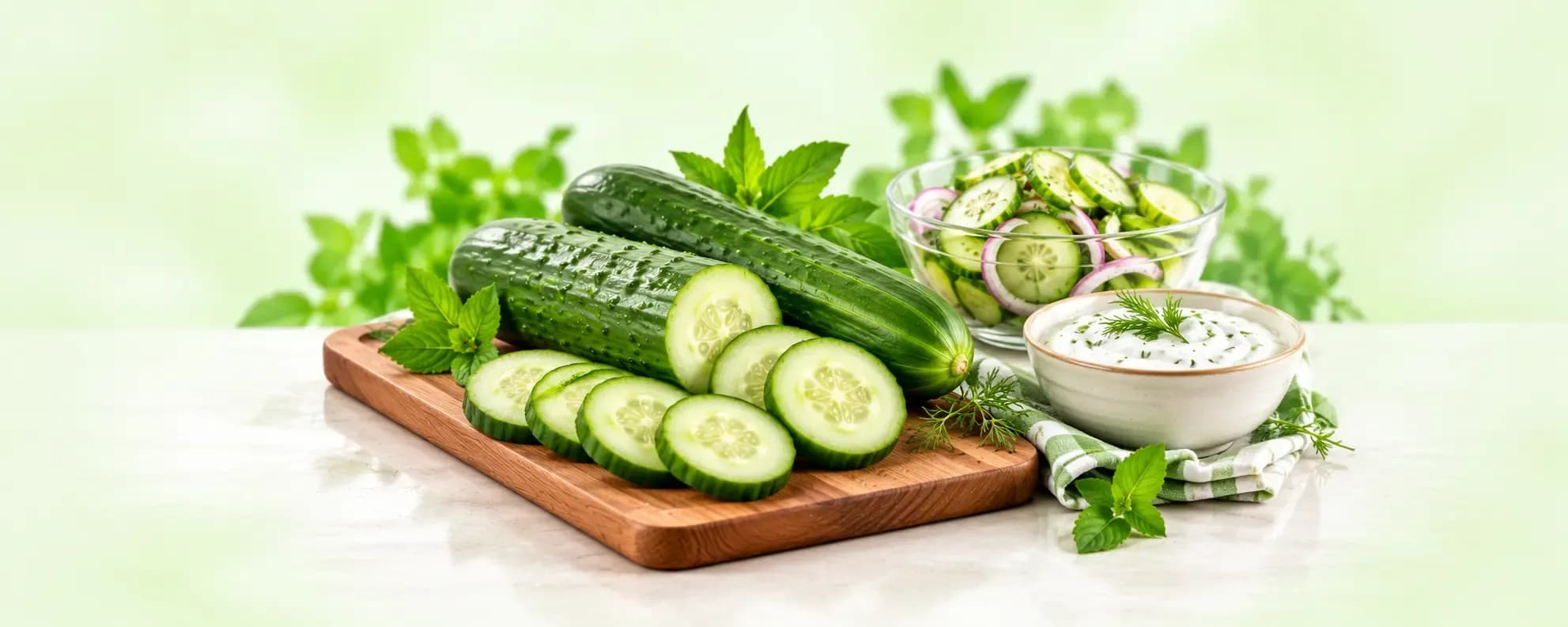
When we think of cooling and refreshing foods during the hot and humid summer months, the cool kaakdi always comes on top. Did you know cucumbers grow in hot climates yet have a hydrating property?
With a high water and dietary fibre content and low sodium, cucumbers are excellent foods for people with chronic health conditions. But having cucumber for diabetes, is that safe? Let’s find out.
Nutritional value of Cucumber
Cucumber is a healthy vegetable that is loaded with nutrients. According to IFCT 2017, here’s what it contains:
| Nutrient | Nutritional value ( In 100 g)* |
|---|---|
| Dietary fibre | 1.6 to 1.8 mg |
| Vitamin C | 6 to 6.2 mg |
| Calcium | 16.4 to 22 mg |
| Potassium | 183 to 198 mg |
Nutritional Value of Cucumber
Besides these nutrients, cucumber is also loaded with antioxidants and vitamin K.
Glycemic Index of Cucumber
One of the primary indicators that help determine if a food is suitable for people with diabetes is the glycemic index (GI). The glycemic index of cucumber is 15. This makes cucumber a low-GI food and appropriate for people with diabetes.
Is Cucumber Good for Diabetes?
Do dietitians recommend cucumber for diabetes? Let’s see.
1. Helps in weight management
Cucumbers are fibre-rich, low-calorie foods, containing over 95% water. So, eating them does not increase caloric intake.
Also, the fibre content makes you feel full, which prevents overeating. These properties make cucumbers excellent for weight loss management. Cucumbers’ ability to help in weight management also assists people with diabetes in maintaining their blood sugar levels.
2. It may help control blood sugar levels
Cucumber is a non-starchy vegetable that is low in carbohydrates and high in fibre. These features make cucumbers an ideal food for people with diabetes. These individuals can add cucumber to every meal to moderate their blood sugar levels more effectively.
3. Loaded with antioxidants
The antioxidants in cucumber skin help the body process free radicals and prevent the development of conditions like diabetes.
Benefits of Eating Cucumbers in Diabetes
Besides the benefits of cucumber for diabetes, other health benefits of this vegetable include:
1. They are hydrating
One of the USPs of cucumbers is that they have a very high water content. So, eating cucumbers is an excellent way to increase your water intake, cool your body, and have a soothing effect on the skin.
2. Promote gut health
Being high in dietary fibre and water content, cucumbers are excellent for your gut health. Besides boosting digestion, they prevent constipation.
3. Boost heart health
Cucumbers are high in fibre and potassium but low in sodium. This helps reduce hypertension and promote heart health.
Ways to Incorporate Cucumber in a Diabetes-Friendly Diet
Cucumbers are a versatile vegetable that can be added to various dishes. Here are a few easy and fun ways to include this vegetable in your diabetes diet, especially if you wish to manage your blood sugar levels within the normal range:
1. Salads and dressings
Think cucumber and salads are among the first things that come to mind. Cucumber salads are refreshing, whether a simple sliced cucumber or spicing it up with chat masala and some dahi. Feel free to add other veggies like carrots, onions, and pineapples to enhance the flavour and texture.
2. Soups
Soups are often thought to be warm and comforting. But do you wish to try a chilled one?
Cucumber is the perfect ingredient for the same. While cold cucumber soups made from fresh herbs and yoghurt are traditional Greek and Polish dishes, they are perfect for summers even in the tropical climate in India.
3. Smoothies
Looking for a hydrating and refreshing drink on a hot summer day? A cucumber smoothie is also the perfect way to begin your day. All you need to do is blend a few cucumbers with their skin on, and you’re done!
4. Appetisers
You can also add a refreshing touch to your appetisers with cucumber. The simplest way to make an appetiser with cucumbers is using it as a topping on roasted papads.
Chop a few cucumbers, onions and tomatoes and toss them with chaat masala, salt, red chilli powder and a few drops of lemon juice. Add this tangy mixture to your papad and enjoy a mini appetiser before the meal.
5. Pachhadi / koshimbir
In the southern states of India, cucumber finds its way to pacchadis and koshimbir. Finely chopped cucumber is garnished with tempering of jeera, mustard seeds and some hing.
6. Coolers
You can add a dash of cucumber to your drinks too! Combine peeled and chopped cucumber with some mint and lemon juice. Serve it chilled or with a few ice cubes.
7. Thalipeet / paratha
Kakdi thalipeeth is a healthy breakfast recipe popular in Maharashtra. While traditional thalipeeth is made from a mixture of various whole grain flours, adding grated cucumber to it enhances the flavour profile and nutrient content.
Grated cucumber can also be added to your regular paratha recipes for a healthy, wholesome meal.
Do’s & Don’ts When Eating Cucumber in Diabetes
1. Moderate Consumption
Enjoy cucumbers as part of your regular diet, but remember to consume them in moderation.
2. Monitor Blood Sugar
Keep an eye on your blood sugar levels to understand how cucumbers impact your diabetes management.
3. Eat Cucumbers with Peel
The peel is rich in fibre, which is beneficial for blood sugar management. Make sure to consume organically grown cucumbers to ensure safety in eating the peel.
4. Pair with Balanced Meals
Incorporate cucumbers into a balanced meal with other diabetic-friendly foods, like lentils, whole grains, and leafy greens.
5. Choose Fresh Over Processed
Opt for fresh cucumbers instead of pickled ones or those marinated in sweet or salt water to enhance taste.
6. Avoid Overeating
Despite cucumbers being low in carbohydrates, consuming them in large quantities can affect blood sugar levels.
7. Avoid Sugary Dressings
Refrain from using high-sugar dressings or dips. Opt for healthier options like yoghurt-based dressings or lemon juice.
8. Be Cautious of Allergic Reactions
Some people may be allergic to cucumber. So, if you experience unusual reactions after eating cucumbers, consult your doctor.
How PB Health Can Support You
When someone in your family needs medical care, you should not have to worry about what comes next or who will take care of each step.
At PB Health, we believe good healthcare depends on proper planning and regular follow-ups. Our doctors and care teams work together, supported by technology that helps track progress, organise follow-ups, and keep all information clear and accessible. From prevention to recovery, every stage is managed carefully so that nothing important is overlooked.
To learn more about our approach, visit the PB Health website.