


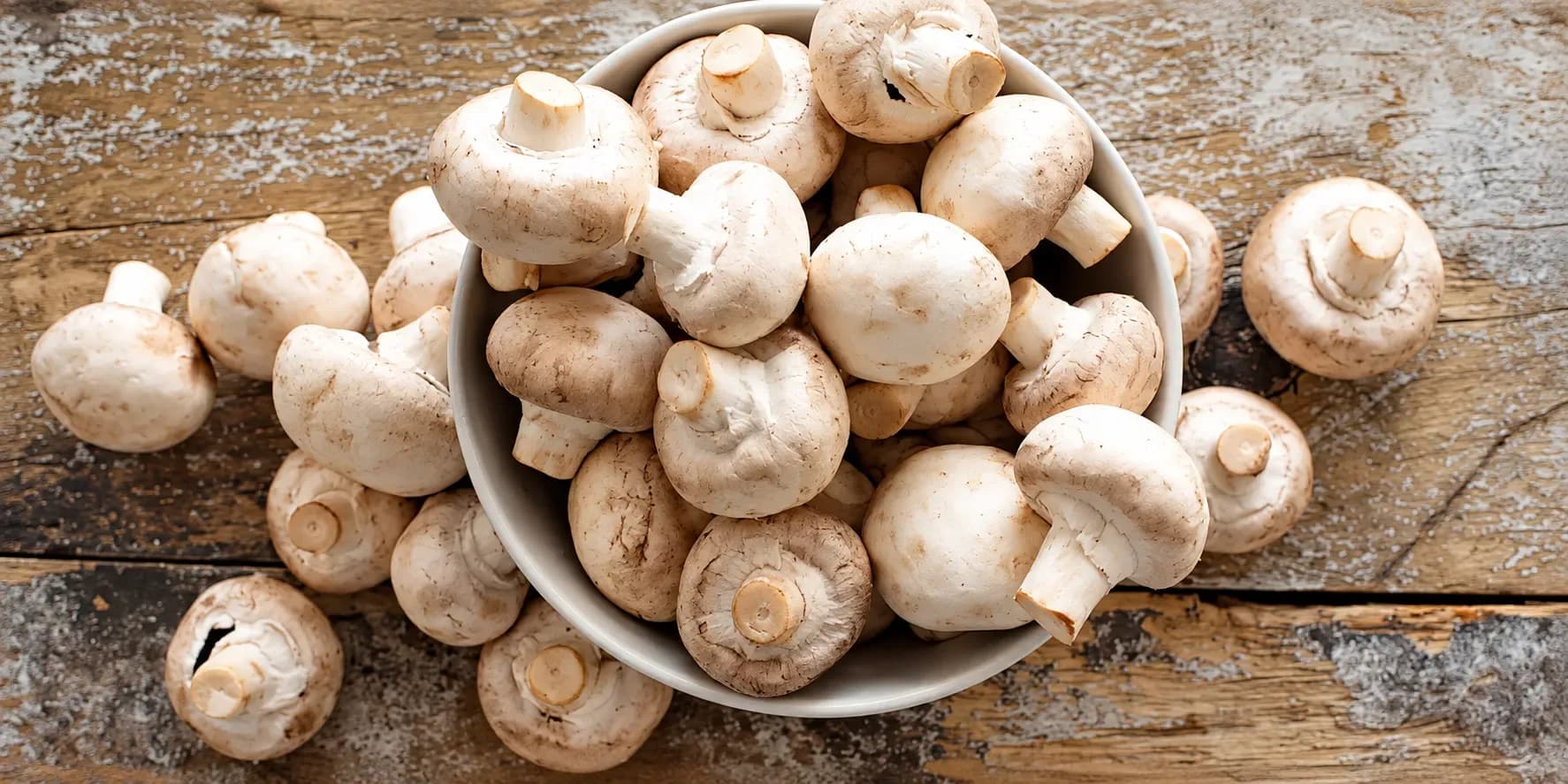
Are you wondering if mushrooms are good for people with diabetes?
Yes! Mushrooms have nutrients that are considered good for people with diabetes. However, one must be mindful of how they are prepared.
Before we go further, let’s address the most asked question: “Are mushrooms vegetarian?”
Are Mushrooms Vegetarian?
Mushrooms are plant-based food items, NOT animal-based. So, yes, mushrooms are vegetarian! However, many people consider them non-vegetarian because of their meat-like texture and flavours. Ironically, it is this very texture and flavour that makes it a great vegetarian alternative for many non-veg foods.
What Is The Nutritional Value Of Mushrooms?
Button mushrooms are the most commonly available variety across India; 100 grams of button mushrooms typically contain:
| Nutrient | Nutritional Value (per 100g) |
|---|---|
| Protein | 2.18g |
| Water | 89.8g |
| Fat | 0.45g |
| Iron | 0.74mg |
| Magnesium | 10.5mg |
| Potassium | 376mg |
| Sodium | 1mg |
Mushrooms are a good source of vitamins and minerals like selenium, zinc, and vitamins B1, B2, B5, B6, and B12.
Mushrooms are packed with antioxidants; however, they do not contain fat or carbohydrates.
What is the Glycemic Index or GI of mushrooms?
Mushrooms have an extremely low GI. Generally, mushrooms have a GI rating of just 15-30.
The GI for mushrooms can vary depending on the type of mushroom and whether it is cooked or not.
Uncooked mushrooms have a lower GI than cooked mushrooms. The low GI makes mushrooms a good choice for diabetes.
What Are The Benefits Of Eating Mushrooms For People With Diabetes?
Mushrooms for diabetes have innumerable benefits:
- Good for weight loss
- Helps in managing calorie count
The other benefits of having mushrooms?
- Low GI prevents blood sugar levels from spiking after eating mushrooms
- Anti-inflammatory properties that are good for heart health.
- High water and fibre content make you feel full for a longer time
Some edible mushrooms that are found in various regions of India, like Futka (found in Chhattisgarh, Orissa, and Jharkhand), Gucci (found in Kashmir and Himachal Pradesh), Oyster mushrooms (Uttarakhand), Tit syiar, Tit doh, Tit tung, and Tit sia (Meghalaya)are rich in Vitamin D, and some even have anti-cancer properties.
How to incorporate mushrooms in a diet for people with diabetes?
Here are a few ways to incorporate mushrooms in your diet:
Breakfast
- Mushroom and Spinach Paratha: Whole wheat or bajra parathas stuffed with a mixture of chopped mushrooms and spinach, lightly spiced.
- Mushroom Omelette: A fluffy omelette filled with sautéed mushrooms, onions, and a sprinkle of herbs. Serve with whole-grain toast.
- Grilled Veggie Roll: Sautéed mushrooms, capsicum, onions, and paneer with leftover chapatis. Sprinkle some sesame seeds for that awesome flavour.
Soups & Salads
- Mushroom Soup: A light and nourishing soup made with mushrooms, garlic, and herbs.
- Mushroom and Cucumber Salad: A refreshing salad with sliced mushrooms(cooked & cooled), cucumber, lemon juice, and a sprinkle of chaat masala.
Lunch & Dinner
- Mushroom and Paneer Tikka: Skewered and grilled cubes of mushrooms and paneer, marinated in yoghurt and mild spices.
- Stuffed Mushrooms: Button mushrooms filled with a mixture of grated paneer, herbs, and spices, and then baked.
- Mushroom Masala with Brown Rice: A flavorful mushroom curry made with tomatoes, onions, and a blend of spices, served with brown rice.
- Mushroom and Vegetable Pulao: Basmati rice cooked with diced mushrooms, peas, carrots, and aromatic spices.
- Mushroom Bhurji: Scrambled mushrooms cooked with onions, tomatoes, and a mix of Indian spices, paired with whole wheat chapatis.
- Grilled Mushroom and Capsicum Skewers: Alternating pieces of mushrooms and capsicum, marinated in spices and grilled, served with a side of mint yoghurt dip.
- Stir-Fried Mushrooms: Lightly stir-fried mushrooms with garlic, pepper, and a dash of soy sauce (in moderation).
What precautions to take while eating mushrooms in diabetes?
Although mushrooms are packed with nutrients, you must avoid:
- Consuming mushrooms cooked in a lot of oil, butter, or ghee.
- Having mushrooms that are deep-fried.
- Taking mushrooms that have high salt content in them, like in Chinese preparation.
- Mushrooms are baked with a lot of cheese.
- Balanced Meals: Pair mushrooms with high-fibre foods like whole grains, lentils, or beans, and include a source of lean protein to help stabilise blood sugar levels.
- Mindful of Cooking Methods: Avoid deep-frying mushrooms or cooking them in excessive oil or ghee. Opt for healthier methods like grilling, baking, sautéing, or steaming.
- Watch for Added Sugars and Fats: In dishes like mushroom curries or gravies, be cautious of adding heavy malai or cashew-based gravies, or ghee, which can impact blood sugar levels. Instead, use tomato-onion-based sauces, light coconut milk, or yoghurt as healthier alternatives.
- Spice Wisely: Instead of adding extra sugar or salt to enhance flavour, use spices like haldi, methi, and jeera powder.
- Freshness is Key: Use fresh mushrooms and avoid canned or processed ones, as they may contain added sodium or preservatives.
- Combine with Non-Starchy Vegetables: While making sabjis/bhaji, mix mushrooms with non-starchy vegetables like spinach, cauliflower, or bell peppers to keep the overall glycemic load low.
- Limit Starchy Accompaniments: Be cautious with the amount of rice, bread, or rotis served with mushroom dishes to avoid excessive carbohydrate intake.
How much mushroom can people with diabetes eat in a day?
Typically, people with diabetes can consume one to one and a half cups of fresh mushrooms in a day. Cook your mushrooms depending on your dietary goals, preferences, and the advice of your nutritionist or dietitian. They can provide personalised guidance based on your overall health, nutritional needs, and diabetes management.
Conclusion
Mushrooms are a great option for people with Diabetes.
- They are packed with essential nutrients, are low in calories, and have a low glycemic index.
- They are a vegetarian alternative to meat, having similar flavour and texture to that of meat.
- Their high water content helps in weight management too.
- Mushrooms can be had as grilled salads, soups, omelettes, and curries. But avoid excessive use of oil, butter, or ghee or rich gravies like cashew or malai gravies while preparing them.
- Consuming one to one and a half cups of fresh mushrooms per day is generally considered appropriate.
How Can PB Health Support You?
When someone in your family needs care, you should not have to worry about what happens next or who is responsible for each step.
At PB Health Hospital, IFFCO Chowk, Gurgaon, we believe wellness requires continuity, coordination, and consistent follow-through. Our doctors and care teams work together, supported by technology that helps track progress, organise follow-ups, and keep information clear and accessible. From prevention to recovery, every stage is managed thoughtfully so that nothing important is missed and nothing is left unclear.
To understand more about our approach, you can visit our website, PB Health.