

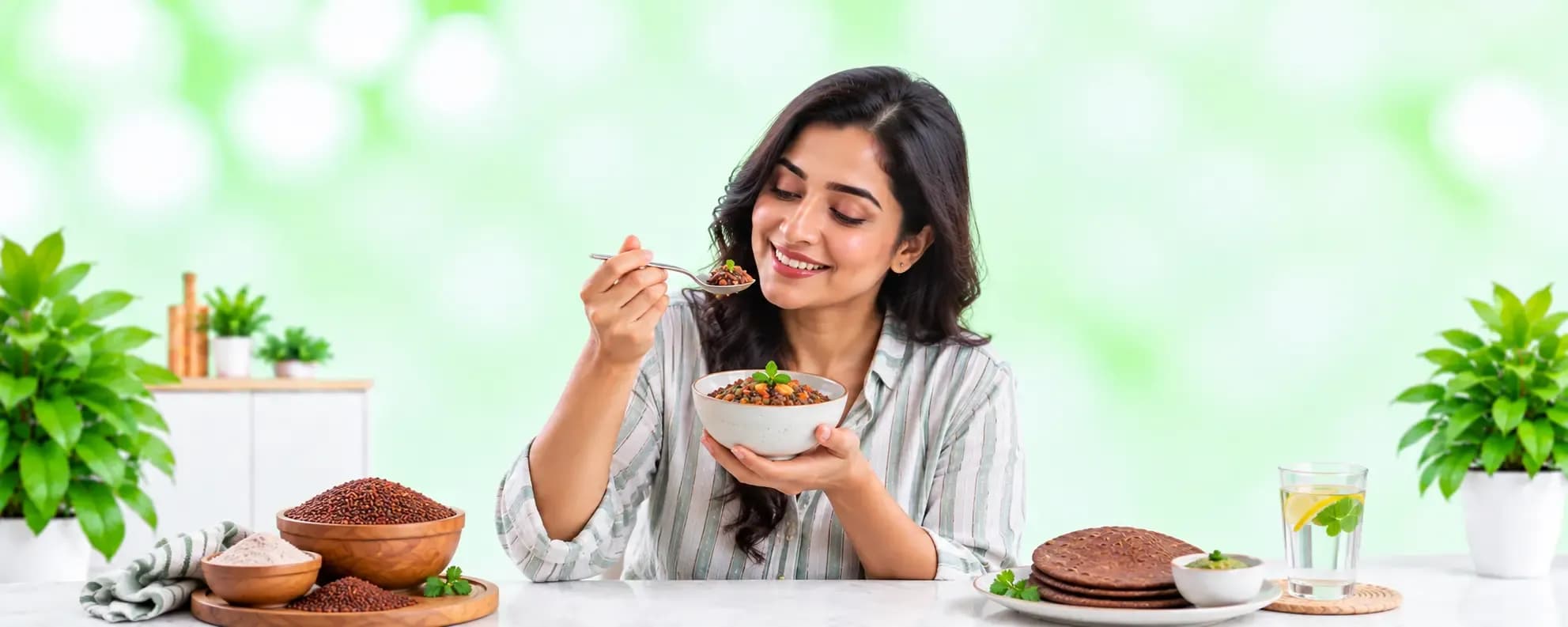
One of the things that people often struggle with in diabetes is creating a diabetes diet plan that includes foods that don’t increase your blood sugar levels.
And one of the popular myths is giving up atta and switching to multigrain flour or millet because it is believed to be higher in fibre content. So, let’s understand if this is really the case.
Read on to find out more about the nutritional value and glycemic score of ragi, and understand the portion of ragi people with diabetes should add to their diet.
Find out if ragi is good for diabetes, the effect it can have on blood sugar levels and overall health, and if it has any benefits for people with diabetes.
What is Ragi?
Ragi is also very commonly known as naachni, and in English, it is known as finger millet. The word ‘millet’ refers to a group of small and rounded whole grains.
Ragi is brown in colour and can somewhat resemble whole mustard seeds. The ragi seeds can also be powdered or ground to make ragi ka atta or ragi flour that you can easily use in different recipes.
Nutritional Value of Ragi
As per IFCT 2017, in a 100-gram serving of ragi, here are the nutritional elements that you can find:
Ragi Glycemic Index
The glycaemic index of ragi for diabetes, or the GI score of ragi, ranges between 54 and 68.
The glycaemic index of ragi preparation will depend on whether you are using ragi as a whole grain or whether you are using ragi in the atta form.
What are the Health Benefits of eating Ragi?
There are various health benefits of eating ragi.
- Ragi is very high in fibre content, which means that it will help you feel full after consuming it. This can help prevent unhealthy hunger pangs and will help you stay feeling full till your next meal.
- Ragi is also gluten-free and will work as a great food choice for those who are intolerant to gluten.
- Ragi is rich in antioxidant levels. This helps reduce oxidative stress in your body.
- Ragi is rich in its content of magnesium and will also keep your heart healthy.
- The amount of calcium found in ragi is good for bone health
- Ragi is also a good source of vitamin B1, which is also known as thiamine. And vitamin B3, or niacin, which is good for the health of your skin.
Ways to Consume Ragi
Adding ragi for diabetes management could be both delicious and nutritious. Here are some foods made with ragi to enjoy it:
- Ragi Dosa
- Ragi Porridge
- Ragi Roti
- Ragi Malt
- Ragi Cookies
Healthy Recipes of Ragi for Diabetes
1. Ragi Onion Masala Dosa
Ingredients
- 1 cup ragi flour
- ¼ cup rice flour
- ¼ cup yoghurt
- 1 chopped onion
- 1 chopped green chilli
- 1 tablespoon coriander leaves
- Cooking oil
- ½ cup water
- Salt
Preparation Steps
Step 1: Mix ragi flour, rice flour, green chillies, yoghurt, water, and salt. Let the batter rest for 30 minutes.
Step 2: Add onions and coriander leaves to the batter. Heat oil, add mustard seeds, then cumin and curry leaves, and mix into the batter.
Step 3: Pour batter onto a hot pan, cook until light brown, flip and cook the other side. Serve with potato curry.
2. Ragi Idli
Ingredients
- 1 cup idli rice
- ½ cup urad dal
- ¼ cup thick poha
- ¼ teaspoon methi seeds
- 1 cup ragi flour
- ⅓ cup water
- 1 teaspoon rock salt
Preparation Steps
Step 1: Soak urad dal and idli rice separately for hours.
Step 2: Grind urad dal, adding water to smooth.
Step 3: Mix ragi flour and soaked idli rava into urad dal batter and ferment for 8-10 hours.
Step 4: Add salt and cooking soda, then steam the batter as idlis.
3. Ragi Halwa
Ingredients
- 2 cups ragi flour
- 2 cups jaggery or coconut sugar
- 1 cup coconut oil or ghee
- ½ cup cashew
- 6 cardamom seeds (powdered)
- 4 cups water
Preparation Steps
Step 1: Sauté cashews in ghee/coconut oil; set aside.
Step 2: Mix ragi flour with water to make a paste.
Step 3: Cook the paste with constant stirring; add jaggery/sugar and cardamom.
Step 4: Gradually add ghee/oil, keep stirring. Once it thickens, add cashews; cook till oil separates. Serve hot.
Is Ragi Good for Diabetes?
While eating whole grains or millets is overall good for people and may even aid in weight loss. But the data that we have from the personalised glycemic response of thousands of members has shown that ragi preparations lead to a spike in blood sugar levels.
Hence, ragi preparations should be used with caution after understanding how blood sugar behaves in that individual post-consumption.
However, the only way to know if it is a healthy option for you and will not spike your blood sugar levels is to measure your blood glucose two hours post-consumption.
You can, however, use a glucometer that you have available with you; just consume the food, note down the food somewhere, and then take your blood sugar after 2 hours to see how your blood sugar is responding to that particular food. The same goes for ragi.
Also, while diet is an important part of diabetes management, it is also essential to focus on other aspects such as exercise, stress, and sleep.
How PB Health Can Support You
When someone in your family needs medical care, you should not have to worry about what comes next or who will take care of each step.
At PB Health Hospital, IFFCO Chowk, Gurgaon, we believe good healthcare depends on proper planning and regular follow-ups. Our doctors and care teams work together to support diabetes management, supported by technology that helps track progress, organise follow-ups, and keep all information clear and accessible. From prevention to recovery, every stage is managed carefully so that nothing important is overlooked.
To learn more about our approach, visit the PB Health website.