


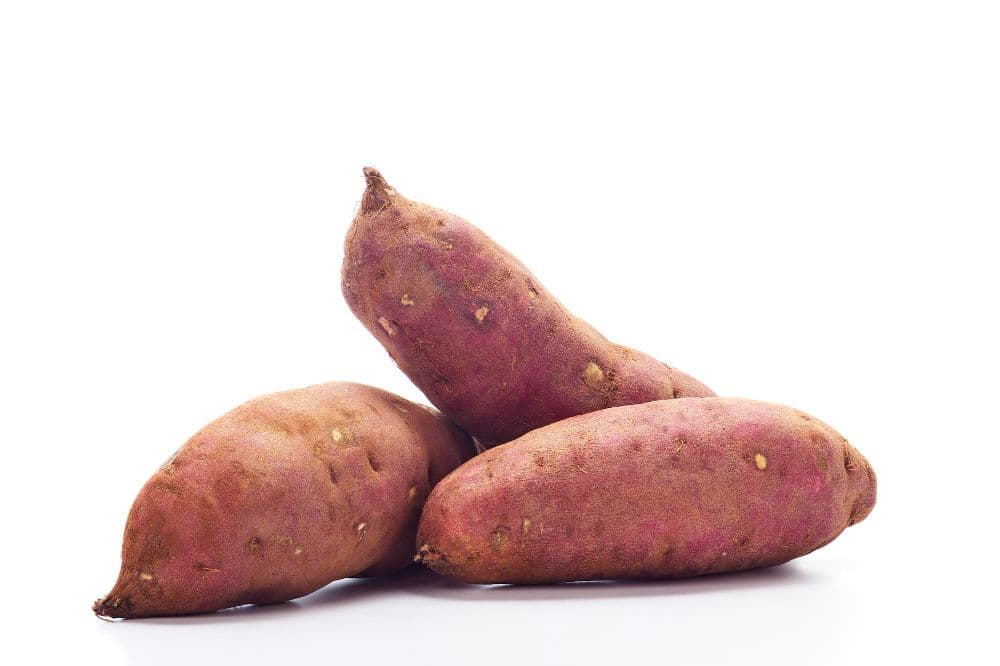
We’ve all heard it before – “Sweet potatoes are healthier than regular potatoes!” Many diet trends keep telling us to ditch the good old potatoes and switch to their “healthier cousin,” the sweet potato, for more benefits.
But is that really true? And more importantly, are sweet potatoes good for people with diabetes?
Let’s find out!
Types of Sweet Potatoes
Sweet potatoes, also known as Shakarkand, Shakkiriyaan, Shakchund, Chilakada, Sakkarai kizhangu, in some of our regional languages, are often enjoyed as a street snack or used in fasting recipes.
While worldwide, sweet potatoes come in different varieties with pink, orange, or even purple flesh, in India, the most common variety has purple-brownish skin with white-cream flesh – which you can easily find in any local sabji mandi or your bhaji market.
Nutritional Value of Sweet Potato
First of all, sweet potatoes and potatoes may share a name, but they’re not from the same plant family. Sweet potatoes belong to the Convolvulaceae family, while regular potatoes come from the Solanaceae family. In other words, they aren’t even genetically related!
Now, coming back to the real question – Is sweet potato healthier than the regular potato?
To help you decide, here’s a side-by-side comparison of the nutritional values of 100 grams of each.
| Nutrient | Sweet Potato (commonly available in India) | Regular Potato (Brown-skinned) |
|---|---|---|
| Energy | 108 kcal | 70 kcal |
| Carbohydrate | 24g | 15 g |
| Protein | 1g | 2 g |
| Calcium | 29mg | 10 mg |
| Phosphorus (P) | 38mg | 43 mg |
| Total Fibre | 4g | 2 g |
| Potassium | 329mg | 541 mg |
| Total Starch | 19g | 12 g |
*as per IFCT, 2017
So, what does this comparison really tell us?
Sweet potatoes actually have more carbohydrates as compared to potatoes (24g vs. 15g per 100 g), which means they can raise your blood sugar levels just as much, if not more than regular potatoes do.
Yes, sweet potatoes do have a bit more fibre, but that also comes with extra carbs, which still impact blood sugar.
So, sweet potato shouldn’t be your first choice for a fibre-rich food. Instead choose green leafy vegetables, beans, or gourds – they give you fibre without the carb overload!
So, Is Sweet Potato Healthy for Diabetes?
Sweet potatoes can be a better choice than regular potatoes if eaten the right way. Here’s why:
1. Slightly More Fibre
Sweet potatoes have a bit more fibre than white potatoes, which helps slow down sugar absorption. This means a gradual rise in blood sugar instead of a sudden spike. But if you’re really looking for fibre, you’re better off eating high-fibre veggies like palak, methi, chaulai saag, bhindi, beans, various gourds, capsicums, etc.
2. Lower Glycemic Index (GI) when Boiled
Boiled sweet potatoes have a GI of 44–50, which is lower than white potatoes. This makes them a better choice for blood sugar control – if cooked in the right way.
3. Packed with Nutrients
Sweet potatoes are rich in nutrients like potassium and magnesium, which help regulate blood pressure – a common concern for people with diabetes. Orange and purple varieties are especially packed with beta-carotene and anthocyanins, which can reduce inflammation and protect against cell damage.
Are There Risks to Eating Sweet Potatoes If You Have Diabetes?
Unless you have any food allergies, eating any food items can’t be a risk, be it with or without diabetes. So rather than saying ‘risky’, we’d say – Why should sweet potatoes not be your top pick while going veggies shopping if you have diabetes?
Carb content matters: Sweet potatoes still contain about 24g of carbs per 100g, so portion control is key. Eating too many carbs at once can spike blood sugar, just like white potatoes.
Cooking method makes a difference: Baking, roasting, or frying increases the glycemic index, making sweet potatoes behave just like regular potatoes. Instead, boil them.
Too much can lead to weight gain: Overeating any carb-heavy food, including sweet potatoes, can contribute to weight gain, which increases diabetes risks.
Are We Eating Sweet Potatoes the Wrong Way? 🤔
In India, we love having shakkarkand with roti, rice, or sabudana – but that’s where the mistake is: sweet potatoes are already high in carbs, and stacking more carbs on top? Boom! Blood sugar spike incoming!
So, next time, balance it out with protein & fibre for a healthier combo!
How to Make Sweet Potato Diabetes-Friendly?
So, to make it diabetes-friendly, you need to change its cooking method and DO NOT club it with a carb source. You can try these methods of cooking it instead.
Boil or steam: These methods help retain the nutrients while keeping the glycemic index lower compared to frying. But after boiling it, if you make mashed sweet potato (a recipe where you typically add butter and milk), then you lose the benefit of boiling.
Bake it: Baking enhances the natural sweetness without adding unhealthy fats or sugar.
Avoid frying: Fried sweet potatoes can have a high-fat content, which may not be ideal for people with diabetes.
That said, sweet potato still is high in carbs, so don’t go binging on it – portion control is key. You can have 2-3 slices of it at a time.
How Much Sweet Potatoes Can You Eat If You Have Diabetes?
Now we know that – while sweet potatoes have several health benefits, they contain carbohydrates, which can impact blood sugar levels. So, how much is okay to eat if you have diabetes?
1. Sweet potato in a main meal
Our typical Indian meal already includes a minimum of 50g of carbs per meal from 1 roti and 1 bowl of dal. And 100g of sweet potato (the size of a small fist) has around 24g of carbs – adding it to your meal can quickly push your carb intake higher. So, if you want to include sweet potato, remove, reduce or replace other carb sources like rice or roti to maintain balance.
2. Sweet potato as a snack
For snacks, 10-15g of carbs (2-3 slices of sweet potato) is a good target to help keep blood sugar stable. Pair it with protein or healthy fats, like roasted peanuts, seeds, or curd, to make it more diabetes-friendly.
As always, it’s best to consult with your doctor or your dietitian to determine how much sweet potato can be safely included in your diet. You can also track how your body reacts by checking your blood sugar 2 hours after eating sweet potato using a glucometer. Since everyone’s body responds differently, this will tell you how it’s affecting YOUR blood sugar levels.
How Can PB Health Support You?
When someone in your family needs care, you should not have to worry about what happens next or who is responsible for each step.
At PB Health Hospital, IFFCO Chowk, Gurgaon, we believe wellness requires continuity, coordination, and consistent follow-through. Our doctors and care teams work together, supported by technology that helps track progress, organise follow-ups, and keep information clear and accessible. From prevention to recovery, every stage is managed thoughtfully so that nothing important is missed and nothing is left unclear.
For personalised diabetes management, PB Health offers support to help patients understand their blood sugar levels, make informed dietary choices and manage diabetes through appropriate medical guidance.
To understand more about our approach, you can visit our website, PB Health.