


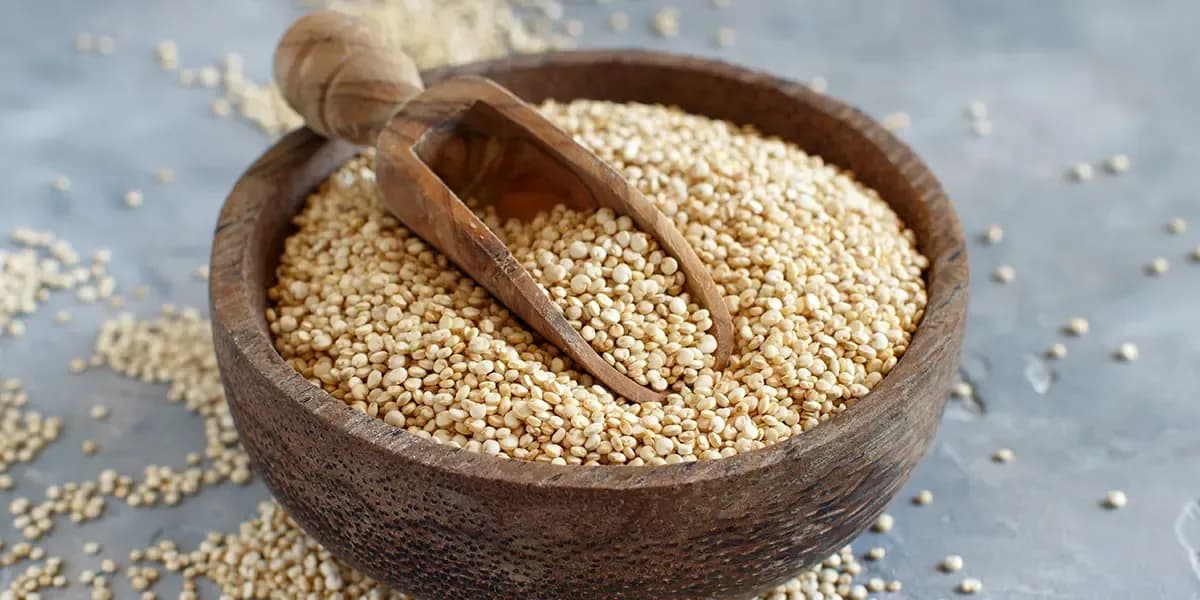
Managing diabetes often means finding the right foods that help regulate blood sugar levels. While it’s common to look for alternatives to rice and wheat, quinoa has emerged as a popular choice for those aiming to keep their diabetes in check. But is quinoa really good for people with diabetes?
YES! Quinoa can be a valuable addition to your diet when consumed in small, measured portions. In this blog, we’ll see how quinoa can help manage blood sugar levels and share some simple ways to include it in your meals.
How Well Do You Know Quinoa?
Quinoa is a nutrient-packed seed from South America. But what is quinoa? Though often mistaken for a grain, it’s actually a pseudo-cereal obtained from the seed of the plant Chenopodium quinoa.
Over the past few years, quinoa has gained popularity globally due to its rich nutritional profile, especially for people with diabetes or those who want to manage their blood sugar.
What is the Nutritional Value of Quinoa?
Quinoa is a complete protein containing all nine essential amino acids that our body needs. In addition to its high protein content, it is also rich in fibre, vitamins like B and E, and minerals such as magnesium, iron, and zinc.
These nutrients are essential for managing overall health, especially with diabetes. As per the Indian Food Composition Table (IFCT), 2017, 100 grams of quinoa contains:
| Nutrient | Nutritional Value* (per 100 gm) |
|---|---|
| Energy | 328.39 kcal |
| Carbohydrate | 53.65 gm |
| Protein | 13.11 gm |
| Total Fat | 5.5 gm |
| Calcium | 198.0 mg |
| Phosphorus (P) | 212.0 mg |
| Total Fiber | 14.66 gm |
| Omega 3 | 204.0 mg |
| Potassium | 474.0 mg |
| Natural Sugar | 1.41 gm |
*as per IFCT, 2017
What is the Glycemic Index (GI) of Quinoa?
The Glycemic Index (GI) measures how quickly foods raise blood sugar levels after eating. Quinoa has a moderately low GI of around 53, meaning it doesn’t cause a rapid spike in blood sugar. This makes it a great choice for people with diabetes, as lower GI foods help control blood sugar more effectively.
The GI of quinoa can vary between 35 and 53, depending on how it’s cooked.
Is Quinoa Good for Diabetes?
Yes, quinoa is indeed good for diabetes, thanks to its low glycemic index and high nutritional content. But the key to incorporating quinoa into your diabetes diet is moderation.
While it can be a healthy alternative to traditional grains, eating it in controlled portions can help manage your blood sugar levels effectively.
Can Quinoa Help You Manage Your Blood Sugar?
Due to its high fibre and protein content, quinoa helps regulate the absorption of carbohydrates, preventing quick sugar spikes after meals. Not just that, the fibre in it also helps with better digestion and promotes a feeling of fullness, reducing the need to snack between meals – an essential factor in blood sugar management.
What Are the Health Benefits of Quinoa for Diabetes?
- Low Glycemic Index: As mentioned, quinoa’s GI score makes it a suitable choice for those managing diabetes.
- Rich in Fibre: Helps improve digestion and regulate blood sugar levels.
- Complete Protein: Quinoa is one of the few plant-based sources of all essential amino acids, which can help in muscle repair and metabolism.
- Good Source of Magnesium: Magnesium plays a role in improving insulin sensitivity, helping your body manage blood sugar better.
Tips for Incorporating Quinoa into a Diabetes-Friendly Diet
Quinoa can be easily added to your daily meals in various ways. Here are a few tips to incorporate quinoa into your diabetes diet:
- Start with a small portion: Keep your serving size to about ½ cup of cooked quinoa per meal.
- Boil and prepare it as vegetable upma: A simple, delicious, and nutritious way to enjoy quinoa is to cook it like a typical vegetable upma with peas, carrots, and capsicum.
- Mix with other grains: For variety, mix quinoa with brown rice or millet to make dishes like pulao or khichdi.
- Use in salads: Quinoa adds a nice texture and nutritional boost to salads, making it a great option for a light, balanced meal.
Quinoa vs. Rice, Brown Rice, Oatmeal, and Wheat
When comparing quinoa to common staples like rice, brown rice, oatmeal, and wheat, quinoa generally comes out on top for its lower glycemic index and higher protein content.
- White Rice: White Rice is high in GI and low in nutrients compared to quinoa, making it less ideal for blood sugar control.
- Brown Rice: Better than white rice but still higher in GI compared to quinoa.
- Oatmeal: Oatmeal is another good choice for diabetes management, but quinoa has more protein and fibre.
- Wheat: Whole wheat is a healthy option, but quinoa offers more balanced nutrition with its complete protein and lower GI.
How PB Health Can Support You?
When someone in your family needs care, you should not have to worry about what happens next or who is responsible for each step.
At PB Health Hospital, IFFCO Chowk, Gurgaon, we believe wellness requires continuity, coordination, and consistent follow-through. Our doctors and care teams work together, supported by technology that helps track progress, organise follow-ups, and keep information clear and accessible. From prevention to recovery, every stage is managed thoughtfully so that nothing important is missed and nothing is left unclear.
To understand more about our approach, you can visit our website, PB Health.