


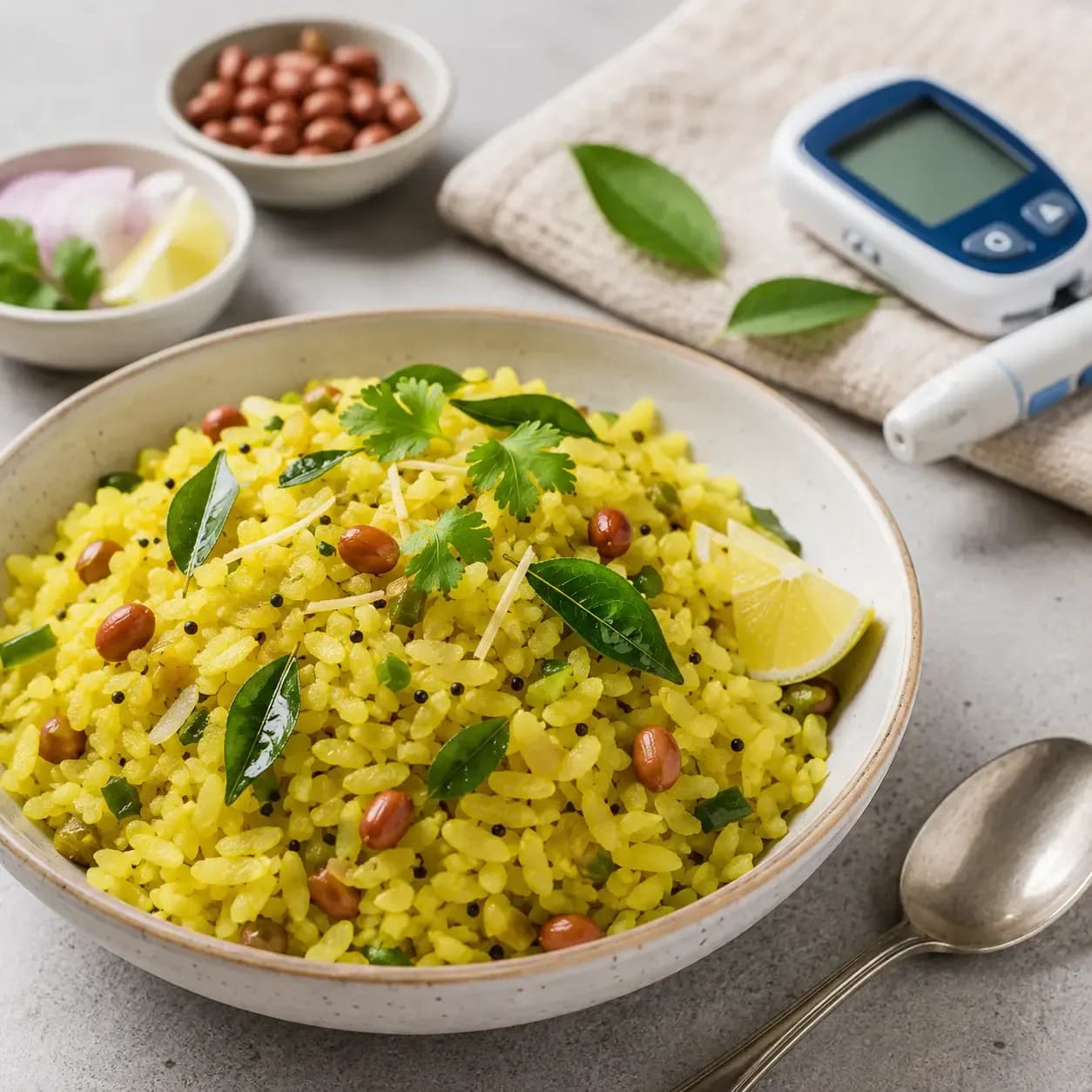
For many, poha isn’t just breakfast - it’s a tradition, a comfort food, and a part of everyday life. From the steaming hot Kanda Poha of Maharashtra to the tangy Indori Poha, or the Aval Upma & Gojju Avalakki from the south or the Goan style Dhayanche Fov, this humble dish has found its way into every corner of India. It feels light and is easy to prepare.
But if you have diabetes, is poha really a smart choice, or does it spike blood sugar too quickly? While it may seem harmless, traditional poha is mostly carbs, and when made with white poha and potatoes, it can cause sharp sugar spikes.
As health concerns rise and diets evolve, one big question remains - is poha still a good choice for people with diabetes? Can this age-old dish be adapted to fit a diabetes-friendly lifestyle?
So Many Types of Poha
Poha, also known as flattened rice or pressed rice, is made by parboiling rice, rolling it flat, and then drying it. This process makes it light, quick to cook, and easy to digest. There are different varieties of poha:
● Jada Poha (Thick Poha) – Used in dishes like Kanda Poha, Batata Poha, Indori Poha, and Masala Poha. This variety holds its shape well and doesn’t become mushy when cooked.
● Patla Poha (Thin Poha) – Used for Chivda (dry snack), Dadpe Pohe, and soaked poha dishes. Since it is very light, it quickly absorbs moisture and doesn’t require cooking.
● Red Poha (Lal Poha) – Made from red rice, this variety is more nutritious and fibre-rich than white poha. It has a slightly nutty taste and is commonly used in healthy poha recipes for people managing diabetes and weight.
● Brown Poha – Made from brown rice, this variety retains more bran and fibre, making it a lower glycaemic index (GI) alternative to white poha. It takes slightly longer to soften, but it is a healthier choice.
● Nylon Poha – This is a super-thin and translucent version of poha, commonly used in Indori Poha and chivda snacks because of its light, crunchy texture.
● Goan Poha (Ukda Poha) – Made from parboiled rice, this variety is thicker, chewier, and more filling than regular poha. It’s often used in Konkani-style poha dishes like Phodni Poha (tempered poha).
● Black Rice Poha – A rare variety made from black rice, rich in antioxidants and fibre. It’s mainly found in parts of Northeast India and is used for health-focused dishes.
| 🎉 Fun Fact! |
|---|
| In Maharashtra, the "Kanda Poha Program" (कांदा पोहा कार्यक्रम) is a traditional matchmaking ritual where families meet over a plate of Kanda Poha to discuss a potential marriage, making the dish a symbol of new beginnings! |
What is the Nutritional Value of Poha?
Here’s the nutritional breakdown of white poha (per 100g), based on the Indian Food Composition Tables (IFCT) 2017:
| Nutrient | Nutritional Value (Per 100 g) |
|---|---|
| Energy | 354 kcal |
| Carbohydrate | 77 g |
| Protein | 7 g |
| Total Fat | 1 g |
| Phosphorus | 195 mg |
| Total Fiber | 4 g |
| Potassium | 148 mg |
| Natural Sugar | 300 mg |
| Total Starch | 68 g |
How Does Poha Affect Your Blood Sugar Levels?
● Poha is primarily made of flattened rice, which is high in carbohydrates and low in protein and fibre, making it a fast-digesting food that can spike blood sugar levels.
● Traditional Kanda Poha is especially problematic for diabetes as it contains white poha, onions, and often potatoes, adding more starch and leading to a sharper rise in blood sugar.
● Similarly, Indori Poha is made sweeter with sugar and topped with sev, making it even worse for blood sugar control.
What is the Best Way to Eat Poha for Diabetes?
If you are trying to manage blood sugar levels, the best way to eat poha is by making it a balanced meal with fibre, protein, and healthy fats.
✅ Choose Brown Rice Poha → Higher in fibre and nutrients than white poha.
✅ Load It with Fibre → Adds tomato, capsicum, and shredded carrot to slow down sugar absorption. Do not add potatoes.
✅ Swap Farsan or Sev for Roasted Peanuts & Sprouts → Boosts protein and healthy fats.
✅ Pair It with Eggs or Curd → Provides extra protein for better blood sugar control.
| 💡 Smart Tip for Poha Lovers! |
|---|
| Many of our Maharashtrian members say they'd rather skip poha than add sprouts or veggies to it 😁 We tell them you don't have to! Just reduce the portion and first have a big bowl of salad, paneer, or boiled eggs. Enjoy it your way, just smarter. Happy? |
Does Poha Have Any Health Benefits?
Poha has some nutritional benefits, but its suitability - especially for people with diabetes - depends on how it is prepared and consumed. While it is easily digestible, gluten-free, and a source of quick energy, it is also high in refined carbohydrates, which can cause blood sugar spikes if not balanced with the right ingredients.
Although poha is rich in iron and has probiotic properties due to traditional processing methods, these benefits do not outweigh its impact on blood sugar when consumed in large portions or without enough protein and fibre. For people managing diabetes, it's important to modify poha by adding vegetables and protein sources like curd or nuts, as well as limiting portion size to keep blood sugar stable.
So, while poha isn’t entirely off-limits, it needs to be consumed with careful modifications to avoid sugar spikes.
Is Brown Rice Poha Good for People with Diabetes?
Brown rice poha is a better option for people with diabetes compared to regular white poha. However, it is not the healthiest choice unless it is paired with the right ingredients.
Why?
✅ Lower Glycemic Index (GI) than White Poha → Causes a slower rise in blood sugar.
✅ Higher Fibre Content → Helps with digestion and blood sugar control.
✅ More Nutrients → Retains essential vitamins, minerals, and antioxidants.
But It’s Still High in Carbs!
Change Your Mindset - Start with Breakfast
For years, we’ve believed that poha, masala dosa, upma, aloo paratha, luchi puri, fafda jalebi, and bread butter jam are the healthiest breakfasts. And now, "WhatsApp University" and ‘so-called influencers’ keep pushing the same myth.
But the truth is - these are just carb-heavy fillers, adding more sugar spikes than real nutrition. It’s time to break the cycle.
A fruit, a handful of nuts, roasted chana, sprouts, adai, veggie cheela, boiled eggs, or even last night’s roti-sabzi - start seeing these as breakfast. They truly fuel your body. If you’re ready for a real change, start the conversation and begin with your own breakfast.
What are the Risks of Overconsumption of Poha?
While poha can be a healthy meal when prepared right, overconsumption can have negative effects:
● High in Carbs → Even brown rice poha is still a carb-heavy food. Eating too much can spike blood sugar levels.
● Low in Protein (on its own) → Without added protein sources, poha can cause energy crashes and frequent hunger.
● May Lead to Weight Gain → Excess carbs without enough protein or fibre can contribute to overeating and weight gain.
● Iron Absorption Issues → Poha is high in iron, but consuming it with tea or coffee can reduce iron absorption.
● Not a Complete Meal → Traditional poha (without protein and fibre) lacks essential nutrients, making it less filling.
What is the Best Time to Consume Poha?
If you have diabetes, it’s best to avoid poha altogether as it is high in carbs and can spike blood sugar levels. However, if you still want to enjoy poha, opt for brown rice poha, eat it in moderation, and pair it with protein and fibre to slow down sugar absorption.
❌ Avoid Eating Poha Late at Night → Since it is carb-dense, eating poha close to bedtime may cause a blood sugar spike and lead to weight gain over time.
Healthy Poha Recipe for People with Diabetes
Mixed Sprouts & Poha Recipe
You will need (Ingredients)
● Poha
● Mixed sprouts of your choice – boil and keep ready
● Any cold-pressed unrefined seed oil of choice
● Rai seeds or mustard seeds
● Curry patta or curry leaves
● Chopped onions
● Chopped tomatoes
● Chopped beans
● Haldi powder
● Salt to taste
● Hara matar or green peas
● Chopped dhaniya leaves or coriander leaves
● Freshly squeezed lemon juice
● Water
How to make
● Lightly wash the poha in a chhalni or sieve.
● Drain it and keep it aside moist.
● Heat some oil in a pan on a low flame.
● Add the rai seeds and let them start to crackle.
● Now add the chopped onions and the chopped green chillies and cook on a low to medium flame.
● Let the onions turn light brown or golden in colour.
● Now add the chopped tomatoes, green peas, and beans and cook till the vegetables are tender.
● Now add the boiled mixed sprouts and cook for another 2 to 3 minutes.
● Add salt and haldi powder, and keep cooking for another minute, stirring the mixture.
● Add the poha and mix everything well.
● Cook this on a medium flame for about 2 to 3 minutes, till the moisture evaporates and the poha is nicely cooked.
● Now add the freshly squeezed lemon juice and garnish with the dhaniya leaves on top.
How Can PB Health Support You?
When someone in your family needs medical care, you should not have to worry about what comes next or who will take care of each step.
At PB Health, we believe good healthcare depends on proper planning and regular follow-ups. Our doctors and care teams work together, supported by technology that helps track progress, organise follow-ups, and keep all information clear and accessible. From prevention to recovery, every stage is managed carefully so that nothing important is overlooked.
To learn more about our approach, visit the PB Health website.