


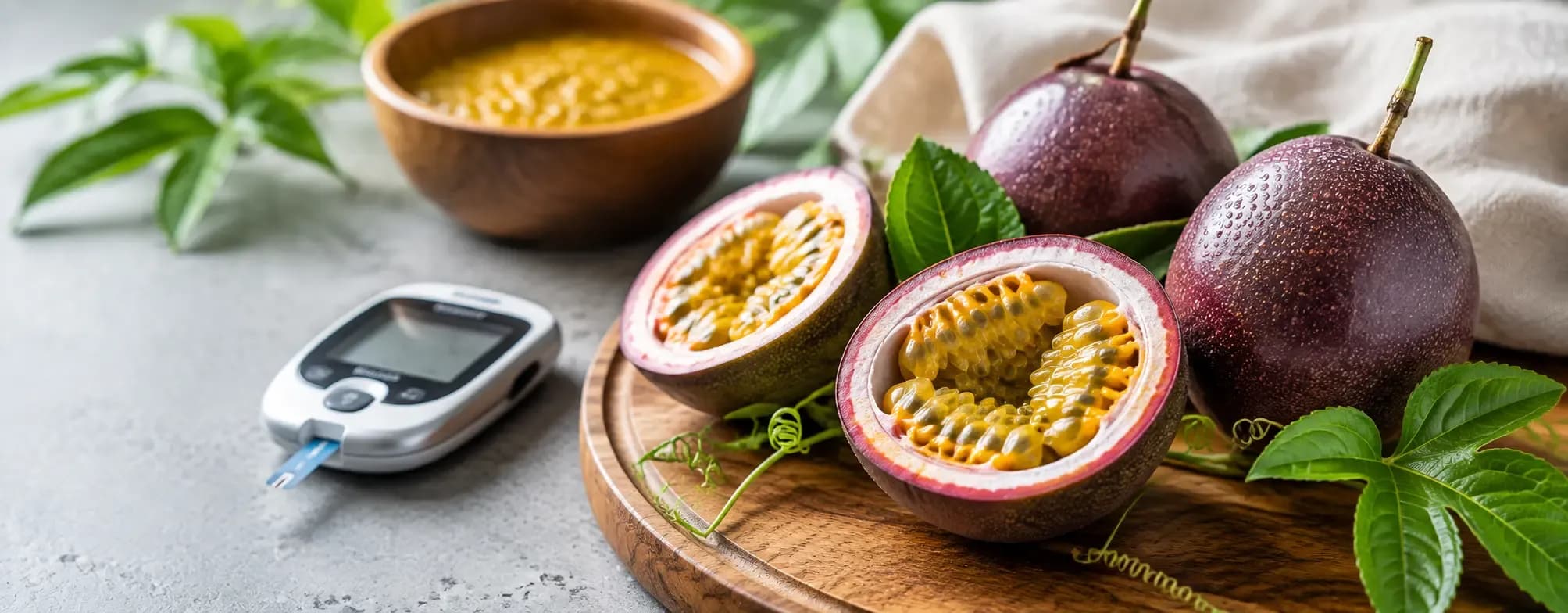
Last year, Avya visited Ooty and spotted a small, round fruit with a tough rind on a street stall. Inside, she found juicy, seed-filled pulp with a tangy-sweet flavour. Excited, she offered it to her grandfather, who hesitated: “I have diabetes. Can I eat this?” This made Avya wonder, Is passion fruit good for diabetes?
What is Passion Fruit?
Passion fruit is a tropical fruit with wrinkled purple or yellow skin. Inside, the pulp is juicy and full of crunchy seeds with a tangy-sweet flavour. It’s rich in fibre, vitamins (like vitamin C and A), minerals, and antioxidants. People typically consume it fresh, in smoothies, fruit salads, desserts, or as juice, often without added sugar.
Availability of Passion Fruit in India
India has the right climate for passion fruit, and it is grown mainly in:
- South India: Kerala, Tamil Nadu, Karnataka
- North-East & Hill States: Mizoram, Manipur, Nagaland, Sikkim
- Other Regions: Himachal Pradesh, Uttar Pradesh, Punjab, Andhra Pradesh (smaller scale)
You can also find it in supermarkets, online stores, and some fruit shops.
Why is Passion Fruit Expensive in India?
Passion fruit is generally costlier than common fruits like bananas, apples, or mangoes. Here is why:
- Exotic & Seasonal: It isn’t widely grown in India, so supply is limited and seasonal.
- Rarity in Local Markets: Often found in supermarkets, online stores, or speciality fruit shops, but not every fruit stall.
- Imported Varieties Cost More: Imported passion fruit from countries such as Thailand is more expensive than local varieties.
What is the Glycemic Index of Passion Fruit?
The glycemic index (GI) of passion fruit is around 30. A low glycemic index ( ≤ 55) indicates a slow and gradual rise in blood glucose levels rather than a sudden spike.
This makes passion fruit suitable for people with diabetes when eaten in moderation.
What is the Nutritional Value of Passion Fruit?
The nutritional value of passion fruit per 100 g is approximately estimated data from IFCT 2017*
| Nutrient | Amount |
|---|---|
| Energy | 97 kcal |
| Carbohydrate | 23.38 g |
| Total Fiber | 10.4 g |
| Protein | 2.2 g |
| Total Fat | 0.7 g |
Why Passion Fruit is Good for People with Diabetes?
- Low Glycemic Index (GI): Passion fruit has a GI of less than 30, meaning it causes a minimal and gradual rise in blood sugar, making it suitable for diabetes management.
- Fibre Content: Fibre content helps to slow sugar absorption, stabilise blood glucose, and promote fullness.
- Moderate Carbohydrates: Even though passion fruit tastes sweet, it contains a moderate amount of carbohydrates, so when eaten in proper portions, it does not cause a sharp rise in blood sugar levels.
- Nutrient-Dense: Rich in vitamin C, vitamin A, potassium, and antioxidants (flavonoids and polyphenols), supporting overall health and potentially improving insulin sensitivity.
- Hydration: High water content helps with hydration and keeps you full without adding extra calories or sugars.
What are the Low-Sugar Fruits to Include in a Diabetes Diet?
Passion fruit, which is less available in India, tends to be more expensive than common fruits. Therefore, for daily consumption, you can focus on low-sugar fruits that are locally available and affordable, such as:
- Jamun: Jamun, also known as Indian Blackberry. It is known for its anti-diabetic properties, and it has a GI of around 25. It helps to regulate blood sugar levels and improve insulin sensitivity.
- Guava: Guava is not only delicious but also packed with fibre, and its GI is around 24, which means it is safe and a good option for a person with diabetes. Guava is easily available year-round.
- Pears: Pears are called Naashpaati; their GI ranges from 30 to 42, and they are high in fibre and low in sugar. Another advantage is that pears contain a type of fibre called pectin, which promotes slow digestion and glucose absorption.
- Apples: An apple a day may help maintain blood glucose levels with a GI of around 38–40. One medium-sized apple is a suitable snack for individuals with diabetes, especially when eaten with the skin.
- Cherries: Cherries are among the lowest-GI fruits (22) and contain anthocyanins, which may support better blood sugar levels.
- Pomegranate: Pomegranates (Anar) are a rich source of antioxidants and have a low glycemic index of 18, making them a diabetes-friendly option.
- Indian Gooseberry (Amla): A local fruit, it is rich in vitamin C and has a low glycemic index, helping support better blood glucose control.
Other low-sugar foods for diabetes include plums, strawberries, oranges, kiwi, star fruit, blueberries, and ice apples.
How to Include Passion Fruit for a Person with Diabetes?
A few ways to enjoy passion fruit:
- Fresh and Whole: Cut a passion fruit in half and scoop out the juicy pulp. Enjoy it as a refreshing snack or mix it into your breakfast cereal or yoghurt.
- Salads: Sprinkle passion fruit seeds on salads to add a burst of flavour and a gentle crunch.
- Dressings: Combine passion fruit pulp with olive oil, vinegar, and seasonings to make tangy dressings that pair well with grilled chicken or fish.
Key Considerations for People with Diabetes
- Moderation is Key: Passion fruit offers health benefits, but it still contains natural sugars, making portion control essential.
- Focus on Whole Fruit: Eating the pulp and seeds provides more fibre and nutrients than just juice.
- Consult Your Doctor: Always talk to your doctor or registered dietitian before making dietary changes, particularly when managing diabetes.
Side Effects of Eating Passion Fruit
While passion fruit is generally safe, allergic reactions and gastrointestinal upset are the most common side effects, especially in individuals with latex sensitivity or when consumed in large amounts.
Conclusion
Passion fruit can be a diabetes-friendly fruit because of its low glycemic index and fibre content. Enjoy it in moderation.
While it may be more expensive and less available than local fruits, its unique taste and health benefits make it a good addition to your meals.
How PB Health Can Support You
When someone in your family needs medical care, you should not have to worry about what comes next or who will take care of each step.
At PB Health, we believe good healthcare depends on proper planning and regular follow-ups. Our doctors and care teams work together, supported by technology that helps track progress, organise follow-ups, and keep all information clear and accessible. From prevention to recovery, every stage is managed carefully so that nothing important is overlooked.
To learn more about our approach, visit the PB Health website.