


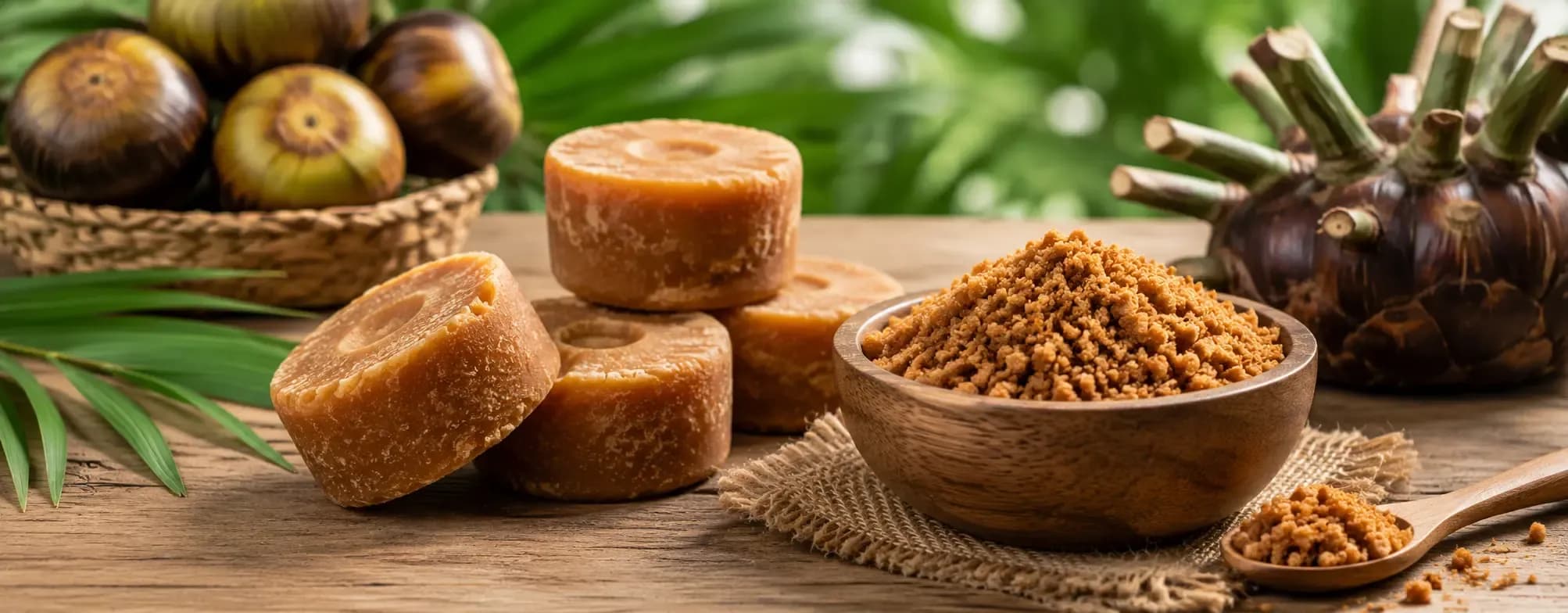
Palm sugar is often praised as a healthier alternative to refined sugar due to its natural origin and less processing, but is it truly a healthier option than refined sugar? Is palm sugar good for diabetes? Let us take a closer look to understand better.
What is Palm Sugar?
Palm sugar is a sweetener that is extracted from the sap of palm trees. In India, the most common varieties are coconut palm sugar, date palm sugar, and palmyra (taal/toddy) palm sugar.
The sap is collected, boiled, and allowed to crystallise into a solid or powder. It has a golden-brown colour and a caramel-like flavour.
Fact: Traditionally, in Ayurveda, palm sugar was used as a cooling agent and digestive aid, and it was believed to reduce fatigue and improve digestion.
What are the Types of Palm Sugar?
Not all palm sugars are the same, but all are forms of sugar. The main varieties include:
- Coconut Palm Sugar, which is extracted from flower sap, has a mild flavour.
- Date Palm Sugar is made from date palm sap, which has a darker and richer taste.
- Palmyra (Taal or Toddy Palm Sugar) is common in South India and aromatic.
Despite slight differences in taste and processing, their effects on blood glucose are similar.
What is Palm Sugar Glycemic Index?
The palm sugar glycemic index typically ranges between 35 and 50, depending on the type of palm and processing method. However, it still contains sucrose, glucose, and fructose, which raise blood sugar levels.
| Type of Palm | Approx. Glycemic Index (GI) | Effect on Blood Sugar |
|---|---|---|
| Coconut Palm Sugar | 35–40 | Considered low GI and releases glucose slowly. |
| Date Palm Sugar | 45–50 | Medium GI |
| Palmyra Sugar | 40–50 | Medium GI |
| Refined White Sugar | 64 | High GI causes a spike in blood sugar levels. |
What is the Nutritional Value of Palm Sugar?
Palm sap sugar contains small amounts of minerals but is primarily composed of sugars.
Macronutrients (per 100 ml of palm sap):
- Glucose: 0.49–86.90 g
- Fructose: 0.26–1.61 g
- Sucrose: 5.30–27.00 g
Micronutrients (per 100 ml of palm sap):
- Potassium (K): 65.28–1326.0 mg
- Sodium (Na): 2.85–117.5 mg
- Magnesium (Mg): 0.54–31.00 mg
- Calcium (Ca): 0.24–79.00 mg
These micronutrients in palm sap are present in very small amounts, whereas the body requires nutrients in meaningful quantities.
To meet daily nutrient needs using palm sugar would require consuming excess sugar, which is unhealthy.
Instead, choose nutrient-dense foods which provide these minerals without added sugar.
For example:
- Potassium: bananas, oranges, coconut water, spinach, sweet potato
- Magnesium: nuts, seeds, whole grains, legumes
- Calcium: milk, curd, paneer, ragi, sesame seeds
Palm sugar vs Palm jaggery
When it comes to diabetes, both palm sugar and palm jaggery are better than refined sugar because they have a low glycemic index. However, the difference between them is minimal.
Palm sugar has a slightly lower glycemic index (35–40) than palm jaggery (around 40–50), meaning it causes a slower rise in blood sugar.
Still, both are forms of sugar and can raise glucose levels if consumed in excess; it is best to avoid them altogether.
Palm Sugar and Diabetes
Palm sugar is not sugar-free and not diabetes-friendly.
Although it has a lower glycemic index than white sugar, it still contains sucrose, glucose, and fructose; therefore, it will raise blood sugar levels, especially when consumed regularly or in larger amounts.
For people with diabetes, reducing overall sugar intake is more important for effective diabetes management than simply switching from one type of sugar to another.
The World Health Organisation (WHO) recommends that, instead of relying on non-sugar sweeteners (NSS), people focus on reducing overall sugar intake by choosing foods with natural sugars, such as fruits, or by opting for unsweetened foods and drinks.
Non-sugar sweeteners do not provide important nutrients, and these are not necessary for a healthy, balanced diet. Gradually getting used to less sweetness, even in naturally sweet foods, can help improve blood sugar control and support overall health.
Also Read: From Sweet to Smart: The Guide to Sugar Substitutes for Diabetes
Conclusion
Palm sugar is a sweetener with a lower glycemic index than refined sugar. However, it mainly contains sugar and can raise blood glucose levels.
For people with diabetes:
- Palm sugar is not diabetes-friendly.
- It may be slightly better than white sugar, but the difference is minimal.
- It should be avoided or consumed only in very small amounts.
How PB Health Can Support You
When someone in your family needs medical care, you should not have to worry about what comes next or who will handle each step.
At PB Health, we believe good healthcare depends on proper planning and regular follow-ups. Our doctors and care teams work together, supported by technology that helps track progress, organise follow-ups, and keep all information clear and accessible. From prevention to recovery, every stage is managed carefully so that nothing important is overlooked.
To learn more about our approach, visit the PB Health website.