


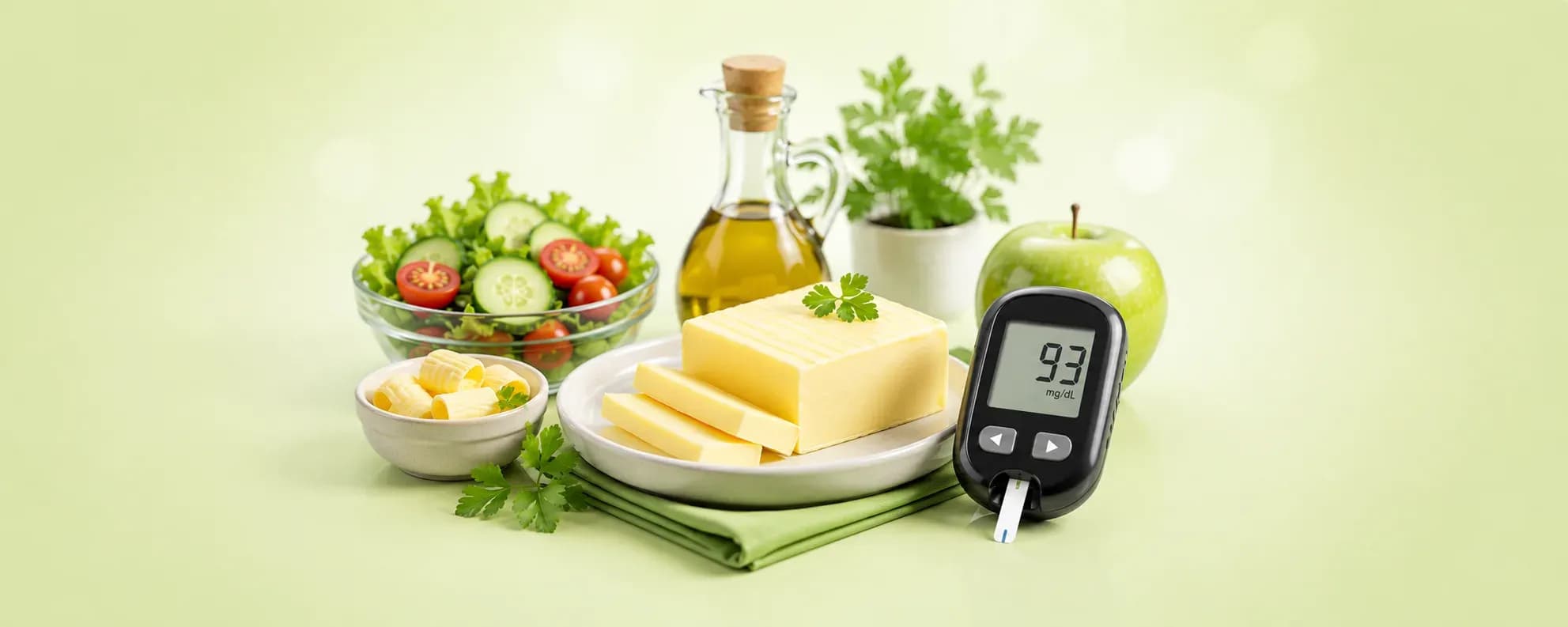
In many Indian homes, butter quietly finds its way onto the plate, melting over a hot roti, stirred into dal, or scraped fresh from a bowl of homemade curd. For years, it has been seen as pure, comforting, and harmless. When someone is diagnosed with diabetes, the first question often sounds simple: Is butter good for diabetes?
What is Butter?
Butter, or makkhan, is a dairy fat obtained from milk. Butter is traditionally prepared by churning curd (dahi) rather than directly from cream. In many Indian households, milk is first boiled and then fermented into curd.
This curd is then churned, separating the fat from the liquid (buttermilk). The fat that rises to the top is collected as butter, also known as makkhan.
Fresh butter consists of fat, water, and milk solids, which is why it feels soft and creamy. Even when butter is homemade and free from chemicals, it is still high in saturated fat.
When you consume it frequently or in large amounts, it can make it harder for the body to use insulin effectively. For this reason, people with diabetes should eat butter only in small amounts occasionally or avoid it completely.
Butter is generally misunderstood for its nutritional content because it does not cause a quick rise in blood sugar; many people believe it is safe or even healthy.
However, managing diabetes is not just about avoiding sugar spikes. From a nutritionist’s perspective, butter should be treated with caution, not as a comfort food.
What is the Glycemic Index of Butter?
Butter has a glycemic index (GI) of 0 because it contains no carbohydrates. This means:
- It does not raise blood sugar directly, and it does not cause post-meal glucose spikes.
- However, GI alone does not determine whether a food is good for diabetes.
What is the Nutritional Value of Butter?
The nutritional value of butter per 100 g is approximately, (data from IFCT 2017)*
| Nutrient | Amount |
|---|---|
| Energy | 725kcal |
| Carbohydrate | 0.4 g |
| Protein | 0.3 g |
| Total Fat | 80 g |
Butter is a calorie-dense food made almost entirely of fat.
One teaspoon of butter (about 5 g) provides approximately:
- 35–36 kcal
- 4 g of total fat (2.5–2.7 g of saturated fat)
- Negligible carbohydrates
- Negligible protein
Because butter contains almost no carbohydrates, it does not directly raise blood sugar levels. However, excessive intake, especially of saturated fat, may contribute to insulin resistance over time and should be consumed in smaller amounts or avoided completely, particularly by individuals with diabetes or heart health concerns.
Why Saturated Fat Matters in Diabetes?
Saturated fat is a type of fat found in foods like butter. When we eat too much of it, the body does not use insulin properly. This makes it harder for glucose to move from the blood into cells, which can increase blood glucose over time.
Too much saturated fat can also raise bad cholesterol, which can harm the heart. People with diabetes already have a higher chance of getting heart problems, so this makes it more dangerous.
Even though butter does not raise blood sugar immediately, eating it regularly can harm the body over time and make diabetes harder to control in the long run.
Is Butter Good for Diabetes?
Butter is not good for people with diabetes. Eating a minimal amount occasionally may not cause harm, but it does not help with diabetes either.
Doctors and nutritionists usually do not suggest butter as the main fat for people with diabetes. It should be eaten only rarely and in small amounts.
If You Still Choose to Eat Butter:
If someone with diabetes eats butter, it should be very little, only ¼ to ½ teaspoon. Butter should be eaten only sometimes, not every day. It is preferable to choose unsalted homemade butter rather than packaged butter.
Additionally, butter should not be consumed with white bread, cakes, or bakery foods, as these foods can cause blood sugar to rise quickly.
What are the Better Fat Choices for a Diabetes-Friendly Diet?
For people with diabetes, choosing the right type of fat is important. Healthy fats help the body use insulin better and protect heart health. These fat sources are generally safer and healthier than butter and other saturated fats.
- Nuts: Almonds, walnuts, and peanuts are good sources of healthy fats. They also contain fibre and protein, which help control hunger and support better glycemic control when consumed in small quantities.
- Seeds: Flaxseeds, chia seeds, pumpkin seeds, and sunflower seeds provide healthy fats and support digestion. When eaten in moderation, they also help maintain heart health.
- Cold-Pressed Vegetable Oils: Mustard oil, groundnut oil, rice bran oil, and olive oil are better options for cooking. These oils contain more unsaturated fats, which are healthier for people with diabetes. They should be used sparingly.
- Fat from Whole Foods: Foods such as thick curd, buttermilk, and paneer (in small amounts) provide fat, protein, and calcium. This makes them a better choice than adding extra fats to meals.
What Nutritionists Recommend Overall?
- Focus on the quality and quantity of fat.
- Avoid excess saturated fat.
- Prioritise unsaturated fats.
- Balance fats with fibre, protein, and physical activity.
Conclusion
Butter has a glycemic index of 0; however, because it is high in saturated fat, it is not a suitable choice of regular fat for people with diabetes.
Eating it often can worsen insulin resistance, so it should be limited to very small, occasional amounts, while healthier fats should come from whole foods and unsaturated sources.
How PB Health Can Support You?
When someone in your family needs care, you should not have to worry about what happens next or who is responsible for each step.
At PB Health, we believe wellness requires continuity, coordination, and consistent follow-through. Our doctors and care teams work together, supported by technology that helps track progress, organise follow-ups, and keep information clear and accessible. From prevention to recovery, every stage is managed thoughtfully so that nothing important is missed and nothing is left unclear.
To understand more about our approach, you can visit our website, PB Health.