


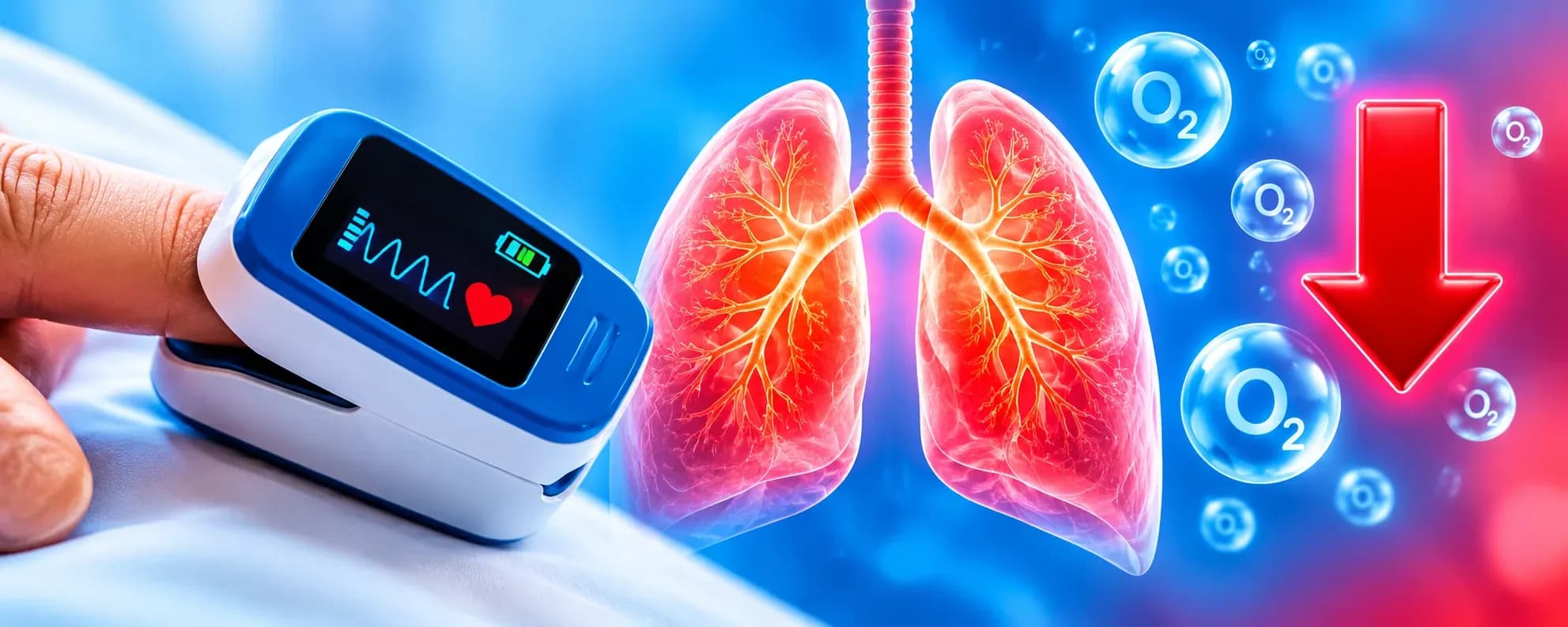


A pulse oximeter reading can change in seconds, but not every low number means the same thing. If your oxygen saturation falls below 90%, however, you shouldn't ignore it. A persistently low reading can indicate the body isn't getting enough oxygen and may require urgent medical assessment.
Understanding what the reading means, checking it correctly, and knowing when to seek medical help can help you respond quickly and appropriately when oxygen levels are low.
What Is a Normal Oxygen Level?
Blood oxygen saturation, usually shown as SpO₂ on a pulse oximeter, indicates the percentage of haemoglobin carrying oxygen.
For most healthy people at sea level:
- 95% to 100%: Generally considered a normal range
- 90% to 94%: Lower than expected and may require medical assessment, particularly if symptoms are present
- Below 90%: Concerning and can represent significant hypoxaemia, especially when persistent
What Does an Oxygen Level Below 90 Mean?
An oxygen saturation below 90% means the blood may not be carrying enough oxygen to meet the body's needs. Medical literature commonly uses SpO₂ below 90% on room air as a marker of acute hypoxaemic respiratory failure.
This does not tell you the cause by itself. Low oxygen can occur with conditions such as:
- Pneumonia or other serious lung infections
- Asthma or a severe asthma attack
- Chronic obstructive pulmonary disease (COPD)
- Certain heart conditions
- Pulmonary embolism
- Severe respiratory infections
- Other causes of impaired breathing or oxygen exchange
When Is It an Emergency?
If a reliable reading remains below 90%, particularly on room air, treat it as a medical emergency and seek urgent medical care. WHO guidance has similarly advised immediate emergency help for readings below 90% in patients being monitored for severe respiratory illness.Do not wait for the number to fall further if the person is also experiencing warning signs.
Seek emergency help if low oxygen is accompanied by:
- Severe difficulty breathing
- Blue or grey lips, face or fingertips
- Chest pain or pressure
- New confusion or unusual drowsiness
- Difficulty staying awake
- Fainting or collapse
- Rapid worsening of breathing
- A person becoming difficult to wake
What Should You Do If the Reading Is Below 90%?
A single low reading can sometimes result from an incorrectly positioned probe or another measurement problem. Before panicking, check the reading again, but do not delay emergency care when serious symptoms are present.
1. Check the reading again:
Make sure:
- The person is sitting still and resting
- The finger is warm
- The probe is positioned correctly
- There is no nail polish or artificial nail interfering with the measurement
- You wait for the number to stabilise and show a consistent pulse signal
If the reading remains below 90%, seek urgent medical attention.
2. Look at the person, not just the number: A pulse oximeter is only one part of the assessment. The FDA advises people not to rely solely on the device and to consider symptoms and how they feel as well.For example, someone with an SpO₂ of 92% who is struggling to breathe may need more urgent attention than the number alone suggests.
3. Follow the person's existing medical plan: If someone has a diagnosed lung or heart condition and has been given specific oxygen or monitoring instructions, follow their doctor's plan.
Do not start or change oxygen therapy on your own unless it has been prescribed and you have been instructed how to use it.
How to Use a Pulse Oximeter Correctly
A pulse oximeter clips onto a fingertip and estimates oxygen saturation and pulse rate.
For a more reliable reading:
- Rest for a few minutes before checking.
- Keep the hand warm.
- Place the device securely on the finger.
- Keep the hand still.
- Wait for a stable reading.
- Record the reading along with any symptoms.
Is 90% to 94% Also Concerning?
Yes. Although it is not necessarily an emergency for everyone, a reading between 90% and 94% is lower than the usual range for most healthy people.
If this is a new finding, keeps recurring, or is accompanied by symptoms such as breathlessness, chest discomfort, weakness, or confusion, contact a healthcare professional promptly.
WHO guidance for patients at risk of severe respiratory illness recommends seeking medical care when oxygen saturation is between 90% and 94% because it can signal early deterioration.People with known chronic respiratory disease may have an individually prescribed target, so their doctor's advice should take priority.
Why You Should Not Ignore a Low Oxygen Level
The brain, heart, and other organs need oxygen to function properly. A sustained reduction in oxygen can become serious, particularly when it is caused by an acute illness.
At the same time, an isolated reading should not automatically be interpreted as a diagnosis. A healthcare professional may need to examine the person, check their breathing and circulation, and perform additional tests to identify the underlying cause. The key point is simple: a persistent reading below 90% needs urgent medical attention, especially if you have symptoms.
How PB Health Can Support You
If you are concerned about a persistently low oxygen reading, PB Health Hospital, IFFCO Chowk, Gurgaon, can help you connect with the right doctor for evaluation through its emergency medicine services. A doctor can review your symptoms, medical history, and reports; assess possible causes; and guide you on whether you need further testing or urgent care.
Conclusion
A normal oxygen level is generally around 95% to 100% for most healthy people at sea level. A reading below 90% can indicate significant hypoxaemia and should be treated as an urgent situation, particularly when accompanied by breathing difficulty, chest pain, confusion or bluish skin.
Check the reading correctly, watch for symptoms, and don't rely on the pulse oximeter number alone. When oxygen levels remain low, prompt medical assessment is safer than waiting for the reading to improve on its own.