

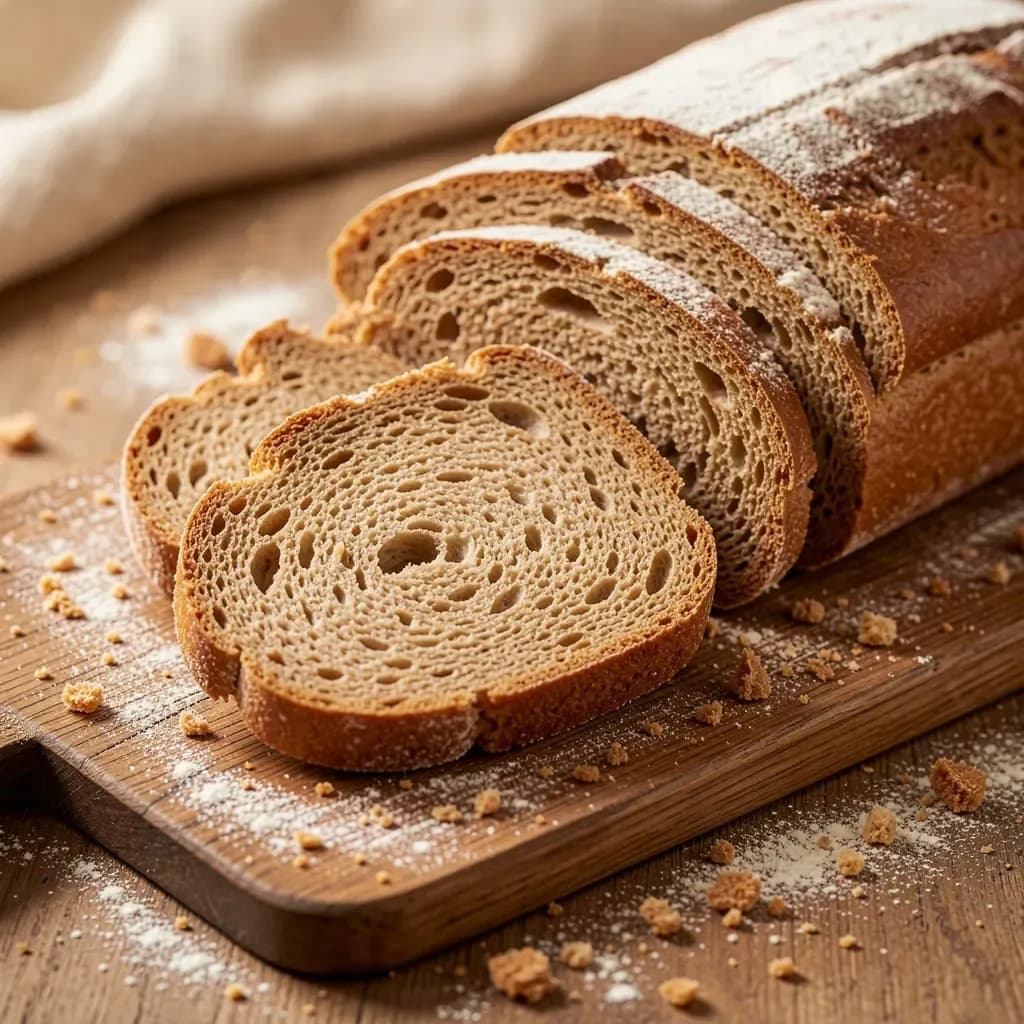
We are pretty sure almost everyone has enjoyed bread in some form - be it sandwiches, bread pakodas, or even the delicious shahi tukda. We all love bread, don’t we?
But does the brown colour of brown bread actually mean it is healthier? And if you’re trying to lose weight, is it the better choice compared to white bread?
You will find all your answers in this blog! 😊
The Reality of Brown Bread: Not All It Seems to Be
Do you know the secret to really knowing how good a food item is? It’s not about looking at the fancy front of the packet, but about flipping it over and reading what’s on the back! Yes, that’s where you’ll know the real truth about any item. And the same goes for bread.
So, to give you a full picture of brown bread, we did the hard work for you😊. We checked out the ingredient lists of some of the most popular brown breads available across many local shops, and here’s what we found!
| Category | Ingredients |
|---|---|
| Main Ingredients |
1. Refined Wheat Flour (Maida) = 50 - 80%* 2. Whole Wheat Flour (Atta) = 20 - 50%* 3. Water, Yeast |
| Sweeteners & Fats |
1. Sugar = 2 - 6% 2. Bread Margarine (for softness and moisture) 3. Palm oil or Vegetable/edible oil |
| Preservatives |
Calcium Propionate, INS 282 (keeps bread fresh, prevents microbial growth) |
| Salt & Flavor Enhancers | Iodized Salt, Common Salt, Caramel Flavour (adds flavour and colour) |
| Texture & Softness Agents |
Emulsifiers (INS 471, 472e, 481), Bread Improvers (INS 170, 1100, 300, 510) (makes bread softer, improves dough strength) |
| Others |
Wheat Bran, Soya Flour (adds fiber and texture), Ascorbic Acid (Vitamin C, INS 300) (improves texture and volume) |
NOTE: This is an average - the amounts of ingredients like flour, sugar, and yeast used vary across different brands.
Notice something surprising? Although the packaging might highlight "wheat flour" as a primary ingredient, it still contains refined wheat flour (maida), a highly processed ingredient that’s less beneficial for weight loss.
● Maida contains gluten, which gives the brown bread its soft texture and structure. However, its high glycemic index causes rapid spikes in blood sugar, which, in turn, makes it bad for weight-loss goals.
● “Bread isn’t supposed to be sweet, so why would it have added sugar, right?” Well, not quite! Added sugar is actually a big concern.
● Sugar not only adds calories but also undergoes caramelisation during baking, giving brown bread its brown colour. This colour can be misleading, leading people to believe the bread is made purely from whole wheat or atta, when in reality it is a combination of maida, sugar, and colour additives (in some brands). Because of this, we’re often drawn to its “healthy” look without actually knowing it's the opposite.
● As shown in the table, oils like palm oil are commonly used in bread to make it soft and moist while also extending its shelf life, and they are not as expensive as other oils. But during baking at very high temperatures, edible oil can undergo specific chemical changes, including oxidation and the potential formation of harmful compounds, depending on the baking conditions.
● This makes it an unhealthy choice, as it contains fats that may increase the risk of heart problems and weight gain.
● Now, let us pause here and think about what you use when making roti, chapati, or paratha at home: ghee or a good-quality edible oil, both of which we choose ourselves, and both of which can be healthier options when used in moderation compared to the palm oil used in most brown bread.
In fact, a garam roti, even without any ghee or oil, still tastes great with just gravy wali sabzi or sookhi sabzi. At the same time, bread without spreads like jam/butter/mayonnaise or toppings like omelette/cutlets, etc., feels ‘incomplete.’
So, doesn’t a roti sound like the smarter, more wholesome choice for your meals? Think about it.
To sum up, although brown bread is marketed as a healthier option, it often contains ingredients that don’t support good health or weight loss.
Why Is Roti a Better Choice than Brown Bread?
So, now we know that brown bread is often made with refined flour (maida), added sugar, and sometimes colour additives, making it quite similar to white bread despite its “healthy” appearance. But there is another aspect to think about when choosing between roti and bread - freshness.
● Bread is usually made a few days before it reaches the store, and then it sits in your fridge for a few more days before you finish it. On the other hand, roti is made fresh at home, and even if kept overnight, it retains its nutrients.
● Now, you might say that you use bread because it is convenient. So here is something worth noting: nowadays, you can even find ready-made, packed rotis in smaller supermarkets. These aren’t the frozen ones but fresh options that make roti just as convenient as picking up a loaf of bread!
So, if you have been choosing brown bread purely for convenience, fresh-packed rotis are a smarter, healthier option you can switch to.
And here’s the best part - rotis can easily replace bread in most dishes! As roti wraps instead of sandwiches, roti-besan pakodas over bread pakodas, and doodh roti will beat shahi tukda any day. Just get creative and see how versatile rotis can be!
What is the Nutritional Value of Brown Bread?
Here’s a look at the nutritional breakdown of a popular brand of brown bread per 100g: We found that the calorie and carbohydrate content in both brown and white bread are pretty similar, meaning brown bread doesn’t offer a significant advantage for weight loss.
The difference in dietary fiber is minimal, and while fiber is essential for a weight-loss diet, 3 grams per 100 grams isn’t really high! You might not be getting as much fiber as you think.
| Nutrient | Nutritional value* (per 100 grams) | Brown Bread | White Bread | Atta Bread | Other Breads (Garlic Bread, Butter Bread, Milk Bread) | Roti |
|---|---|---|---|---|---|---|
| Equivalent Quantity | 1.25 - 2.5 Slices | 1.25 - 2.5 Slices | 1.25 - 2.5 Slices | 1.25 - 2.5 Slices | 2 - 2.5 Roti | |
| Energy (Kcal) | 260 - 300 | 250 - 260 | 250 - 260 | 260 - 320 | 175 - 250 | |
| Protein (gm) | 8 - 10 | 7 - 8 | 8 - 9 | 8 - 10 | 5 - 7 | |
| Carbohydrates (gm) | 53 - 57 | 54 - 55 | 52 - 53 | 52 - 57 | 37 - 50 | |
| Total Sugar (gm) | 4 - 6 | 2 - 3 | 2 - 3 | 1 - 20 | 0 | |
| Total Fat (gm) | 3 - 4 | 1 - 2 | 3 - 4 | 1 - 6 | 1 - 2 (recipe dependent) | |
| Total Fiber (gm) | Unknown | Unknown | Unknown | 2 - 3 | 2 - 3 | |
| Sodium (mg) | 320 - 520 | 400 - 410 | 430 - 440 | 370 - 620 | 10 - 15 |
_* All the values provided for bread are based on commercially available brands and may vary depending on the specific brand and product.
- Two bread slices weigh 40-80 grams, while a medium roti weighs 40-50 grams. For 100 grams, this equals about 1.25 to 2.5 slices of bread or 2 to 2.5 rotis._
Why Does Roti Make You Feel Fuller Than Bread?
Roti keeps you full for longer because it is prepared with whole wheat flour. It is rich in fiber and nutrients. It digests slowly, gives steady energy, and helps you feel satisfied for more time.
But bread often contains refined flour, added oils, sugars, and preservatives. These can cause quick blood sugar spikes, leaving you hungry sooner. As a result, you may end up eating more slices of bread (1.25 to 2.5 slices for 100 grams) to feel full compared to rotis (2 to 2.5 rotis for 100 grams). This means adding more calories, which isn’t ideal if you’re trying to manage your weight.
And roti, even if it is made overnight and you have it in the morning, just lightly heating it makes it a much healthier option.
Is Brown Bread Good for Weight Loss?
No, It isn’t.
But if you enjoy brown bread, consider it an occasional treat, much like mithai (sweets), rather than a daily staple. Make an informed choice and restrict yourself to the minimum number of slices.
A great tip is to pair each slice with fresh, fibre-rich veggies. This way, you’ll add nutrients, fiber, and flavour, making your meal much healthier without relying too heavily on the bread itself.
How to Choose Weight Loss & Diet-Friendly Bread
Bread can still be part of a weight-loss diet if chosen wisely and eaten in moderation. Here's how:
- Check the Ingredients: Look for whole wheat or whole grains listed first. Avoid options listing refined or enriched flour (maida).
- Avoid Added Sugars: Avoid bread with added sugars, such as high fructose corn syrup or malt. Opt for low - or no-sugar varieties.
- Look for Fiber: To help you stay full longer, choose bread with at least 0.4 - 1.2 grams of fiber per slice.
- Minimize Additives: Avoid breads with long lists of preservatives or artificial additives. Go for natural, minimally processed options.
- Verify Whole-Grain Claims: Don’t be fooled by brown-coloured bread. Check labels to ensure it’s truly whole grain or whole wheat.
- Pick Smaller Slices: Smaller slices or 100% whole-grain breads are lower in calories and better for weight management.
Enjoy bread mindfully by pairing it with sautéed veggies or paneer for a healthier twist.
Other Types of Bread Better Suited for Weight Loss
If you're looking for healthier alternatives to traditional brown and white bread, here are some options that are commonly available in our local market/grocery shops/hypermarkets and can be easily added to your diet:
1. Whole Wheat Bread (100% Whole Wheat or Atta Bread)
Choose bread labelled "100% whole wheat" or "atta bread." Made entirely from whole grains, it’s high in fiber, helping you stay fuller for longer, aiding digestion, and stabilizing blood sugar for weight management.
2. Multigrain Bread
Multigrain bread contains extra fibre, vitamins, and also minerals. It is made from a mix of grains like oats, ragi, and jowar. It's nutrient-rich, which helps to reduce cravings, improve digestion, and support healthy weight loss over time.
3. Rye Bread
In specialty stores, you can get rye bread, which is generally dense, high in fiber, and has a low glycemic index. It helps you stay full longer, avoids sudden blood sugar spikes, and may be easier to digest for some people because it has less gluten.
4. Oats Bread:
Oat bread contains whole oats and wheat. It also contains beta-glucan, which helps control hunger and stabilize blood sugar. It is a healthy option for breakfast or even as a snack while managing weight.
5. Sprouted Grain Bread
Bread is nutrient-dense and made from sprouted grains. It is easier to digest, high in fiber, supports a balanced diet, and can help control cravings.
6. Bran Bread
Bran bread, made with wheat flour and bran, is rich in fiber to support digestion and keep you fuller longer. It is a great option for managing hunger and aiding weight loss.
7. Milk Bread (Whole Wheat or Atta Version)
Check for milk bread made with whole wheat or atta as the primary ingredient. While it retains the soft texture of milk bread, the added fiber from whole wheat makes it a slightly better choice than refined white milk bread. However, check the label carefully to ensure whole wheat is the main ingredient, as not all "atta" milk bread may meet this standard.
NOTE: Always read the ingredient label, as bread ingredients (even if they are 100% atta bread) vary by brand and region. If unlabelled (like local pao, ladi pav), you can't be sure what's in it. Look for whole grains or whole wheat as the first ingredient to make healthier choices.Brown bread may look healthy, but it is not always the best choice for weight loss. Many brands still contain refined flour, added sugar, and unhealthy fats. That’s why reading the ingredient label is important.
If you are trying to lose weight, fresh whole-wheat roti is often a better and more wholesome option. And if you enjoy bread, choose 100% whole grain varieties and eat them in moderation.
Remember, weight loss is not about completely avoiding foods and it’s about making smarter choices every day.
How PB Health Can Support You?
When someone in your family needs care, you shouldn’t have to worry about what happens next or who will manage each step.
At PB Health, we believe good healthcare requires proper planning and regular follow-up. Our doctors and care teams work together using technology to track progress, schedule follow-ups, and keep all information clear. From prevention to recovery, every step is handled carefully so nothing important is missed.
To learn more about our approach, visit the PB Health website.