


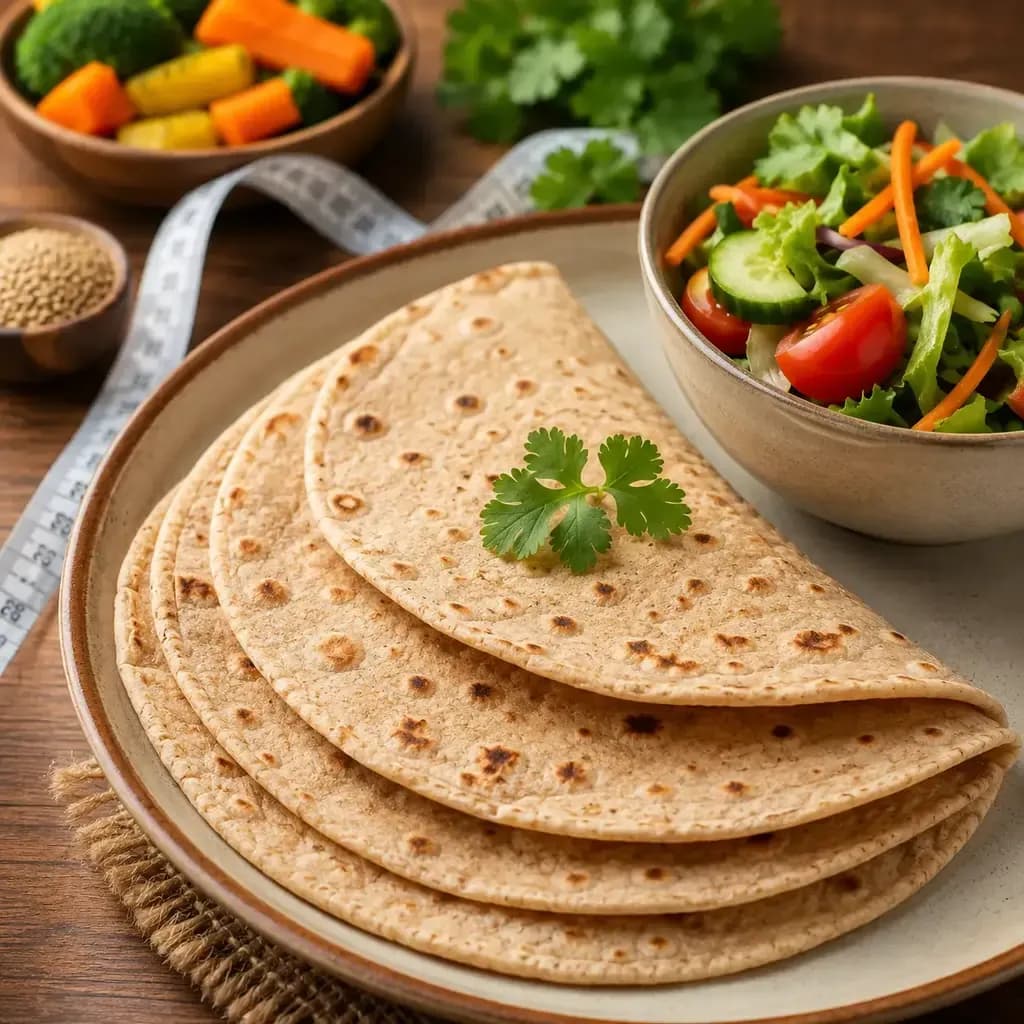
Chapati has been a part of our staple diet for ages. But for many years, several held carbohydrate-rich foods like chapati as a culprit for their inability to lose weight despite exercise.
However, one must understand that chapati is not responsible for their inability to lose weight. Unlike the common misconception of chapatis being one of the main culprits for weight gain, if chapati is consumed in moderation with a combination of other nutritious foods, it is a good source of fibre.
It is the fibre that helps us feel full.
Generally, a small change in lifestyle and eating habits can work wonders. Instead of completely giving up on your staple food, chapatis, ensure that you add wheat bran or other healthy grains like jowar, bajra, oats, or besan to your wheat flour to make it healthier and more nutritious.
The diet, which includes chapati for weight loss, is a nutritious and balanced way of eating that helps in losing weight without following a restrictive diet.
This weight-management diet is rich in fibre, vitamins, minerals, and antioxidants. The presence of these nutritious elements can help you feel fuller for longer, while reducing cravings and boosting your metabolism.
The diet that includes chapati for weight reduction can be an effective strategy for accomplishing your weight loss goals with the right preparation and dedication to good eating.
The goal of this article is to offer a thorough explanation of how many calories are in chapati and how to use that information to lose weight quickly.
Let us now understand more about India chapati.
What is an Indian Chapati?
Indian chapati or flatbread is an integral part of Indian cuisine. Although roti is made in Pakistan, Nepal, and a few other Asian countries, it is much more popular in India.
Chapati is one of the most popular Indian flatbreads.
Chapati is traditionally made from wheat flour, water, and salt used to make a soft dough. It is then rolled out thinly and grilled/steamed until it becomes flaky and crispy.
It is also a traditional breakfast food, enjoyed with curries, dal, vegetables, and pickles.
Some variations of the chapati may include the addition of small amounts of oil or ghee (clarified butter), milk, or spices to add flavour and moisture to the wheat flour dough.
Sometimes, to make the chapati more nutritious, people change the grain of the chapati. This grain change of rotis can help you prepare chapati for weight loss.
What is the Nutritional Value of Chapati?
Here is one chapati (27 g) nutritional breakdown, according to the USDA:
| Nutrient | Nutritional Value |
|---|---|
| Calories | 81 kcal |
| Total Fat | 2.5 g |
| Salt | 80 mg |
| Potassium | 53 mg |
| Carbohydrates | 12 g |
| Protein | 2.1 g |
| Fibre | 2.6 g |
Typically, dry chapattis (without ghee or oil) do not have high fat and cholesterol content. Also, they have high fibre content, and they also contain vitamins and minerals such as vitamins B1, B3, B5, B6, B9, and E. In addition, they also contain iron and magnesium.
However, one must note that the nutritional contents of a chapati can vary depending on the type of flour used and the cooking method.
For example, ghee (clarified butter) or oil is used in making thicker chapatis, but water can also be used if you prefer something lighter. Also, the chapatis made on a grill or Tawa (flat pan), will have a slightly different nutritional value than those cooked in an oven or over a fire.
So if you have incorporated a diet that has chapati for weight loss, kindly ensure that it does not contain any ghee or oil.
Types of Chapati
Chapati, a staple in many diets, comes in various types, each offering unique flavors and nutritional benefits. Here's a look at some common varieties:
| Type of Chapati | Main Ingredient | Key Features |
|---|---|---|
| Whole Wheat Chapati | Whole wheat flour | Traditional, high in fibre and nutrients |
| Multigrain Chapati | Blend of grains (barley, millet, oats) | Higher in fibre and nutrients |
| Missi Roti | Wheat flour, gram flour | North Indian, spiced for flavor |
| Bajra Roti | Millet flour | Gluten-free, high in protein, fibre, and minerals |
| Jowar Roti | Sorghum flour | Gluten-free, rich in protein and fibre |
| Ragi Roti | Ragi (finger millet) flour | High in calcium and iron, supports bone health and metabolism |
Each type of chapati offers distinct health benefits and can be selected based on dietary needs, preferences, and nutritional goals. Consult with your dietician about what suits you best according to your diet plan.
7-Day Chapati Diet Plan for Weight Loss
Here's how you can incorporate chapatis into your meals for a week:
Day 1
● Breakfast: 1 whole wheat chapatis with low-fat paneer bhurji and a side of cucumber salad.
● Lunch: 1 multigrain chapatis with mixed vegetable curry and a bowl of dal.
● Dinner: 1 bajra rotis with grilled chicken and a green salad.
Day 2
● Breakfast: 1 jowar rotis with egg scramble and a glass of buttermilk.
● Lunch: 1 ragi roti with chickpea curry and steamed broccoli.
● Dinner: 1 whole wheat chapatis with fish curry and stir-fried vegetables.
Day 3
● Breakfast: 1 missi roti with low-fat yogurt.
● Lunch: 1 multigrain chapati with tofu curry and a side of mixed greens.
● Dinner: 1 whole wheat chapati with kidney bean curry and a cucumber tomato salad.
Day 4
● Breakfast: 1 whole wheat chapatis with almond butter.
● Lunch: 1 bajra rotis with vegetable stir-fry and lentil soup.
● Dinner: 1 ragi rotis with paneer tikka, mint chutney and salad.
Day 5
● Breakfast: 1 jowar rotis with avocado and poached eggs.
● Lunch: 1 whole wheat chapatis with dal and a side of raw papaya salad.
● Dinner: 1 multigrain chapati with grilled mushrooms and a spinach salad.
Day 6
● Breakfast: 1 missi roti with peanut butter.
● Lunch: 1 ragi roti with mixed dal and roasted beetroot.
● Dinner: 1 whole wheat chapati with chicken stew and salad.
Day 7
● Breakfast: 1 bajra roti with sabzi and mixed nuts.
● Lunch: 1 multigrain chapati with fish curry and a side of sautéed greens.
● Dinner: 1 whole wheat chapati with mixed vegetable curry and a side of raita.
Besides this diet plan, remember to stay hydrated and adjust portions according to your dietary needs and activity level.
How many Chapatis should be eaten in a Day to Lose Weight?
Generally, a small chapati contains around 81 calories. So, if your lunchtime calorie intake is 300 calories, you can have two chapatis that will be around 160 calories, and the remaining calories can come from vegetables and salad that you eat along with the chapatis.
You must always remember that not only chapatis but also the vegetables and fruits you consume contain some amount of carbs.
In other words, the number of wheat rotis you can eat each day depends on how many calories you consume. For weight loss, four chapatis per day are recommended.
If you follow intermittent fasting and are considering consuming 3 chapatis during lunch, you must consider the calorie intake by calculating how many calories 3 chapatis have, along with the calories in the vegetables and salad you consume.
If the calorie intake exceeds 350 calories, try to reconsider your chapati intake.
Which Roti is Best for Weight Loss?
While we Indians enjoy a variety of rotis made from different grain flours, from the traditional wheat flour roti to healthy grain options like millet, ragi, jowar, bajra and oats. While all of these rotis are healthy, Bajra rotis are considered the healthiest because they are very nutritious.
Bajra is high in fibre, which can help improve your digestion by providing lots of bulk to your diet. Bajra also has a low glycaemic index and helps regulate blood sugar levels.
Bajra bakes into thin, crisp rotis, perfect for breakfast and other light meals.
How to Lose Weight with Chapati?
Losing weight with chapati involves more than just switching flour types; it's about making mindful choices and adjustments to your overall diet. Here are some tips:
● Portion Control: Stick to one or two chapatis per meal to keep your calorie intake in check.
● Choosing Healthy Fillings and Toppings: Pair chapatis with high-protein and fibre-rich foods like lentils, grilled vegetables, or lean meats instead of high-calorie options.
● Opt for Healthy Cooking Methods: Avoid using too much oil or ghee when cooking chapatis. A non-stick pan can help minimise the need for added fats.
● Incorporate Whole Grains: Use flours made from whole grains to increase the fibre content of your chapatis, which can help you feel full and satisfied for longer.
● Stay Consistent: Incorporate chapatis into a balanced diet that includes a variety of nutrients. Combine this with regular physical activity for effective weight loss.
By following these strategies, chapatis can be a part of a healthy weight loss diet, offering both nutrition and satisfaction without giving up on flavours.
So what are you waiting for? It’s time to say bye-bye to those stubborn fats and say hello to a much fitter you 🙂
How Can PB Health Support You?
When someone in your family needs medical care, you shouldn’t have to worry about what happens next or who will manage each step.
At PB Health, we believe good healthcare requires proper planning and regular follow-up. Our doctors and care teams work together using technology to track progress, schedule follow-ups, and keep all information clear. From prevention to recovery, every step is handled carefully so nothing important is missed.
To learn more about our approach, visit the PB Health website.