


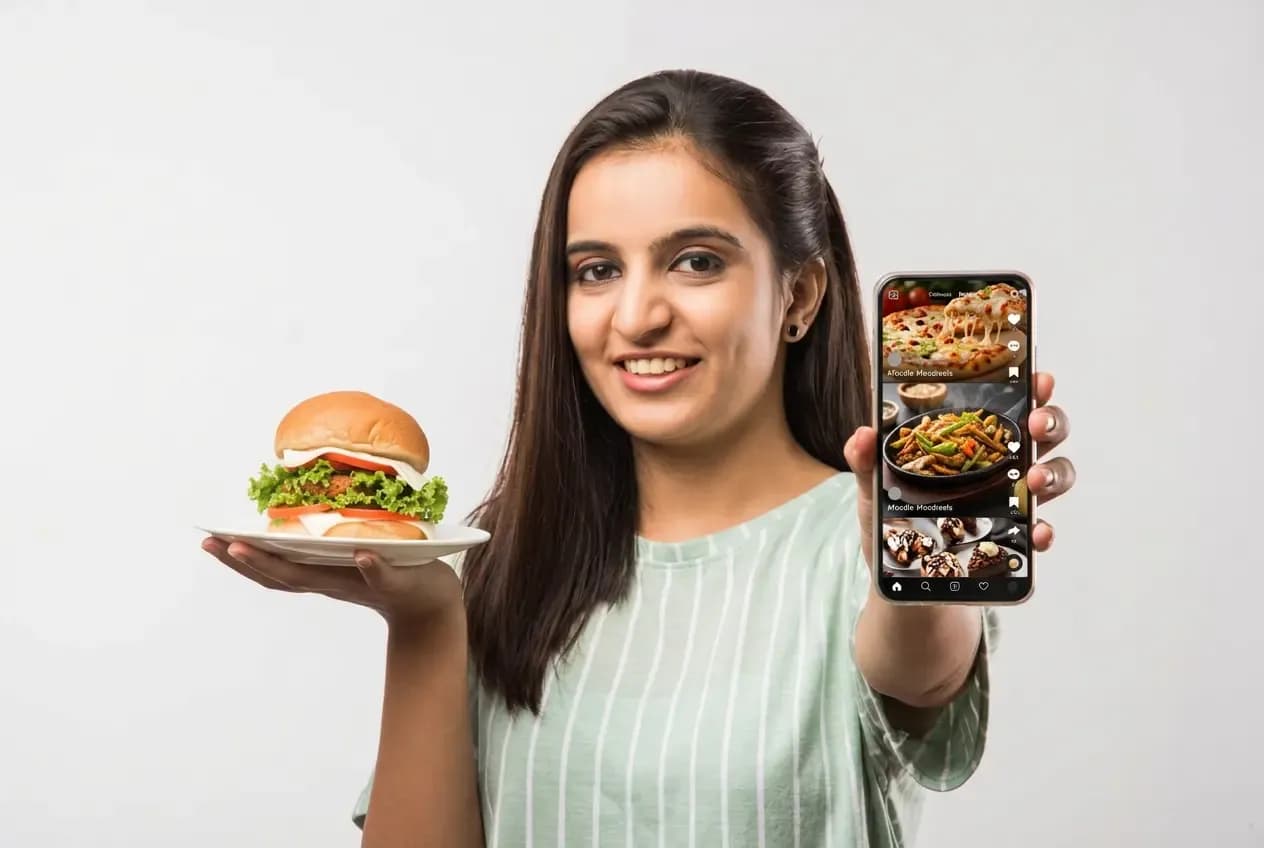
Scrolling through Instagram reels, YouTube shorts or other social media platforms has become a daily habit for many people. Along with entertainment and connection, these platforms are now filled with food-related content, especially visually appealing junk-food reels and advertisements. This growing trend shows how junk food reels can affect your mood and trigger strong food cravings.
While they may seem harmless, some suggest that repeated exposure to junk food content can influence cravings, mood, and mental health.
Why Junk Food Images Make You Want to Eat?
Looking at pictures or videos of unhealthy foods can make people feel hungry and crave them, even when they are not physically hungry. Some show that when people see appealing food images, they report stronger urges to eat, which can lead to more frequent cravings and eating.
What Is The Impact on Mood and Emotional Health:
Beyond cravings, exposure to junk food content has also been linked to changes in mood. People exposed to such content often report feelings of:
- Stress
- Sadness
- Mental exhaustion
- Increased hunger
These emotional responses may not appear immediately, but over time, they can affect overall mental well-being. Constant stimulation without physical satisfaction can leave people feeling drained and dissatisfied.
What Is The Role of Social Media Advertising:
Food brands increasingly use social media marketing because it allows them to influence users subtly and repeatedly.
Bright visuals, slow-motion shots, sound effects, and influencer endorsements are all designed to make food look irresistible.
Advertising works not just by showing food, but by linking it to pleasure, comfort, success, or social approval.
This can shape food choices subconsciously, making unhealthy options seem more appealing than they actually are.
How Social Media Shapes Our Relationship with Food?
Social media often highlights idealised lifestyles and eating habits, which may not reflect real life. Comparing your food choices to those of influencers or celebrities can distort your perception of what is “normal” or “healthy.”
This constant comparison may:
- Increase dissatisfaction with your own eating habits.
- Encourage emotional or impulsive eating.
- Create confusion around nutrition and health.
Over time, it can weaken intuitive eating and trust in your body’s hunger cues.
Why Repeated Exposure Matters?
The more often you are exposed to junk food content, the stronger its psychological impact can become. Continuous visual stimulation may reinforce cravings, alter eating patterns, and increase reliance on food for emotional comfort.
Repeated exposure may also make it harder to choose healthier foods, even when you are motivated to eat well.
What Are The Tips for Healthier Social Media Consumption?
Experts suggest a few simple steps to protect both mental health and eating habits:
- Limit time spent scrolling, especially when hungry or stressed.
- Follow credible nutrition professionals and balanced food content.
- Unfollow or mute accounts that promote excessive junk food.
- Be mindful of how certain content makes you feel after watching.
Conclusion
Junk food reels may look entertaining, but repeated exposure can influence cravings, mood, and eating habits more than we realise. Being mindful about what you watch can help protect your mental health and support healthier food choices.
How Can PB Health Support You?
When someone in your family needs care, you should not have to worry about what happens next or who is responsible for each step.
At PB Health Hospital, IFFCO Chowk, Gurgaon, we believe wellness requires continuity, coordination, and consistent follow-through. Our doctors and care teams work together, supported by technology that helps track progress, organise follow-ups, and keep information clear and accessible. From prevention to recovery, every stage is managed thoughtfully so that nothing important is missed and nothing is left unclear.
For personalised weight loss support, PB Health offers guidance to help patients make informed food choices and develop sustainable eating habits.
To understand more about our approach, you can visit our website, PB Health.