

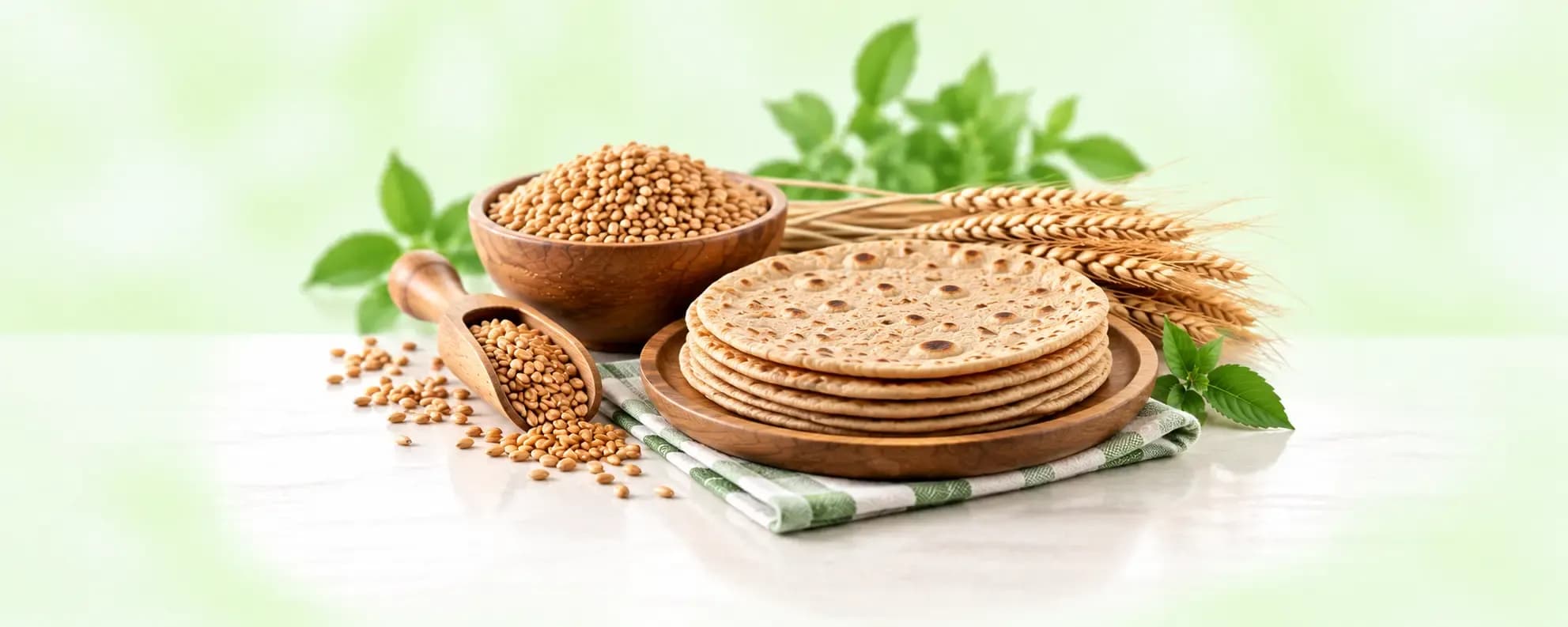
Wheat is one of the most commonly consumed cereals in India. Every day, we Indians consume wheat in the form of roti, paratha, thepla, bread, pasta, biscuits, and namkeens.
While it is one of the most commonly used cereals, wheat is often considered a healthier cereal for people with diabetes over rice. Wheat also aids in good digestion and prevents cardiovascular disease, while helping you maintain a healthy weight.
Despite the benefits wheat offers, sometimes we wonder if wheat is good for people with diabetes. Let us understand the nutritional value of wheat and how it affects blood glucose levels.
What is the Nutritional Value of Wheat?
Typically, the nutritional value of 100 grams of wheat is:
| Nutrients | Values per 100 grams |
|---|---|
| Calories | 320 kcal |
| Carbohydrate | 64 grams |
| Protein | 10 grams |
| Total fat | 1.53 grams |
| Fiber | 11.36 grams |
The glycemic index for whole grain wheat flour is 45, whereas the glycemic load of it is 26.8. The low glycemic index of wheat makes it a good cereal choice for people with diabetes.
However, because of the carbohydrate content in wheat, you must keep a watch on the quantity of wheat you consume.
Besides tracking your wheat intake, you must ensure you add a lot of fibre and protein in your diet to reduce the glycemic load of your entire meal.
Additionally, you must ensure that you do not sieve the flour too much, as it can reduce the fibre content in the wheat flour. The fibre content reduces the glycemic index, which directly affects blood sugar levels.
The less processed the wheat is, the better choice it makes for controlling blood sugar.
What are the other health benefits of wheat for diabetes?
Understanding the effect of wheat for diabetes is crucial as wheat is a staple cereal in almost all Indian households. Whole wheat flour does not cause a rise in blood glucose levels as much as rice, such as blood sugar and body fat levels.
Apart from managing glucose levels and body fat levels, the fibre in wheat is what makes it a hero. Some of the benefits it offers are:
- Lowers the risk of developing chronic diseases.
- Helps you manage your heart health.
- The high fibre content in wheat delays the emptying of the stomach. This helps you feel satiated for a long time.
- Lowers the risk of developing cancer.
- Strengthens the bones.
Ways to Consume Wheat in Diabetes?
The most popular cereal across the globe, wheat can be consumed in many ways by people with diabetes, including:
Roti/ Chapati: Generally, wheat flour is used to make roti or chapati, which are a staple food in many Indian households.
Dalia: Fibre-rich cereal made with broken wheat, dalia is a nutritious and filling food option.
Chilla: Wheat pancakes or chilla made from wheat flour using a healthy oil like rice bran or olive oil.
Healthy cakes: Whole wheat flour can be used to make carrot cakes with natural sweeteners like stevia and yoghurt to replace sugar and oil.
Partha/theplas: Although the calorie content is high in theplas and parathas, whole wheat thepla and vegetable partha can occasionally be consumed by people with diabetes.
Is chapati made from whole wheat good for diabetes?
Chapatis made from whole wheat are generally better than rice for most people with diabetes. The low glycemic index of whole wheat flour makes it ideal for people with diabetes.
The high complex carbohydrates present in whole wheat flour take time to digest, thereby reducing the glycemic load. Besides having complex carbohydrates, chapati is high in dietary fibre, which slows down the absorption of sugar in the bloodstream. The delay in the absorption of sugar prevents a sudden spike in blood sugar levels.
Chapati made from whole wheat flour is low in fats, which are considered to provide a healthy and balanced diet for people with diabetes.
Conclusion
Whole wheat can be a healthy choice for people with diabetes because it provides fibre and complex carbohydrates. Choose less-processed whole wheat, avoid excessive sieving, and watch your portion size to support diabetes management and help manage blood sugar levels.
How PB Health Can Support You?
When someone in your family needs care, you should not have to worry about what happens next or who is responsible for each step.
At PB Health, MG Road, Gurgaon, we believe wellness requires continuity, coordination, and consistent follow-through. Our doctors and care teams work together, supported by technology that helps track progress, organise follow-ups, and keep information clear and accessible. From prevention to recovery, every stage is managed thoughtfully so that nothing important is missed and nothing is left unclear.
To understand more about our approach, you can visit our website, PB Health.