
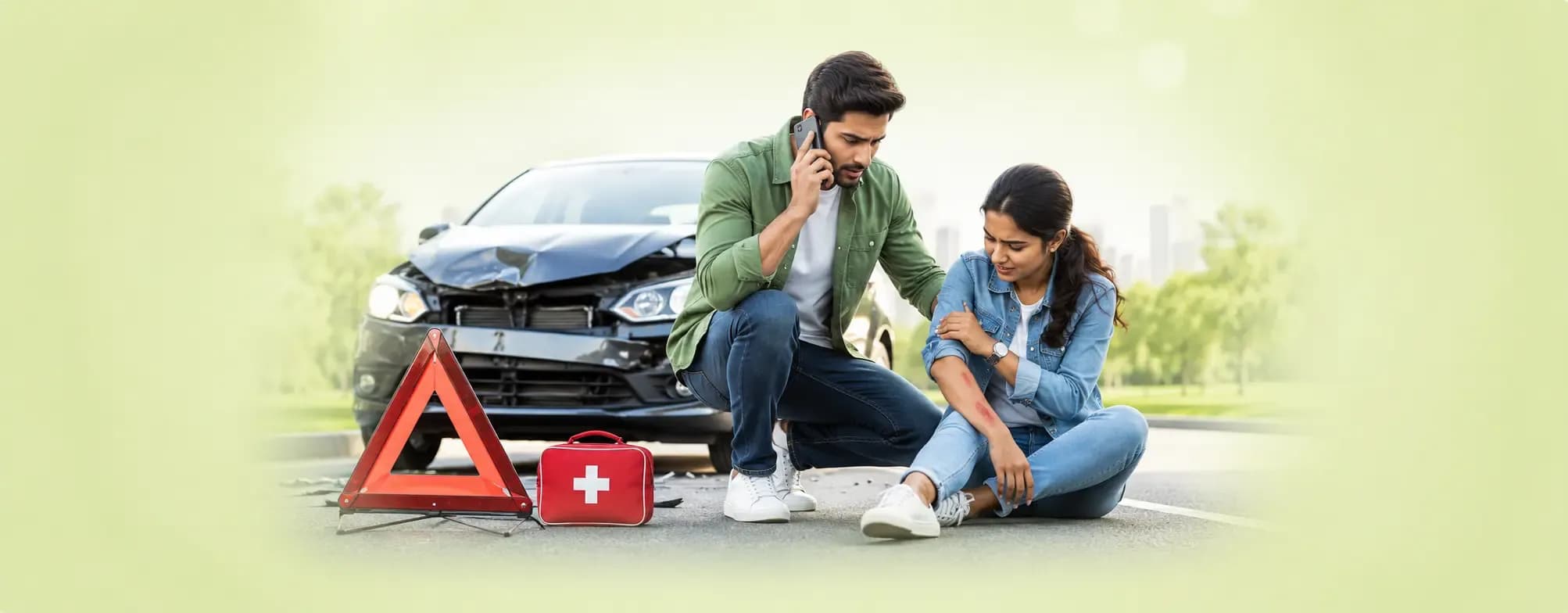
A road traffic accident can leave you shaken, confused, and unsure of what to do next. In India, where accidents can happen on busy highways, crowded city roads, or even during a short commute, knowing the right steps can make a real difference.
Whether you're a driver, passenger, cyclist, or pedestrian, the priority after an accident is simple: get to safety, check for injuries, and seek medical help when needed.
Even if you feel fine immediately after a crash, some injuries may not be obvious at first. Adrenaline can temporarily mask pain, and symptoms such as neck pain after a car accident may appear hours later.
What to Do Immediately After a Car Accident
The first few minutes matter. Try to stay calm and follow these steps.
1. Move to a Safe Place, If You Can
If you can move and it is safe to do so, get yourself and other passengers away from moving traffic. If your vehicle is in a dangerous position and can be moved safely, shift it to the side of the road.
Turn on the hazard lights and use a warning triangle if one is available.
However, don't move someone who may have a serious spinal or neck injury unless there is an immediate danger, such as fire or the risk of another collision.
2. Check Yourself and Others for Injuries
Before worrying about the vehicle or insurance, check whether anyone is injured.
Look for:
- Heavy bleeding
- Difficulty breathing
- Loss of consciousness
- Severe pain
- Confusion or unusual drowsiness
- Weakness or numbness
- Difficulty walking
- Neck or back pain
Some injuries from car accidents are immediately obvious, while others may take time to become noticeable.
3. Call for Emergency Medical Help
If anyone is seriously injured, seek emergency medical assistance immediately. In India, 112 is the national emergency number that can connect you to emergency services.
Don't wait for pain to become severe before seeking help. A person who appears alert can still have an internal injury, concussion, or other significant trauma.
4. Avoid Unnecessary Movement
After a significant collision, avoid unnecessarily moving an injured person, particularly if there is neck, back, or spinal pain.
If the person is unconscious but breathing, or you are unsure about their condition, follow the instructions provided by emergency responders rather than attempting to reposition them yourself.
5. Control Serious Bleeding
If someone has severe external bleeding, apply firm, direct pressure to the wound with a clean cloth or gauze if available.
Do not remove an object that is embedded in the wound. Instead, apply pressure around it and wait for medical assistance.
Car Accident Checklist: What Should You Document?
Once everyone is safe and medical needs have been addressed, document the accident if you can do so safely.
A useful car accident checklist includes:
- Photograph the vehicles and visible damage
- Photograph the accident scene if it is safe
- Note the date, time, and location
- Record vehicle registration numbers
- Exchange contact and insurance details with the other driver
- Note the names and contact details of witnesses
- Keep copies of medical records and bills
- Report the accident to the relevant authorities and your insurer as required
Avoid getting into an argument about who was responsible at the scene. Focus first on safety, medical care, and documenting what happened.
Don't Assume You're Fine Because You Have No Pain
Internal bleeding, head injuries or organ damage may have delayed or subtle symptoms; they can occur even if initially you feel normal. That is why medical assessment after a significant accident is important.
The body's stress response can temporarily reduce your awareness of pain. Some injuries become noticeable only after several hours or even days.
This is why injuries from car accidents should not be judged solely by how you feel immediately afterwards.
You may need medical assessment even if you don't see an obvious injury, particularly after a high-speed collision, significant impact, or loss of consciousness.
Neck Pain After a Car Accident: Should You Worry?
Neck pain after a car accident is relatively common, particularly after a sudden impact that causes the head and neck to move rapidly back and forth. This type of injury is often referred to as whiplash.
Symptoms can include:
- Neck pain or stiffness
- Reduced neck movement
- Shoulder or upper back pain
- Headache
- Dizziness
- Tingling or numbness
While many whiplash injuries improve with time and appropriate care, persistent or severe symptoms should be evaluated by a healthcare professional.
Seek urgent medical attention if neck pain is accompanied by weakness, numbness, difficulty walking, loss of bladder or bowel control, severe headache, confusion, or loss of consciousness.
Other Injuries That May Follow a Road Accident
A collision can affect almost any part of the body. Depending on the nature of the accident, people may experience:
- Head injuries: A blow to the head can cause a concussion or, in more serious cases, bleeding inside the skull.
- Chest injuries: Seat belts and impact can cause bruising or injuries to the ribs and chest.
- Abdominal injuries: Internal bleeding may not always cause obvious symptoms immediately.
- Fractures: Arms, legs, ribs, and other bones can be injured during a collision.
- Back and spinal injuries: These may cause pain, weakness, numbness, or changes in sensation.
Because some serious injuries are not immediately visible, medical evaluation can be important after a significant accident.
When Should You Go to the Hospital?
Seek urgent medical attention if you or another person has:
- Severe or worsening pain
- Difficulty breathing
- Heavy bleeding
- Loss of consciousness
- Repeated vomiting
- Confusion or unusual behaviour
- Severe headache
- Weakness or numbness
- Difficulty walking
- Blood in urine or vomit
- New or worsening neck or back pain
Children, older adults, and people with existing medical conditions may require particular attention following an accident.
What Not to Do After an Accident
After an accident, there are a few important things you should NOT do
- Don’t assume you are fine just because there is no pain or visible injury.
- Don’t move an injured person unnecessarily, especially if there is a possibility of a head, neck or spine injury.
- Don’t remove a helmet from a motorcycle rider unless it is necessary to provide life-saving care and you know how to do it safely.
- Don’t give food, water or medicines to an injured person, particularly if they may need surgery or are unconscious.
- Don’t try to straighten or push back a fractured or dislocated limb.
- Don’t remove an embedded object from a wound; stabilise it and seek medical help.
- Don’t ignore bleeding; apply firm pressure with a clean cloth or gauze and seek emergency care.
- Don’t drive yourself to the hospital if you are seriously injured, dizzy, confused or bleeding significantly. Call an ambulance.
- Don’t delay medical evaluation because symptoms can appear hours after an accident.
Key message: “After an accident, don’t take chances. Keep the person still, provide basic first aid, call for professional help, and get medically assessed.”
Conclusion
Knowing what to do immediately after a car accident can help you respond more calmly in chaotic situations. First, move to safety if possible, check for injuries, call for emergency help when required, and avoid unnecessary movement of anyone who may have a serious injury.
Remember that not all injuries from car accidents are immediately obvious. Symptoms such as neck pain after a car accident, headaches, dizziness, or increasing pain should not be dismissed simply because you initially felt fine.
If you've been involved in a significant road traffic accident, getting medically assessed can help identify injuries early and ensure you receive the right care.
How PB Health Can Support You
After an accident, getting the right medical attention quickly can make the recovery process easier. At PB Health, our multidisciplinary teams can assess accident-related injuries through Accident & Emergency care, arrange appropriate diagnostic investigations, and coordinate specialist care when required. From the initial evaluation to rehabilitation and follow-up, our focus is on helping you recover safely and confidently.