


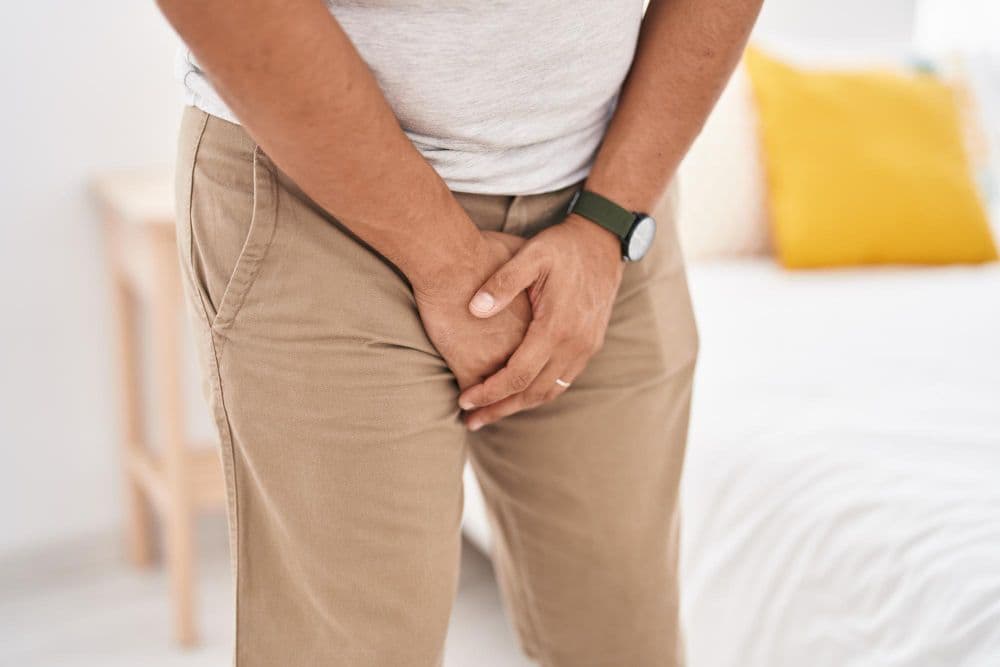


Pain in or around the testicles can be uncomfortable and worrying. It may be caused by something minor, such as a mild injury, but it can also result from an infection, kidney stone, hernia, or another condition that needs urgent treatment.
One important cause is testicular torsion, where the testicle twists and its blood supply is reduced. This is a medical emergency and needs treatment as soon as possible.
Understanding the possible causes and recognising warning signs can help you know when to seek medical care.
What Is Testicular Pain?
Testicular pain refers to discomfort in one or both testicles or the surrounding scrotum. The pain may be sudden or develop gradually. It can range from a mild ache to severe, sharp pain.
The location and nature of the pain, along with other symptoms such as swelling, fever, nausea, or urinary problems, can help a doctor identify the possible cause.
What Are the Causes of Testicular Pain?
There are several possible causes. Some develop gradually, while others require immediate attention.
1. Testicular torsion: Testicular torsion happens when a testicle twists around the spermatic cord, which carries its blood supply. The resulting loss of blood flow can damage the testicle.
It often causes:
- Sudden, severe pain
- Swelling of the scrotum
- A testicle that appears higher than usual
- Nausea or vomiting
- Lower abdominal pain
Testicular torsion is most common in teenagers but can occur at any age. It usually requires emergency surgery. Early treatment gives the best chance of saving the testicle.
2. Epididymitis: The epididymis is a small tube located behind each testicle. When it becomes inflamed, the condition is called epididymitis.
It can cause:
- Pain that develops gradually or suddenly
- Tenderness and swelling
- A warm or red scrotum
- Difficulty or pain while urinating
- Discharge from the penis in some cases
Epididymitis is often caused by an infection. In younger men, sexually transmitted infections can be a cause, while urinary infections are more common in older men.
3. Injury: A direct blow to the testicles during sports, exercise, an accident, or other physical activity can cause pain and swelling. Most minor injuries improve with time, but a doctor should assess severe pain, significant swelling, bruising, or persistent symptoms.
4. Kidney stones: Kidney stones can sometimes cause pain that travels from the back or side towards the groin and testicle. The pain may come in waves and can be severe. Other symptoms may include nausea, vomiting, pain while urinating, or blood in the urine.
5. Inguinal hernia: An inguinal hernia occurs when tissue pushes through a weak area in the groin. It can cause pain or pressure in the groin that may extend into the scrotum. You may also notice a bulge in the groin or scrotum, particularly when coughing, lifting, or standing.
6. Varicocele or hydrocele: A varicocele occurs when veins around the testicle become enlarged. It may cause a dull ache or heaviness, particularly after standing for a long time.
7. Other causes: Testicular or scrotal discomfort can also be associated with conditions such as prostatitis, urinary infections, nerve-related pain, or, less commonly, testicular cancer. A lump or swelling does not automatically mean cancer, but a doctor should check it.
When Is Testicular Pain an Emergency?
Sudden or severe pain should never be ignored.
Seek emergency medical care if you have:
- Sudden, severe pain in one testicle
- Rapid swelling of the scrotum
- Testicular pain with nausea or vomiting
- Severe pain after an injury
- A testicle that appears higher than usual or has changed position
- Severe abdominal or groin pain along with testicular pain
These symptoms can occur with testicular torsion, which needs urgent treatment. Importantly, pain that suddenly disappears does not always mean the problem has resolved. A testicle can twist and then untwist temporarily, so sudden pain that goes away should still be assessed promptly.
What About a Swollen Testicle?
A swollen testicle or scrotum can have several causes. Infection, injury, hydrocele, varicocele, hernia, and testicular torsion are some possibilities.
The timing of the swelling matters. Swelling that appears suddenly with severe pain needs urgent assessment. A painless lump, persistent swelling, or a change in the size or shape of a testicle should also be checked by a doctor.
How Is Testicular Pain Diagnosed?
Your doctor will first ask about the pain, when it started, whether it is getting worse, and whether you have other symptoms. A physical examination may be followed by:
Urine and blood tests: These can help identify infections or other conditions contributing to the symptoms.
Scrotal ultrasound: An ultrasound, often with Doppler imaging, can assess the testicles and blood flow. It can help doctors distinguish between conditions such as torsion, infection, and other causes of scrotal swelling. However, when testicular torsion is strongly suspected, treatment should not be unnecessarily delayed while waiting for investigations.
How Is Testicular Pain Treated?
Treatment depends on the cause.
- Testicular torsion: Usually requires emergency surgery to restore blood flow.
- Epididymitis or other infections: May require antibiotics and treatment of the underlying infection.
- Minor injury: Rest, scrotal support, and pain relief may be recommended depending on the injury.
- Kidney stones: Treatment depends on the size and location of the stone and may include pain management or procedures to remove it.
- Hernia, varicocele, or hydrocele: Treatment depends on the severity and symptoms.
What Should You Do If You Have Testicular Pain?
If the pain is sudden or severe, seek emergency medical care rather than waiting to see if it improves.
For mild or persistent discomfort:
- Make an appointment with a doctor.
- Note when the pain started and whether it is getting worse.
- Look out for swelling, fever, urinary symptoms, or nausea.
- Tell your doctor about any recent injury, strenuous activity, or infection.
- Do not ignore a lump, swelling, or change in the size or shape of a testicle.
How Can PB Health Support You?
If you have testicular pain or swelling, a doctor can assess your symptoms and medical history and recommend the appropriate tests. At PB Health Hospital, IFFCO Chowk, Gurgaon, the right specialist, including a urologist in Gurgaon, can help identify the cause and guide you towards appropriate treatment when needed.
Conclusion
Testicular pain can have several causes, from infections and minor injuries to kidney stones and testicular torsion. While not every case is an emergency, sudden or severe pain, particularly with swelling, nausea, or vomiting, needs immediate medical attention.
If the pain persists, keeps returning, or is associated with a lump or swelling, get it checked rather than waiting for it to settle on its own.