

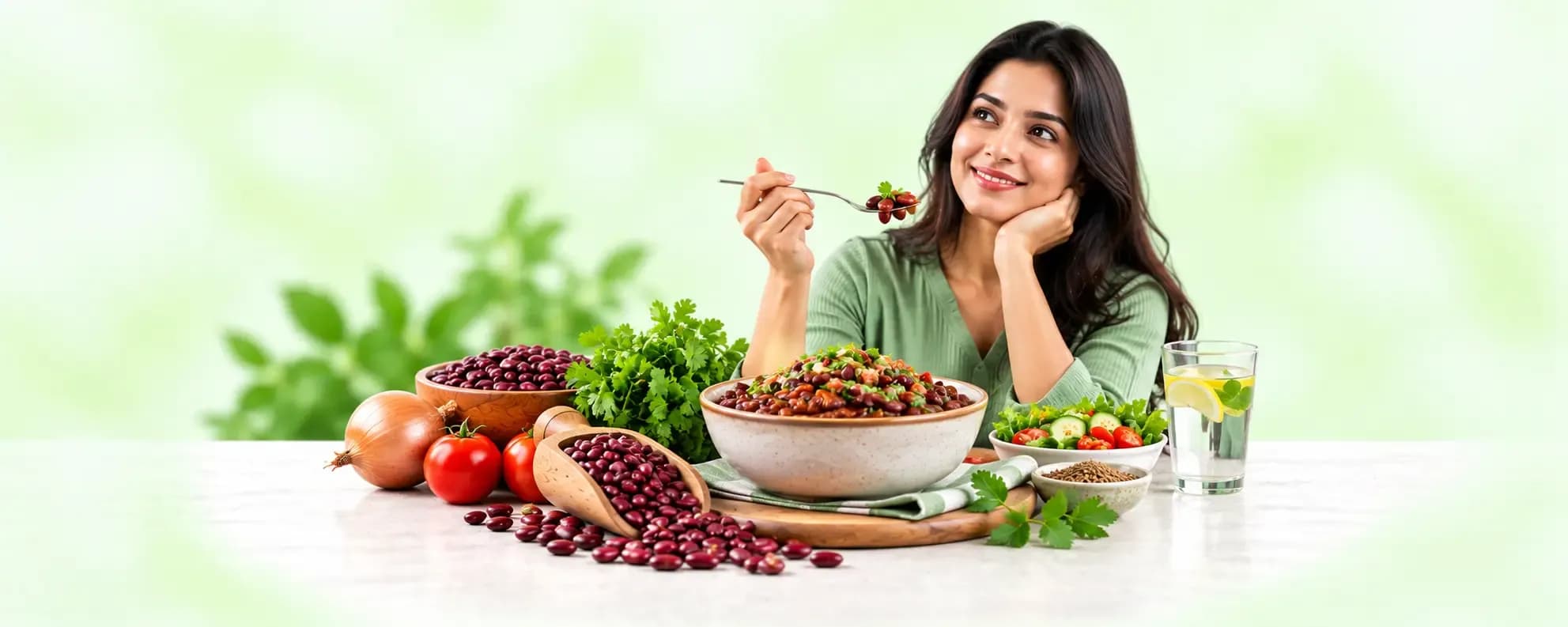
Who doesn’t love a comforting plate of rajma chawal? That rich, hearty flavour brings a sense of nostalgia and warmth with every bite. But if you’re living with diabetes, you might find yourself asking, “Can I still enjoy rajma?”
Don’t worry; we’ve got you covered. In this blog, we’ll explore whether rajma is good for diabetes and whether it should be included in your diabetes-friendly diet.
What is Rajma?
Rajma, commonly known as kidney beans, is a popular legume in North Indian cuisine, often cooked in rich, flavorful gravies. It’s not just a comfort food but also a nutrient-dense ingredient that offers various health benefits.
What is the Nutritional Value of Rajma?
Rajma is packed with essential nutrients, including protein, dietary fibre, vitamins, and minerals like iron, magnesium, and potassium. According to IFCT (Indian Food Composition Table), 2017, a typical serving of rajma (about 100 grams) provides around:
What Are the Varieties of Rajma Available in Local Markets?
When you visit local markets, you’ll find different varieties of rajma, each with its unique flavour and texture. Here are the most common types:
- Jammu Rajma/Black Rajma: Smaller in size, darker in colour, with a rich taste and creamy texture.
- Red Rajma: Larger, bright red beans commonly used in North Indian dishes with a hearty flavour.
- Chitra Rajma: Light brown with reddish streaks, offering a slightly nutty flavour.
- White Rajma: Milder in taste, with a creamier texture, often used in stews and salads.
- Joshimath Rajma: A smaller and darker variety known for its distinct earthy flavour, typically found in the Himalayan region.
- Capsule Rajma: Named for its capsule-like shape, this variety is slightly larger and has a dense texture with a rich flavour.
- Chakrata Rajma: Native to the Chakrata region (Uttarakhand region), this variety is smaller and softer, with a subtle, delicate taste.
All these varieties offer similar nutritional benefits, making them excellent choices for a diabetes-friendly diet.
What is the Glycemic Index of Rajma?
The Glycemic Index (GI) is a measure of how quickly a food raises blood sugar levels. Foods with a low GI are better for managing diabetes as they release sugar slowly into the blood. Rajma has a low GI of around 22, making it an excellent choice for people with diabetes.
Is Rajma Good for Diabetes?
Rajma’s low GI, high fibre content and rich nutrient profile make it a diabetes-friendly food. The slow release of glucose into the blood helps maintain stable blood sugar levels and prevent sudden blood sugar spikes.
What are the Benefits of Eating Rajma in Diabetes?
Below are some of the benefits of rajma for diabetes patients.
1. Low Glycemic Index (GI): Rajma has a low glycemic index, which means it releases sugar slowly into the bloodstream. This helps in diabetes management by managing blood sugar levels and preventing sudden spikes, making it an excellent choice for people with diabetes.
2. High Fibre Content: Rajma is rich in dietary fibre, both soluble and insoluble. Soluble fibre helps lower cholesterol levels, while insoluble fibre aids digestion and promotes a feeling of fullness. This can be beneficial in managing weight, which is crucial for diabetes control.
3. Rich in Protein: Rajma is a good plant-based source of protein. Protein helps in stabilising blood sugar levels by slowing down the digestion and absorption of carbohydrates. Including protein-rich foods like rajma in diabetes meals can help keep blood sugar levels steady.
4. Packed with Nutrients: Rajma is rich in essential nutrients such as magnesium, potassium, and iron. Magnesium improves insulin sensitivity, which is important for managing diabetes. Potassium helps maintain blood pressure, which is often a concern for people with diabetes.
5. Heart Health: The fibre, magnesium, and potassium in rajma contribute to heart health by lowering blood pressure, reducing cholesterol levels, and improving overall heart function. Heart health is especially important for people with diabetes, as they are at a higher risk of cardiovascular diseases.
6. Helps in Weight Management: The combination of protein, fibre, and complex carbohydrates in rajma helps keep you full for longer, reducing the likelihood of overeating. Managing weight is a key factor in controlling diabetes.
How to Add Rajma to a Diabetes-Friendly Diet?
There are several ways to incorporate rajma into a diabetes diet. Some of them are:
1. Rajma Chawal with Brown Rice or Mixed Grain Roti
Enjoy this classic dish of rajma (kidney beans) simmered in a flavorful tomato-onion gravy. For a diabetes-friendly diet, serve it over brown rice or pair it with a mixed-grain roti instead of white rice, parathas, or puris.
Check what works better for you: whether it’s the fibre-rich brown rice or the nutrient-packed mixed-grain roti, both options keep all the comforting flavours intact while being mindful of your health.
2. Rajma Salad
A refreshing salad made with boiled rajma mixed with chopped cucumber, tomato, and onion and seasoned with lemon juice, chaat masala, and fresh coriander. Perfect as a light meal or snack.
3. Rajma Soup
A hearty soup made by blending boiled rajma with tomatoes, onions, and Indian spices like jeera and haldi. It’s a warm, comforting dish that’s easy on the stomach and great for managing blood sugar levels.
4. Rajma-Stuffed Paratha
A wholesome paratha made by stuffing whole wheat dough with a spiced rajma mixture, then cooked on a tawa. Serve with a side of dahi for a balanced, protein-packed meal.
5. Rajma Tikki Chaat
Turn rajma tikkis into a delicious chaat by topping them with yoghurt, chopped onions, tomatoes, and a sprinkle of chaat masala. It’s a diabetes-friendly way to enjoy street food flavours at home.
6. Rajma Paneer Bhurji
A protein-rich dish made by combining crumbled paneer with boiled rajma, onions, and spices. It’s perfect for serving with whole wheat rotis or as a side dish.
7. Rajma Usal
Give your Maharashtrian usal a fun twist by making it with rajma and the usual matki. Pair it with bajra roti or bhakri (millet flatbread) for a hearty and diabetes-friendly meal.
8. Rajma Khichdi
A comforting one-pot dish made with rajma, brown rice, and split moong dal, cooked with cumin, turmeric, and a touch of ghee. Add in lots of veggies like carrots, French beans, and tomatoes to make it a wholesome, nutritious meal.
Are There Any Potential Risks or Side Effects from Eating Rajma?
While rajma is generally safe for people with diabetes, it’s essential to cook it properly. Raw or undercooked rajma contains lectins, which can cause digestive discomfort.
Also, overconsumption of rajma may lead to bloating or gas due to its high fibre content.
How PB Health Can Support You
When someone in your family needs medical care, you should not have to worry about what comes next or who will take care of each step.
At PB Health, MG Road, Gurgaon we believe good healthcare depends on proper planning and regular follow-ups. Our doctors and care teams work together, supported by technology that helps track progress, organise follow-ups, and keep all information clear and accessible. From prevention to recovery, every stage is managed carefully so that nothing important is overlooked.
To learn more about our approach, visit the PB Health website.