

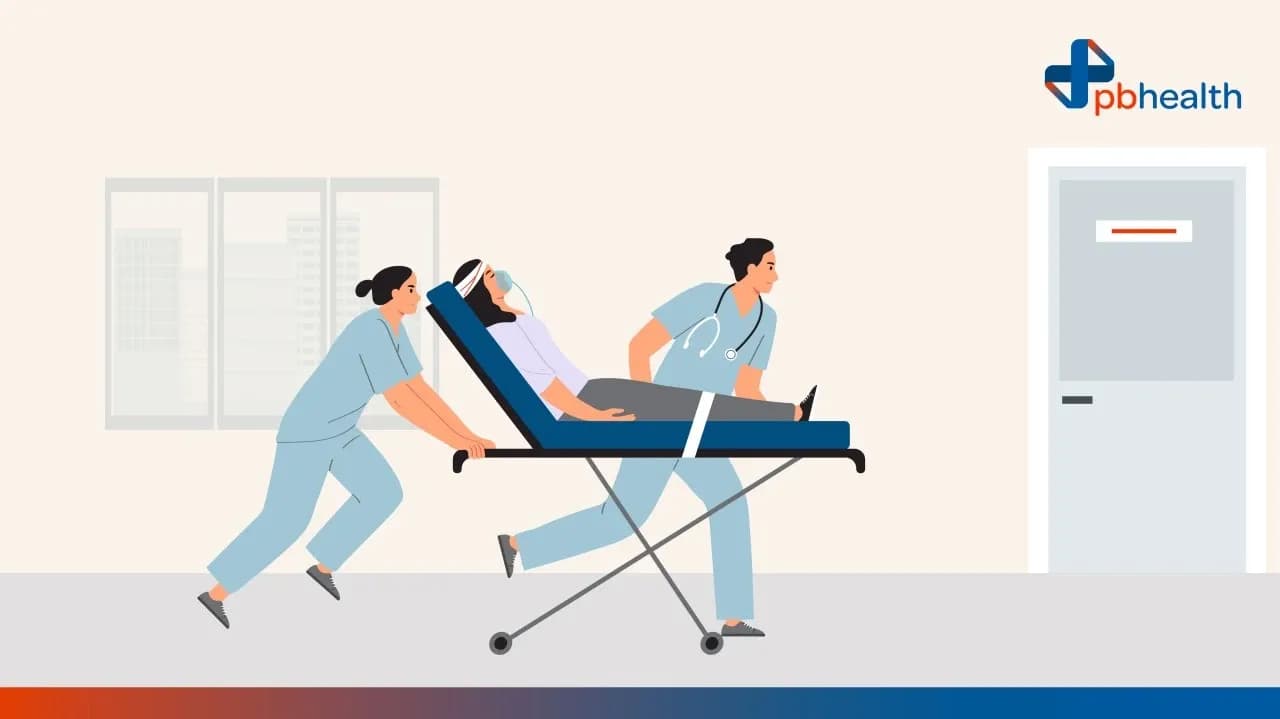
When people think about emergency medicine, they often picture moments of heroism.
A doctor recognising something everyone else missed. A team working against the clock to save a life. A critical intervention that changes the course of a patient's future.
These moments exist, and they deserve admiration.
But if an emergency department needs heroics every day to deliver good outcomes, something is already wrong.
The best emergency departments are not designed around extraordinary performances. They are designed so that ordinary patients receive the right care at the right time, every single day.
That is why protocol-driven emergency medicine has become one of the most important shifts in modern healthcare.
Emergency Medicine Is More Complex Than Ever Before
The emergency department is unlike any other part of a hospital.
Patients arrive without appointments. Diagnoses are often unclear. Information is incomplete. Decisions need to be made quickly, sometimes within minutes.
At the same time, the patients themselves are becoming more complex.
An elderly patient with chest pain may also have diabetes, kidney disease, hypertension, and a long list of medications. A trauma patient may require coordination across emergency medicine, radiology, orthopaedics, surgery, neurosurgery, neurology and intensive care. A patient with a severe infection can deteriorate rapidly if treatment is delayed.
The challenge is not a lack of expertise. Modern emergency departments are filled with highly skilled professionals.
The challenge is ensuring that expertise translates into consistent action, regardless of the time of day, patient volume, or the team on duty.
Why Good Care Shouldn't Depend on Who Happens to Be on Shift
Most patients assume that emergency care follows a standard process.
In reality, small differences in assessment, communication, escalation, or prioritisation can influence how quickly a patient receives treatment.
Consider a patient arriving with symptoms suggestive of a stroke.
Every minute matters. The faster the condition is recognised, the faster imaging can be performed, specialists alerted, and treatment decisions made.
In a protocol-driven emergency department, these steps do not rely solely on memory or individual preference. The pathway is already defined. Teams know what needs to happen, in what sequence, and who is responsible at each stage.
The purpose is not to remove clinical judgment.
It is to ensure that critical actions do not depend on circumstances.
Patients should not receive different standards of care because a particular consultant is on duty, the department is unusually busy, or a crucial step was delayed during handover.
What Protocols Really Do
The word "protocol" can sometimes sound restrictive, as though medicine is being reduced to a checklist.
In reality, well-designed protocols do the opposite.
They create a reliable framework within which clinicians can exercise their judgment.
Protocols help emergency teams recognise high-risk situations earlier, coordinate more effectively, communicate more clearly, and act with greater confidence when time is limited.
They reduce unnecessary uncertainty in routine decisions so that clinicians can focus on situations that genuinely require deeper judgment and experience.
The goal is not to make every patient identical.
The goal is to ensure that every patient benefits from the best available evidence, delivered through a coordinated system.
The Real Promise of Protocol-Driven Emergency Medicine
The greatest benefit of protocol-driven care is not simply that it can make emergency departments faster.
It can make them more dependable.
For patients and families, emergencies are moments of immense uncertainty. They may never see the clinical pathways, escalation protocols, or coordination systems operating behind the scenes.
What they experience is confidence that the people caring for them know what needs to happen next.
That confidence is built when emergency care relies less on individual heroics and more on systems that consistently support sound decision-making.
Building for Dependability
At PB Health, this belief sits at the heart of how we think about emergency care.
Protocol-driven pathways are not viewed as administrative tools or compliance requirements. They are part of a broader effort to build systems that help clinicians deliver evidence-based care consistently, particularly during the moments when patients are most vulnerable.
Our objective is clear: to combine clinical expertise, structured pathways, technology, and coordinated teams to reduce avoidable delays and improve outcomes.
The future of emergency medicine will not be defined solely by how quickly hospitals respond.
It will be defined by how consistently they deliver the right care when it matters most.
Source URL: https://www.linkedin.com/pulse/protocol-driven-emergency-medicine-why-best-8bwif/