
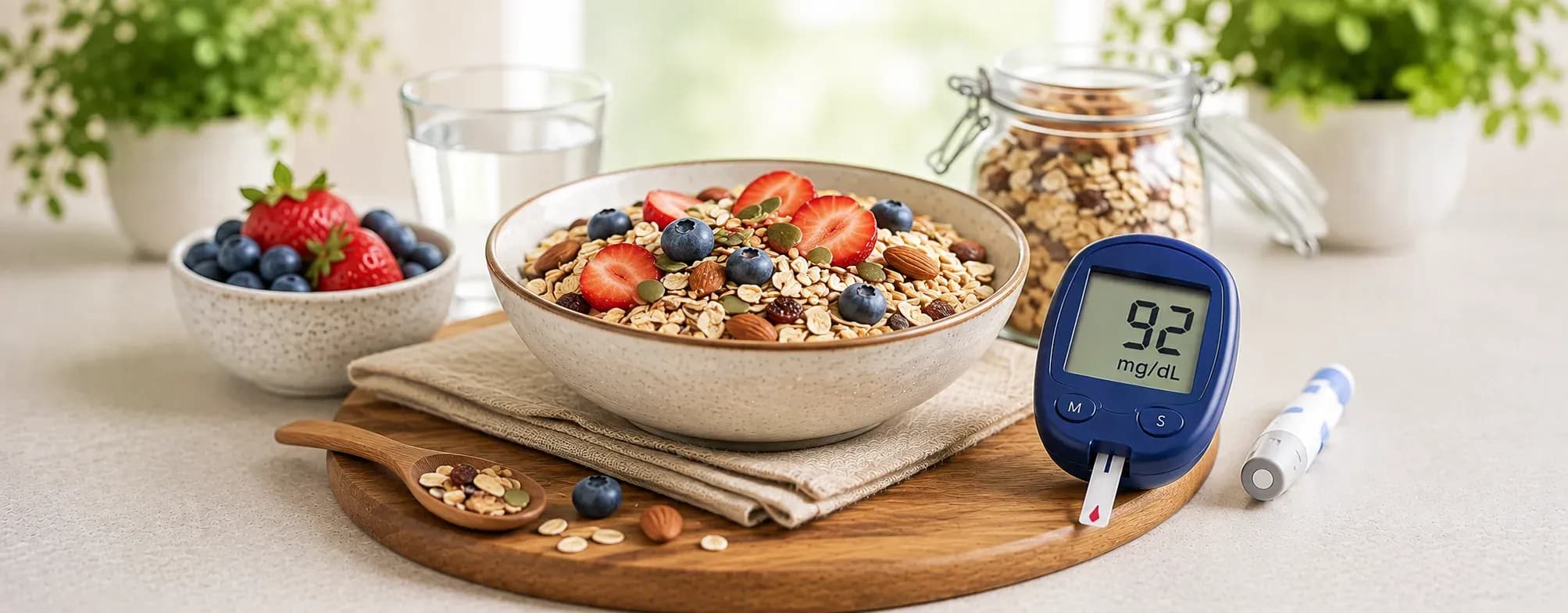
Isha and Arjun both had their own mixed experiences with muesli. Isha ate it most mornings, not because it was healthy but because she was too busy to cook. Arjun always tries to tell his roommate that muesli is healthy, but his roommate disagrees, saying that it is full of sugar. When you go to the supermarket, you might think, Are those colourful muesli boxes really healthy? and if you are a person with diabetes, you may think, “Is muesli good for diabetes?” Or “What could be the glycemic index of muesli?” Let us find out.
What is Muesli?
Muesli is a breakfast mix made from raw or lightly toasted whole grains, seeds, nuts, and sometimes dried fruits. It was created by Swiss physician Dr Maximilian Bircher-Benner over 100 years ago as a healthy, fibre-rich breakfast.
What are the Typical Ingredients of Muesli?
Whole Grains: Rolled oats or other grains like barley, flakes of wheat, brown rice and quinoa, millets of bajra, ragi, foxtail, and buckwheat.
Nuts and Seeds: Almonds, walnuts, flaxseeds, sunflower seeds, etc. They provide healthy fats, proteins and crunch.
Dried Fruits: Adding dried fruits like raisins, apricots, or dates is optional, which gives natural sweetness.
Sweeteners: Adding sweeteners like honey, sugar, or chocolate is optional because these ingredients make muesli tastier; however, they also increase the sugar content, especially in store-bought options.
What is the Nutritional Value of Muesli?
The nutritional value of muesli (per 100g) (data based on IFCT 2017)*
| Nutrient | Amount |
|---|---|
| Energy | 355 kcal |
| Carbohydrates | 75 g |
| Protein | 8.6 g |
| Calcium | 36 g |
| Fat | 5.4 g |
What is the Glycemic Index of Muesli?
The glycemic index of muesli is not fixed because it depends on its ingredients. It is usually made from a mix of whole grains, seeds, nuts, and sometimes dried fruits. Since the composition varies by brand, the glycemic index of muesli can differ, but it is generally on the higher side.
Muesli and Diabetes:
Muesli is generally not a good breakfast choice for people with diabetes. This is because commercially available muesli in the market contains added sugars, dried fruits and a mix of grains, all of which can raise blood sugar levels quickly.
Though muesli contains healthy nuts and seeds, its overall carbohydrate content remains high, resulting in higher blood sugar after meals. So, eating muesli regularly may cause spikes in blood sugar levels. Instead, a better option is to eat protein-rich breakfasts.
For example, you can try eating egg whites in an omelette, boiled eggs, besan chilla, moong chilla, etc, and these foods not only give us energy but also help to keep our blood sugar levels stable.
Muesli and Diabetes: What You Need to Know
Muesli is often marketed as a healthy breakfast, but we now know it is not a good choice for people with diabetes. However, if you still want to enjoy it, then choose a sugar-free variety instead of sweetened store-bought varieties, which are often pre-sweetened with honey, chocolate or dried fruits.
You can add flaxseeds or chia seeds for a fibre boost, as these seeds help to slow down the digestion and absorption of carbohydrates, and also prevent a sudden rise in blood sugar levels.
Pair it with yoghurt or milk in moderation, which can help prevent sudden spikes in blood sugar levels. You can also pair muesli with yoghurt or milk as a protein source, in moderation.
How PB Health Can Support You
When someone in your family needs medical care, you should not have to worry about what comes next or who will take care of each step.
At PB Health, we believe good healthcare depends on proper planning and regular follow-ups. Our doctors and care teams work together, supported by technology that helps track progress, organise follow-ups, and keep all information clear and accessible. From prevention to recovery, every stage is managed carefully so that nothing important is overlooked.
To learn more about our approach, visit the PB Health website.