

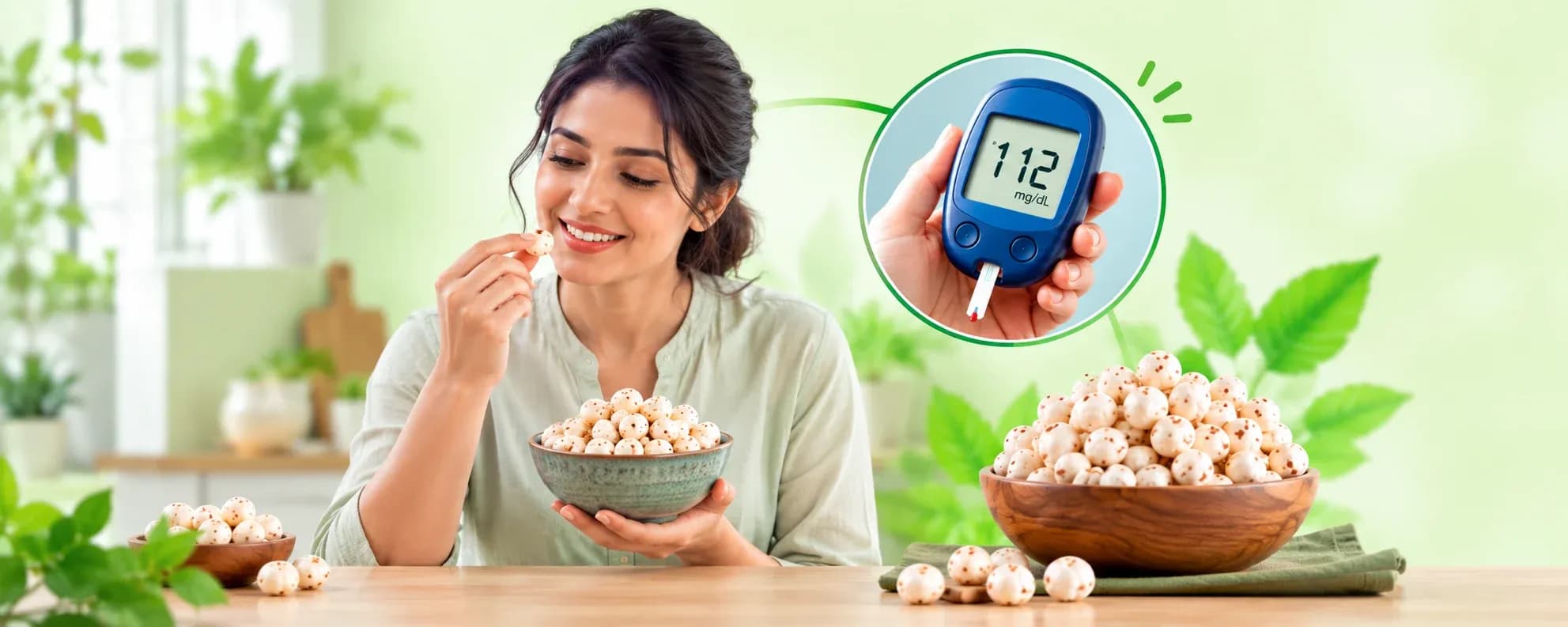
If you are looking for a mid-morning or evening snack that’s tasty, healthy, and crunchy, makhana is the perfect choice.
Yes, Makhana is indeed a handy and all-around ingredient. It can be used to make parathas, curries, snacks, and even desserts, or eaten just as is after roasting.
Makhana (scientific name: Euryale ferox) is commonly known as lotus seeds, fox nuts, and gorgon nuts. These seeds are harvested from the prickly water lily plant, which is grown in stagnant water bodies such as ponds and wetlands. After collecting the seeds, they are sun-dried and roasted to make them crisp and ready to eat.
Is Makhana Good for Diabetes? Can people managing Diabetes eat Makhana? Let’s find out!
But before you read further, consider this: we say something is good, but what if it’s not right for you? It may not be a favourite, or it might not be part of your family’s food, or you love it but don’t know the best way to enjoy it.
Nutritional Value of Makhana:
Before adding makhanas to a diabetes-friendly diet, it is essential to learn about their nutritional value (as per IFCT) and how they affect blood sugar levels.
| Nutrient | Amount (100g) |
|---|---|
| Energy | 347 kcal |
| Carbohydrates | 76 g |
| Proteins | 9.7 g |
| Fibre | 14.5 g |
| Iron | 1.4 mg |
| Calcium | 20 mg |
The Glycemic Index Of Makhana:
The glycemic index of Makhana (fox nuts or lotus seeds) is around 30 to 35, which comes under the low GI category (GI < 55), making it a suitable snack for people with diabetes. Foods with a low GI are digested and absorbed slowly, which leads to a gradual rise in blood sugar levels rather than a fast spike.
Important note: It is essential to note that the glycemic index value can change depending on the preparation method.
For example, Roasted or dry makhanas are good to eat. But fried or sugar-coated makhana may raise blood glucose levels.
If you have diabetes and think, “Does makhana increase blood sugar levels?”
The answer is “NO, if consumed in the recommended quantity.”
What are the Benefits of Eating Makhana?
Eating makhana has benefits, and some of them are:
Suitable for the digestive system: Makhana is rich in fibre content, which helps improve digestion and prevent constipation. They also contain flavonoids that have anti-inflammatory properties.
Permitted in Weight Loss Diets: Makhanas are permitted in weight loss diets because they are low in calories and high in fibre. Their high fibre content increases their satiety value (the ability to keep you full for longer), reducing hunger and preventing the intake of excess calories.
Lower inflammation: Makhanas are rich in flavonoids like kaempferol (a plant-based antioxidant), which have anti-inflammatory and anti-ageing properties, reducing inflammation in the body and are beneficial for people with diabetes and heart disease.
Boost immunity: Makhanas are rich in antioxidants and help boost immunity.
Help with maintaining blood sugar levels: As mentioned earlier, Makhanas have a low glycemic index, which means they don’t cause a fast rise in blood sugar levels. Early studies have also suggested that these Makhanas contain a few other compounds that may have antidiabetic effects.
Makhana is a good source of natural antioxidants, and so may be beneficial in the management of diabetes.
How to include Makhana in your meals:
From snacking on crunchy snacks to rich curries, makhana can be enjoyed in many ways.
Roasted Makhana: Roast makhana in a pan with minimal or no oil at all. Add turmeric, cumin, or black pepper slightly over the makhana. This is easy to make; avoid store-bought as they are coated with sugars or salt.
Makhana Chat: Add chopped onions, cucumbers, carrots, tomatoes, coriander, and lemon juice to makhana. Avoid adding sweet chutneys, and add sprouts or paneer for extra protein.
These recipes are higher in calories and can also increase blood sugar levels if consumed more than the recommended amount.
Makhana Paratha: Mix ground makhana into wheat dough, and you can also add methi leaves (fenugreek) or spinach for added fibre. However, you can cook with a small amount of ghee or avoid using it altogether.
Makhana Curry: Cook the blended makhana in a tomato-onion base, with paneer or peas. Use minimal oil and avoid adding cream.
Makhana trail mix: Roast Makhana mixed with almonds, walnuts, sunflower seeds, and pumpkin seeds, and add pepper powder and a pinch of salt. It’s easy to carry and good for a mid-morning or evening snack. But eat in moderation.
Things to Watch Out For While Eating Makhana:
Stick to a small handful (25- 30 g) to avoid excess calories and enjoy a guilt-free snack.
Avoid fried makhana or packaged ones, as they may contain added salt, sugar or unhealthy fats.
Some people may be sensitive to makhana, so be sure to check for allergies before eating.
Use makhana as part of a balanced diet, not as a meal replacement.
How Can PB Health Support You?
When someone in your family needs care, you should not have to worry about what happens next or who is responsible for each step.
At PB Health, we believe wellness requires continuity, coordination, and consistent follow-through. Our doctors and care teams work together, supported by technology that helps track progress, organise follow-ups, and keep information clear and accessible. From prevention to recovery, every stage is managed thoughtfully so that nothing important is missed and nothing is left unclear.
To understand more about our approach, you can visit our website, PB Health.