

“Can I eat this?”
“Will this affect my sugar levels?”
If you’re managing diabetes, these questions might feel like a constant companion every time you look at your plate. It’s normal to feel overwhelmed when trying to figure out what’s safe and what’s not.
The truth is, diabetes management isn’t about giving up all the foods you love – it’s about knowing what works for your body and what doesn’t. While it can be hard to resist that gulab jamun or your favourite samosa, making smarter choices can go a long way in keeping your blood sugar levels in check. We can help you, too 😀
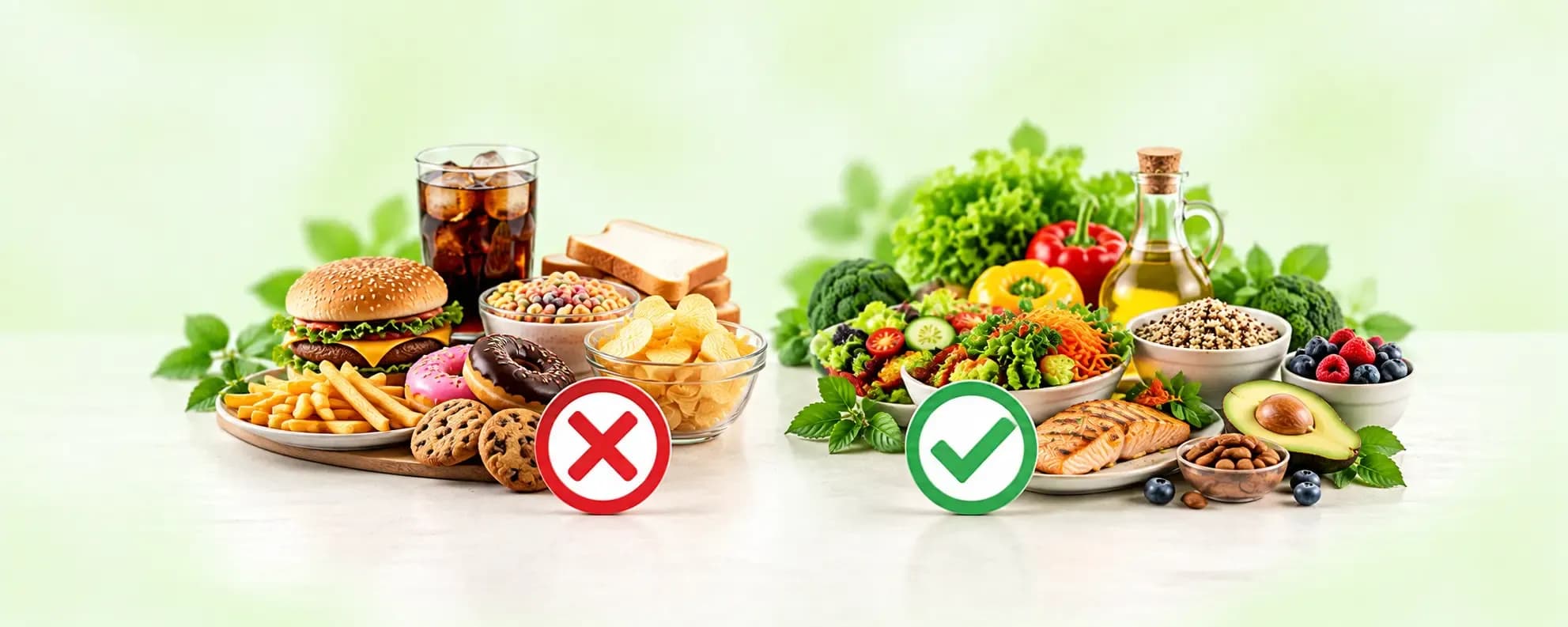
In this blog, we have listed 14 kinds of food that you should avoid if you have diabetes.
1. Sugary Treats and Sweets
If you’re managing diabetes, you should exclude these foods from your diet as they are among the foods to avoid in diabetes.
Candy, cookies, cakes, pastries and mithais are at the top of this list.
They’re packed with sugar and can cause quick spikes in your blood sugar levels.
2. Sugar-Sweetened Beverages
For better blood sugar control, remember these are the following foods to avoid with diabetes:
Drinks like soda, fruit juices (even homemade unsweetened fruit juices), energy drinks, sharbat, falooda and sweetened iced tea often contain hidden sugars.
They provide little or no nutrition and can lead to unhealthy blood sugar swings.
3. Refined Carbohydrates
The following foods should be avoided when you have diabetes: Refined carbohydrates like white bread, white rice, and maida-based items such as bhatura, kulcha, and mathri. These foods can lead to sudden increases in blood sugar levels due to their low fibre content.
4. All Fried Snacks
The snacks, including samosa and batata wada, fall into the category of foods to avoid with diabetes due to their high content of unhealthy fats and carbohydrates, which can cause blood sugar spikes and promote weight gain.
5. Processed Meats
Processed meats like red meats, ready-made kebabs, and nuggets. These items are on the list of foods to avoid with diabetes due to their frequent inclusion of unhealthy fats, potential added sugars, and preservatives.
6. Full-Fat Dairy Products
Among the foods to avoid with diabetes are high-fat dairy products, which encompass whole milk, regular cheese, malai paneer, full-fat curd (malai dahi), ghee, and cream. These items can be rich in saturated fats, potentially elevating the risk of heart disease.
7. High-Sugar Breakfast Cereals
Many breakfast cereals, categorised as foods to avoid in diabetes, such as cornflakes and chocos, often contain high sugar content, even those that appear healthy. To make the right choice, be sure to check labels and opt for cereals with whole grains and low added sugars.
8. Fast Food
Fast food, categorised among foods to avoid with diabetes, frequently incorporates unhealthy fats, excessive salt, and oversized servings, posing difficulties in the management of blood sugar levels. This category encompasses items such as vada pav, samosa pav, and popular street foods like sev puri and pani puri.
9. Sugary Condiments and Sauces
The following foods should be avoided when you have diabetes.
Condiments like ketchup, pickles, papads, chutneys and some salad dressings can be surprisingly high in added sugars.
Choose sugar-free or lower-sugar options.
10. Sweetened Yoghurts
Flavoured yoghurts, ice creams, and desserts like shrikhand are often loaded with added sugars, which can cause blood sugar spikes.
A healthier alternative is plain, low-fat, or non-fat yoghurt. For natural sweetness and added nutrients, you can add fresh fruits or a sprinkle of nuts.
11. Alcohol in Excess
Alcoholic beverages should be avoided entirely in diabetes, as they can cause unstable blood sugar levels. Alcohol interferes with the body’s ability to regulate glucose, leading to sudden spikes or dangerous drops in blood sugar.
Additionally, it can contribute to other health issues like weight gain, liver damage, and complications with diabetes management. For overall health and better blood sugar control, it’s best to eliminate alcohol from your diet.
12. High-Sodium Foods
High-sodium foods, considered foods to avoid in diabetes, encompass items like packaged soups, salty snacks, and processed meats. These can elevate blood pressure levels, thereby increasing the risk of heart issues.
13. Deep Fried Foods
Fried food items such as fried chicken, medu vada, vada pav, samosa, kachori, poori, sev, fried chivda, chakli, and other deep-fried snacks. These foods are rich in unhealthy fats and can result in blood sugar spikes.
14. Excessive Portions
Regardless of what you’re eating, overeating can contribute to high blood sugar levels. Portion control is key to managing your condition effectively.
Which Foods Cause Diabetes?
No single food directly causes diabetes, but eating too many unhealthy foods along with an unhealthy lifestyle can increase the risk of type 2 diabetes. Foods like white bread, sugary snacks, soft drinks, fried foods, and those high in unhealthy fats can lead to weight gain and insulin resistance, making it harder for the body to control blood sugar levels.
In addition to diet, factors like lack of exercise, high-stress levels, poor sleep, and even family history play a big role. Stress and not getting enough sleep can disrupt your body’s hormones, leading to cravings for unhealthy foods and poor blood sugar control. A sedentary lifestyle further increases the risk.
To reduce the chances of diabetes, eat a healthy diet with whole grains, vegetables, lean proteins, and healthy fats. Stay active, manage stress through relaxation techniques, and make sure to get enough sleep regularly. Small changes in your daily routine can make a big difference!
What are the Best Foods for Diabetes?
Certain foods can help manage blood sugar levels and improve overall health for people with diabetes:
1. Vegetables
Non-starchy vegetables like spinach, methi, karela, lauki, and tomatoes are rich in fibre and nutrients, helping regulate blood sugar and improve digestion.
2. Whole Grains and Millets
Whole grains like wheat, brown rice, oats, and millets such as foxtail, kodo, and barnyard millet provide slow-releasing carbs and fibre for steady blood sugar levels.
3. Legumes and Pulses
Lentils (dal), chickpeas (chana), kidney beans (rajma), and black-eyed peas (lobia) are high in protein and fibre, aiding in blood sugar control.
4. Nuts and Seeds
Almonds, walnuts, flaxseeds, chia seeds, and pumpkin seeds offer healthy fats and fiber, helping to stabilise blood sugar and promote heart health.
5. Fruits
Low-glycemic fruits like guava, apples, papaya, oranges, and sweet lime provide natural sweetness, fibre, and essential vitamins without spiking blood sugar.
6. Dairy Products
Low-fat options such as curd, buttermilk, and paneer are excellent sources of protein and calcium, supporting stable blood sugar levels.
7. Fish and Seafood
Fatty fish like salmon, mackerel, and sardines, as well as shellfish, are rich in omega-3s and protein, reducing inflammation and improving insulin sensitivity.
8. Eggs and Poultry
Eggs and lean poultry like skinless chicken are excellent sources of protein, keeping blood sugar levels steady and promoting satiety.
9. Spices and Herbs
Fenugreek, cinnamon, and garlic naturally help lower blood sugar levels and support better digestion.
While foods are vital, diabetes management also depends on other lifestyle factors:
Portion Control and Meal Timing: Balanced portions and eating at regular intervals help avoid sugar spikes.
Physical Activity: Regular exercise enhances insulin sensitivity and complements a healthy diet.
Stress and Sleep: Chronic stress and poor sleep can disrupt blood sugar control. Prioritise relaxation and adequate rest.
Hydration: Drink plenty of water and consider herbal teas or traditional options like jeera and fennel water.
Remember, managing diabetes is a holistic process – focusing on food is critical, but it works best when combined with these lifestyle changes.
How PB Health Can Support You
When someone in your family needs medical care, you should not have to worry about what comes next or who will take care of each step.
At PB Health, MG Road, Gurgaon, we believe good healthcare depends on proper planning and regular follow-ups. Our doctors and care teams work together, supported by technology that helps track progress, organise follow-ups, and keep all information clear and accessible. From prevention to recovery, every stage is managed carefully so that nothing important is overlooked.
To learn more about our approach, visit the PB Health website.