


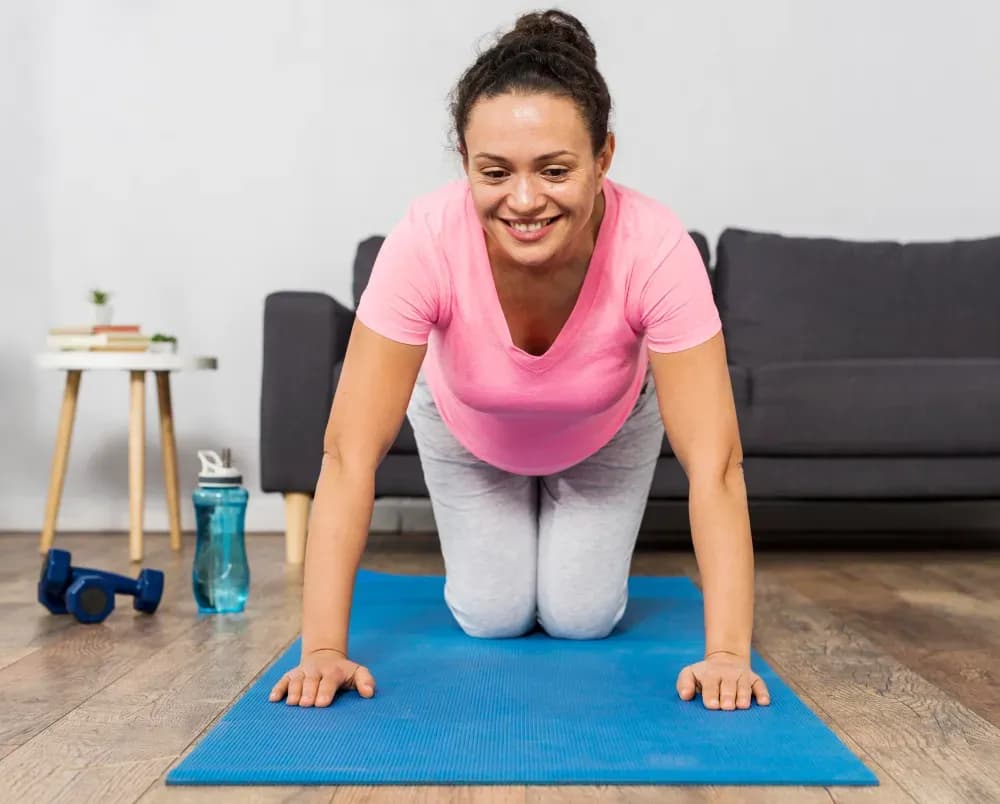
Exercising is essential for managing diabetes. Physical activity, or at least moving your body at short intervals, is very important when we talk about type 2 diabetes treatment.
One of the most glaring contributing factors towards India’s super-rapid rise as a diabetic nation is the sedentary lifestyle of our young population. This guide provides practical, safe, and effective home exercise for diabetes routines tailored for individuals with diabetes.
Exercising is not about Expensive Gymming
It goes without saying that keeping your body fit is a good step towards fighting complications of diabetes.
Exercising need not be an expensive, tedious, boring, or mentally exhausting chore that makes you run away in the opposite direction. Physical fitness can be made into fun workouts without wasting money on gym memberships.
Exercising is About Feeling Good while Sweating
Exercise keeps your muscles and bones healthy and releases neurotransmitters called endorphins that make you feel good. Once you feel happy in your mind and body, life fills with hope and spirit.
So, isn’t that a win-win situation for your body, mind, and spirit?
Regular exercise is crucial for managing diabetes. It helps control blood sugar levels, improve insulin sensitivity, and enhance overall health. This blog aims to provide you with easy-to-follow home exercise for diabetes routines to help you stay active and healthy.
Safety Considerations for Starting Home Exercise for Diabetes
Before starting any new home exercise for diabetes, it’s essential to keep a few safety tips in mind:
- Consult Your Doctor: Always consult your healthcare provider before beginning a new exercise regimen.
- Monitor Blood Sugar Levels: Check your blood sugar levels before and after exercising to ensure they stay within a safe range.
- Stay Hydrated: Drink plenty of water before, during, and after your workout.
- Have a Snack Ready: Keep a quick snack on hand in case of hypoglycemia (low blood sugar).
5 Simple Home Exercises for Diabetes Management
1. Jumping Jacks
Starting in a standing position, leap to spread your legs shoulder-width apart while simultaneously raising your arms above your head, then quickly jump back to the starting stance.
Perform this in 3 sets of 30 seconds to 1 minute each. Jumping jacks can burn approximately 8-14 calories per minute.
It is an excellent cardiovascular exercise that engages multiple muscle groups for a full-body warm-up or high-intensity interval training (HIIT) component.
2. Push-Ups
From a plank position, lower your body toward the floor by bending your elbows and push back up. Aim for sets of 10-15 push-ups, gradually increasing the number as you grow stronger.
Push-ups can burn around 7-10 calories per minute, focusing on strengthening the chest, shoulders, triceps, and engaging the core, thereby providing a compact upper body workout.
3. Squats
Stand with feet hip-width apart, then lower your body back as if sitting in a chair, keeping your chest upright. Rise back up to standing. Do 3 sets of 15-20 repetitions.
Squats can help you burn about 7-10 calories per minute, effectively targeting the lower body, including quadriceps, hamstrings, glutes, and calves, enhancing strength, balance, and flexibility.
4. Planks
Prop yourself on your elbows and toes, keeping a straight line from head to heels. Hold this position for 20-60 seconds for 2-3 sets.
Planking burns approximately 2-5 calories per minute, depending on intensity and individual factors. It’s a superb exercise for the core, strengthening the abdominal muscles, lower back, and shoulders and improving overall stability.
5. Burpees
Begin standing, squat down, place your hands on the ground, kick your feet back into a push-up position, do a push-up, return to squat, and jump up with arms overhead. Perform 2-3 sets of 10-15 burpees.
Burpees can burn around 10-15 calories per minute, offering a rigorous full-body workout that improves muscle strength, endurance, and cardiovascular fitness, making them exceptionally efficient for weight loss and conditioning.
Important Note: If you experience any pain or discomfort while exercising, please stop and check with your doctor or physiotherapist first.
Weekly Home Exercise Plan for Diabetes
Here’s a simple weekly exercise planner that you can follow. But like we said earlier, it’s best to check this with your fitness expert or a physiotherapist to see if it’s best for you.
| Day | Focus | Activities & Sets |
|---|---|---|
| Day 1 | Full Body & Cardio | – Warm-Up: Jumping Jacks (5 min)– 3×15 Push-Ups– 3×20 Squats– Burpees (2 min, as many as possible)– Cool Down: Stretching/Yoga (10 min) |
| Day 2 | Upper Body Strength & Core | – Warm-Up: Arm Circles, Wall Push-Ups (5 min)– 3×12 Push-Ups – 3×1-minute Planks – 3×15 Chair Dips, 3×15 biceps curls – Cool Down: Stretching for Arms/Abs (10 min) |
| Day 3 | Active Recovery | – 30-min Walk or Low-Impact Yoga Session |
| Day 4 | Lower Body Strength & Stability | – Warm-Up: High Knees (5 min)– 4×20 Squats– 3×15 Lunges per Leg – 2×20 Calf Raises – Cool Down: Lower Body Stretching (10 min) |
| Day 5 | Cardio & Core | – Warm-Up: Jumping Jacks (5 min)– 20 min HIIT (1 min high-intensity, 1 min rest/light activity – Minute on Minute cycles of push up, squats, burpees, mountain climber, reverse lunge)– 3×1-minute Planks– 3×15 Russian Twists– Cool Down: Full-Body Stretching (10 min) |
| Day 6 | Full Body Strength | – Warm-Up: Dynamic Stretching (5 min)– 3×10 Push-Ups– 3×20 Squats– 3×1-minute Planks– 3×15 Glute Bridges– Cool Down: Stretching for Worked Muscles (10 min) |
| Day 7 | Rest or Light Activity | – Complete Rest or Light Activity (e.g., Walking, Gentle Stretching, Leisurely Bike Ride) |
Tips for Staying Motivated
Staying motivated is key to maintaining a regular home exercise for diabetes routine. Here are some tips:
- Set Realistic Goals: Start with achievable exercise goals and gradually increase intensity.
- Track Progress: Keep a workout journal or use fitness apps to monitor your progress.
- Mix It Up: Vary your exercises to keep workouts interesting and target different muscle groups.
- Stay Connected: Join online fitness communities or virtual exercise classes for support and motivation.
Conclusion
Regular physical activity can be a simple and effective part of diabetes management. You do not need an expensive gym or complicated routine to stay active. Start with exercises that suit your fitness level, stay consistent, and increase the intensity gradually. If you have any health concerns or experience pain or discomfort, speak with your doctor or physiotherapist before continuing.
How Can PB Health Support You?
When someone in your family needs care, you should not have to worry about what happens next or who is responsible for each step.
At PB Health Hospital, IFFCO Chowk, Gurgaon, we believe wellness requires continuity, coordination, and consistent follow-through. Our doctors and care teams work together, supported by technology that helps track progress, organise follow-ups, and keep information clear and accessible. From prevention to recovery, every stage is managed thoughtfully so that nothing important is missed and nothing is left unclear.
Explore diabetes management services at PB Health for guidance on managing blood sugar and building healthy routines.
To understand more about our approach, you can visit our website, PB Health.