


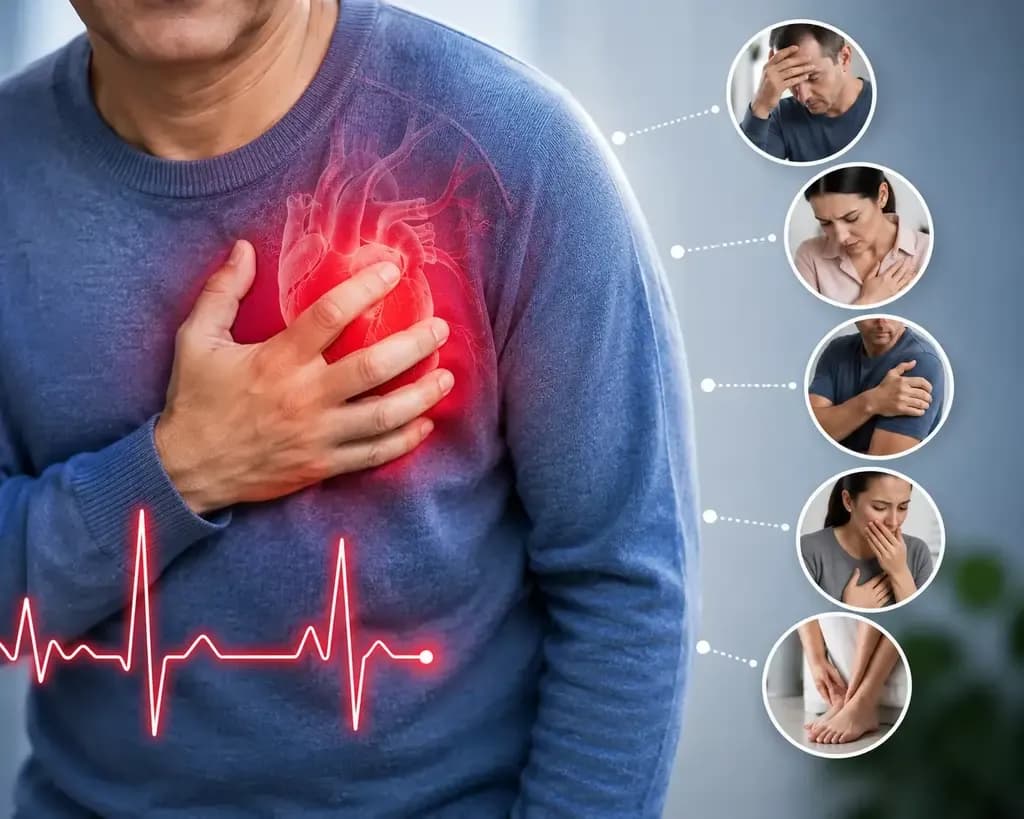
Heart disease continues to be a major health concern across the world, affecting millions of people every year and contributing to many early deaths. Many heart-related conditions do not develop suddenly and often progress gradually, sometimes with subtle warning signs that can easily go unnoticed. Being aware of the five early signs of a heart attack can support early identification, timely medical attention, and better heart health management.
How Does a Heart Attack Happen?
A heart attack (myocardial infarction) occurs when blood flow to part of the heart is blocked, usually because fatty deposits (plaque) build up inside the coronary arteries.
If a plaque ruptures, a blood clot can form and completely block blood flow. Without enough oxygen-rich blood, part of the heart muscle begins to get damaged.
A heart attack is a medical emergency and requires immediate treatment.
5 Early Signs of a Heart Attack You Should Never Ignore
Heart attacks don't always begin with sudden, crushing chest pain. Many people experience subtle symptoms that are often mistaken for stress, acidity, or fatigue.
1. Chest Pressure or Discomfort
Chest discomfort is the most common warning sign, but it doesn't always feel painful. Watch for:
● Tightness or pressure in the chest
● A squeezing or heavy feeling
● Burning sensation that feels like acidity
● Discomfort that comes and goes
Never ignore chest discomfort, especially if it occurs with other symptoms.
2. Shortness of Breath
Feeling breathless during routine activities, or even at rest, may be an early sign that your heart isn't getting enough oxygen-rich blood.
Look out for:
● Breathlessness while walking
● Difficulty climbing stairs
● Shortness of breath during routine activities
● Feeling unable to catch your breath
3. Cold Sweats
Breaking into a cold sweat without exercise, heat, or fever can sometimes indicate a heart attack.
It may be accompanied by:
● Clammy skin
● Dizziness
● Weakness
● Chest discomfort
4. A Feeling That Something Isn't Right
Some people experience an unusual sense of uneasiness before a heart attack.
This may include:
● Sudden anxiety
● Panic without a clear reason
● Feeling that "something is wrong"
When this occurs alongside physical symptoms like chest discomfort or sweating, don't ignore it.
5. Extreme Fatigue
Unusual tiredness, especially if it develops suddenly or lasts for several days, can be an early warning sign.
Watch for:
● Feeling exhausted despite adequate rest
● Difficulty performing everyday tasks
● Reduced stamina
● Unexplained weakness
This symptom is particularly common in women.
Do Heart Attack Symptoms Differ in Women?
Yes. Women may experience symptoms that are different from the classic chest pain often seen in men. The common symptoms in women can include:
● Unusual fatigue
● Nausea
● Jaw, neck, or back discomfort
● Shortness of breath
● Dizziness
● Mild chest pressure rather than severe pain
Because these symptoms can appear less obvious, they are often mistaken for stress, digestive issues, or exhaustion.
When Should You Seek Immediate Medical Attention?
Seek emergency medical services immediately if you experience:
● Chest pain or pressure lasting several minutes
● Difficulty breathing
● Pain spreading to the arm, jaw, neck, shoulder, or back
● Cold sweats
● Sudden dizziness or fainting
● Chest discomfort accompanied by nausea or sweating
Conclusion:
The earlier a heart attack is recognised, the better the chances of preventing serious complications. If you notice warning signs such as chest discomfort, shortness of breath, cold sweats, unusual fatigue, or sudden anxiety, don't ignore them. Prompt medical attention can save heart muscle, and save lives.
Awareness is one of the most important steps in protecting heart health.
How Can PB Health Support You?
Early diagnosis and timely treatment can make a significant difference in heart health. At PB Health, our doctors provide coordinated care, from risk assessment and diagnosis to treatment, recovery, and long-term heart health management.
Our integrated care approach ensures every stage of your healthcare journey is connected, coordinated, and seamless.