

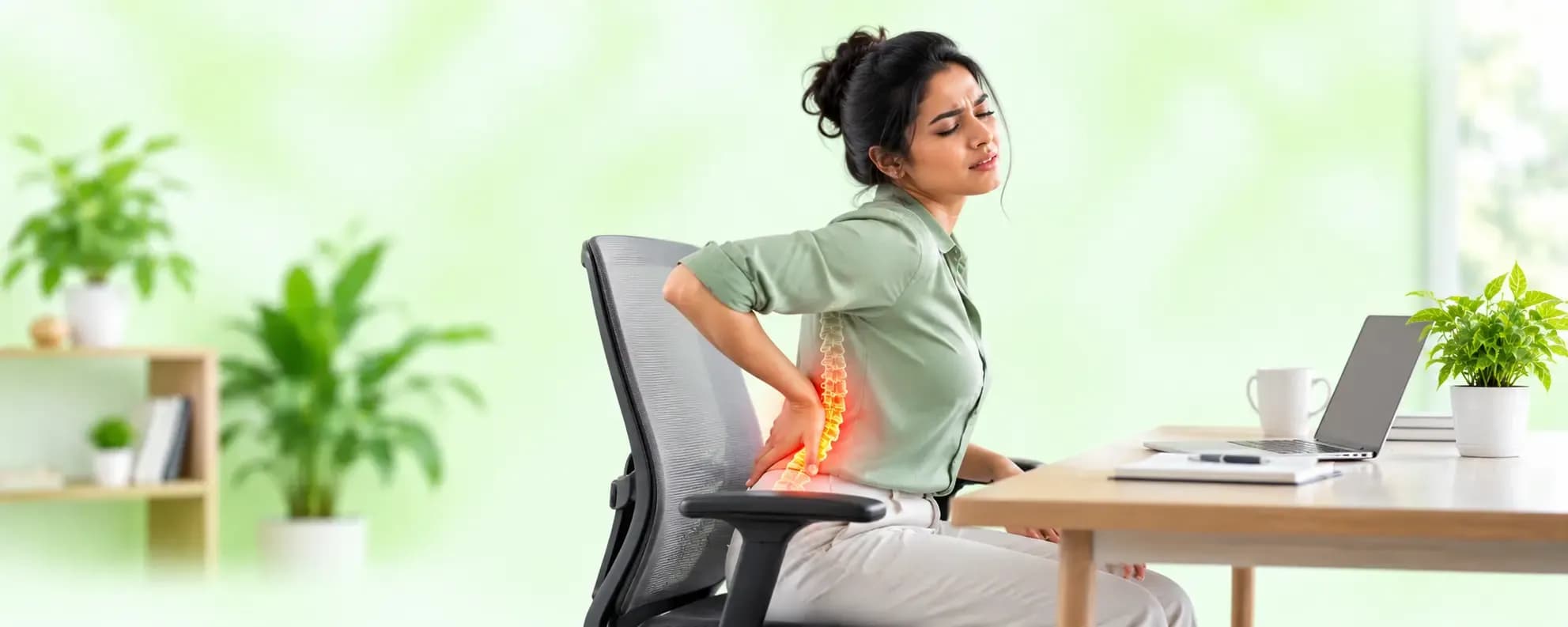

When your back starts hurting, it is easy to think the safest thing to do is wait, rest and avoid movement until the pain goes away.
But during those first few days, you are already making decisions. Should you stop walking? Is it safe to bend? Should you lift your child? Do you need an MRI? Should you stay in bed?
The problem is that you often make these decisions without knowing what your back actually needs.
For many people, understanding when to keep moving, when to modify an activity and when to seek medical advice can be more useful than simply waiting for the pain to disappear.
Back pain doesn't always tell a clear story
Most people judge back pain by how severe it feels. But pain intensity does not always correspond directly to what an imaging scan shows.
A systematic review published in the American Journal of Neuroradiology found that disc degeneration, disc bulges and other spinal changes were also common in people who had no back pain. These findings became more frequent with age. This means that an MRI finding does not necessarily explain someone's pain on its own.
An MRI is therefore only one part of the assessment. A doctor may also consider:
- How the pain started
- Where the pain is located
- Whether it travels into the leg
- What makes it better or worse
- Your physical examination
- Whether you have any warning signs
This is why a scan should be interpreted alongside your symptoms and clinical examination rather than in isolation.
What should you do when your back hurts?
For many episodes of lower back pain, staying completely inactive is not the best approach.
Clinical guidance generally recommends continuing normal activities as much as possible, while adjusting activities that make the pain worse. Routine imaging is also not recommended for everyone with low back pain. NICE advises that imaging should generally be considered only when the result is likely to change management.
Depending on the situation, back pain treatment may involve:
- Staying gently active
- Modifying activities temporarily
- Exercise or physiotherapy
- Pain-relief medicines when appropriate
- Addressing factors that may contribute to persistent pain
- Further investigation when clinically indicated
There is no single lower back pain treatment that works for everyone. The right approach depends on the cause, duration and severity of the symptoms.
When back pain needs urgent attention
Some symptoms should not be managed by simply waiting at home.
Seek urgent medical assessment if back pain is accompanied by:
- New difficulty controlling your bladder or bowel
- Numbness around the genitals, buttocks or inner thighs
- Significant or worsening weakness in the legs
- Severe symptoms following major trauma
- Other symptoms that make you seriously unwell
These symptoms can sometimes indicate a more serious problem and need prompt assessment.
How to relieve back pain safely
If your back pain is mild and there are no warning signs, simple measures may help.
Keep moving: Gentle movement and normal daily activity, within your comfort level, are generally preferable to prolonged bed rest. NICE recommends encouraging people with low back pain to continue normal activities.
Modify painful activities: You do not necessarily need to stop every activity. Instead, temporarily reduce or modify movements that clearly aggravate the pain.
For example, if bending repeatedly makes your symptoms worse, avoid unnecessary bending for a short period while continuing comfortable activities.
Don't rush into an MRI: An MRI can be useful when there is a clinical reason for it, but having a scan simply because your back hurts may not provide the answer you expect. Degenerative changes can occur even in people without pain.
Seek medical advice if pain persists: If your symptoms are not improving, keep returning, are becoming more severe or are affecting your ability to function, speak with a healthcare professional.
How PB Health Can Support You?
A useful consultation should give you more than a diagnosis or prescription. You should understand what may be contributing to the pain, which activities you can continue, what you may need to modify, whether tests are necessary and which symptoms require further attention.
At PB Health, our healthcare team can help you understand your symptoms and reports, guide you on appropriate evaluation and connect you with the right specialist when needed.
Knowing what to do next can be an important part of managing back pain.
Conclusion
Back pain does not always mean you need complete rest, an immediate MRI or a complicated treatment plan.
For many people, the first step is understanding what is safe to continue, what should be modified and when medical assessment is necessary.
The goal is not simply to make the pain disappear. It is to understand what your back needs and take the right next step.