


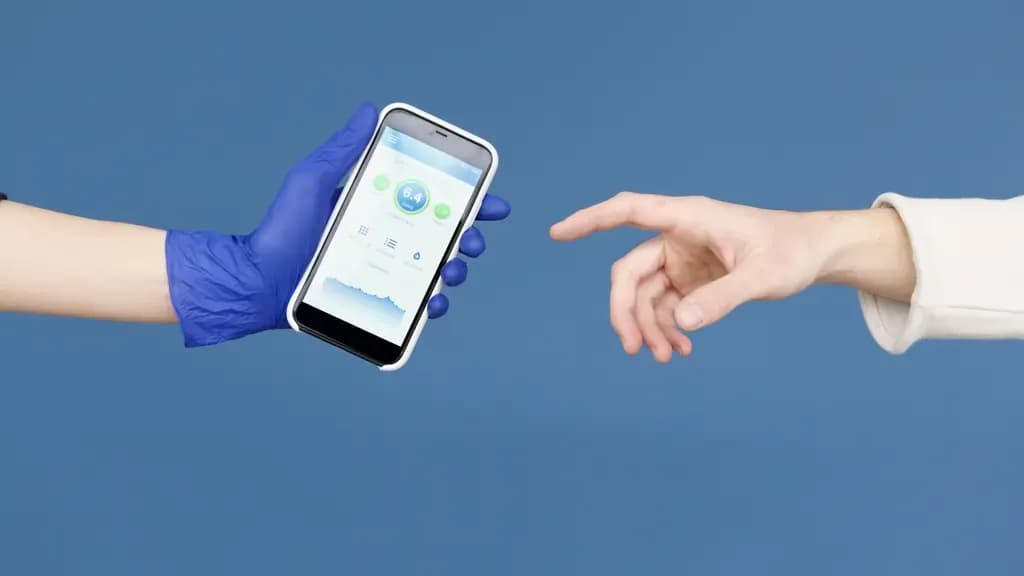
Healthcare is changing. And it is not just happening inside hospital walls anymore.
For a long time, most of us believed that healthcare starts only when we get sick and ends when we leave the hospital. We would see a doctor, take medicines, and go back to our normal lives. That was it. But today, things are different. Technology is slowly changing the way we think about care.
Now, you can book appointments online without standing in long queues. You can also talk to a doctor through a video call. You can even check your heart rate, sleep, and step on your smartwatch.
Healthcare is not just the hospitals and clinics. It is becoming a part of our everyday lives. It lives in our phones, our homes, and our daily habits. Instead of waiting to fall sick, we can now track our health, notice small changes early, and act in time.
This shift is powered by digital healthcare, a growing space where medicine and technology come together to solve real-life problems.
How AI and Smart Systems Are Transforming Healthcare?
One of the biggest changes happening in healthcare today is the rise of AI, which helps doctors analyses reports faster, detect diseases early, and reduce mistakes made by humans.
Not just that, AI can scan thousands of medical records in a few minutes. Especially for patients, this means shorter waiting times, quicker diagnosis, and treatment plans that are accurate and better suited to their needs.
Electronic health records (EHR)* have replaced piles of paper files. Important details such as your medical history, prescriptions, test results, and doctor notes can now be stored digitally. So, this makes follow-up smoother and prevents unnecessary repeated tests, saving both time and money.
How Automation Reduces Cost, Saves Time, and Increases Efficiency?
Hearing the word “Healthcare” always leaves us confused and stressed, thinking about unexpected expenses, long wait times, and the need to repeat paperwork.
Technology is helping solve these pain points.
Digital medical records make tracking history easy: When health records such as medical history, past treatments, test reports, and family health details are stored in one place. You don’t have to repeat everything every time you visit a new doctor. Doctors can quickly review your records and focus on treatment rather than paperwork, saving time for both patients and doctors.
Automated appointment scheduling reduces wait time at the reception: With online booking systems, patients can choose available time slots in advance. This helps hospitals better manage patient flow and reduces long queues at reception. It also saves time for both patients and staff.
Digital billing brings transparency: Digital billing systems clearly show the breakdown of charges such as consultation fees, tests, medicines, and other services. This reduces confusion, avoids billing errors, and builds trust between patients and healthcare providers.
AI-based triage systems guide patients to the right specialist: AI-powered systems can ask basic questions about symptoms and suggest the appropriate department or specialist. This helps patients get the right care faster and reduces unnecessary appointments or delays.
Telemedicine allows patients to consult doctors from home: Through video calls or health apps, patients can speak to doctors without visiting the hospital. This is especially helpful for follow-ups, minor illnesses, or people living in remote areas. It saves travel time, cost, and effort.
How Healthcare Is Becoming Part of Everyday Life?
Technology is not just helping hospitals; most importantly, it helps individuals take charge of their well-being.
● Health apps remind us to take medicines, track calories, or monitor blood pressure.
● Wearable technology in healthcare, such as fitness bands that track steps, sleep, and heart rate in real time.
● Medical robots assist in complex surgeries with greater precision.
● Blockchain in healthcare is improving data security, ensuring medical records remain safe and tamper-proof.
The hard truth is that many lifestyle diseases build silently. By the time symptoms appear, the body has already been adjusting for years. With continuous tracking and digital health tools, issues can be identified much earlier.
A New Model: How PB Health Is Using Integrated Technology in Healthcare:
While many healthcare providers are adopting technology, PB Health represents a new way of thinking.
Instead of focusing only on hospital-based treatment, PB Health integrates technology into the entire healthcare journey. The idea is simple: healthcare should be proactive, transparent, and accessible, but not reactive and confusing.
PB Health uses integrated digital systems to:
● Make appointments smoother and easier
● Keep patient records connected and organized
● Provide cost transparency
● Enable timely interventions
● Reduce unnecessary procedures
Their approach blends AI tools, digital records, and patient-centric design to create a seamless experience. It is not just about treating illness; it is about managing health smarter.
PB Health’s model recognizes that prevention, early diagnosis, and coordinated care reduce overall costs and emotional stress for families. Technology serves as a bridge connecting patients, doctors, data, and decisions within a single ecosystem.
How Can PB Health Support You?
When a loved one needs care, the first thing you want is clarity. You want to understand the potential costs, the expected recovery timeline, and the next steps. Most importantly, you want confidence that every recommendation is truly necessary.
From consultation to treatment to discharge, you shouldn’t have to coordinate between doctors, labs, pharmacies, and insurance. Your focus should be on being by your loved one’s side, and your time should matter. There should be a single, clear point of ownership guiding the entire journey.
Even after returning home, support should continue through structured follow-ups and attention to long-term health. Families and caregivers deserve to feel supported, not left to navigate the process alone.
At PB Health, this is how we believe healthcare should work, not as a promise, but as a basic standard. If this aligns with the standard you expect, you can learn more by visiting our website, PB Health.