
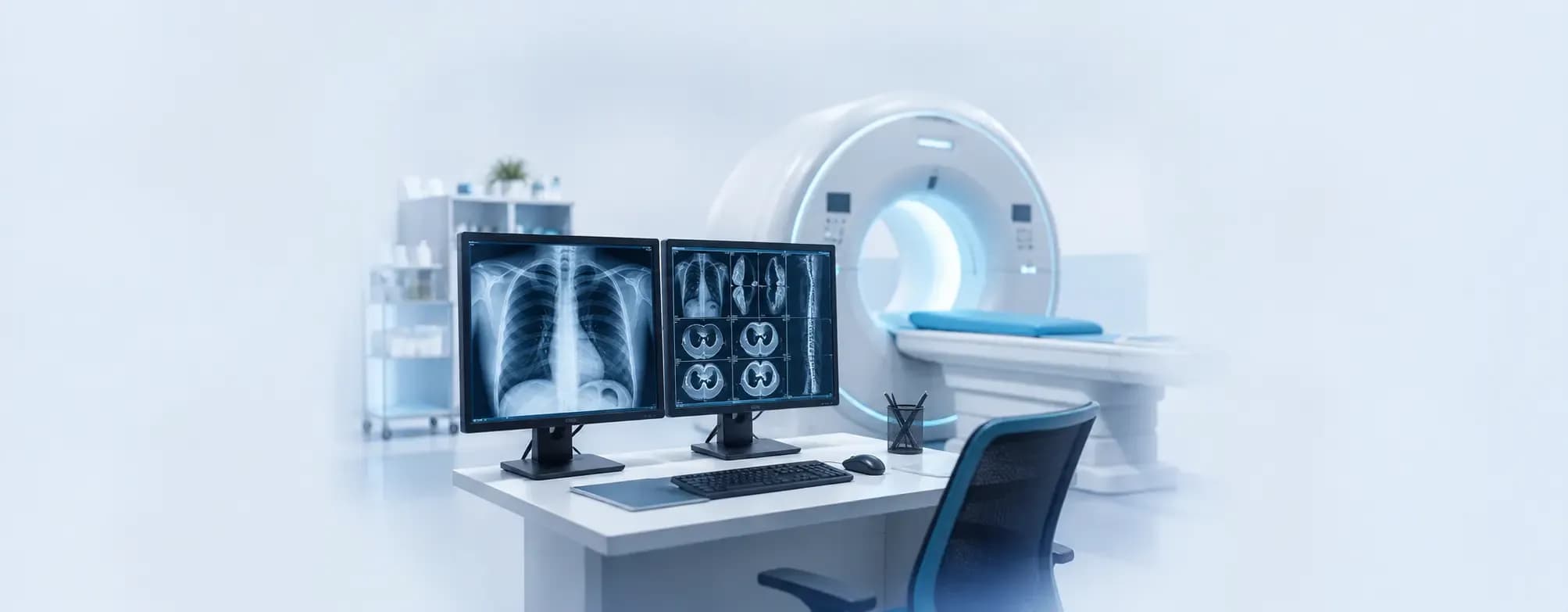
Most serious illnesses don't begin with obvious symptoms. In many cases, changes are happening inside the body long before a person feels unwell. That's one of the reasons radiology has become such an important part of modern healthcare — it lets doctors look beneath the surface, helping detect conditions early, confirm a diagnosis, and guide treatment decisions.
Whether it's a persistent cough, unexplained pain, or a routine health screening, radiology imaging often provides answers that a physical examination alone cannot.
What Is Radiology?
Radiology is the branch of medicine that uses medical imaging to diagnose, monitor, and sometimes treat disease. It includes techniques such as X-rays, ultrasound, CT scans, MRI, and mammography, each suited to examining different parts of the body.
Radiology has two broad branches. Diagnostic radiology uses imaging to identify and monitor disease, while interventional radiology uses imaging to guide minimally invasive treatments, such as draining fluid, opening a blocked blood vessel, or performing a needle biopsy — often avoiding the need for open surgery.
Images are interpreted by specially trained doctors called radiologists, who work closely with your treating physician to help identify the cause of your symptoms and recommend next steps.
Imaging Techniques at a Glance
Each imaging test has a specific purpose, and your doctor chooses the one most likely to answer the clinical question at hand:
| Technique | Radiation? | Speed | Often used for |
|---|---|---|---|
| X-ray | Yes, low dose | Seconds | Fractures, chest and lung conditions |
| Ultrasound | None | Minutes | Abdominal organs, blood flow, pregnancy |
| CT scan | Yes | Minutes | Bones, blood vessels, internal organs, trauma |
| MRI | None | 30–60 min | Brain, spine, muscles, joints, soft tissue |
| Mammography | Yes, low dose | Minutes | Breast tissue and screening |
Why Is Early Detection So Important?
Many health conditions are easier to manage when identified early. Finding a disease before symptoms become severe can make treatment more effective and, in some cases, help prevent complications altogether. For example, imaging may detect:
- A small lung infection before it worsens
- Early changes in the bones after an injury
- Kidney stones causing abdominal pain
- Breast changes that require further evaluation
- Tumours that aren't yet causing symptoms
Finding these conditions early allows treatment to begin sooner and gives doctors more options for managing the condition.
Common Early-Detection Screening Programmes
Beyond investigating symptoms, some imaging tests are used to screen for disease in people who feel well but may be at higher risk. Examples include:
- Mammography — used to screen for breast cancer, often starting at an age your doctor will advise based on your personal and family history
- Low-dose CT lung screening — considered for people at higher risk of lung cancer, such as long-term smokers
- Bone density (DEXA) scanning — used to screen for osteoporosis, particularly in postmenopausal women and older adults
Screening recommendations depend on age, risk factors, and family history, so it's worth discussing with your doctor whether any screening programme is right for you.
It's Not Just About Finding Disease
One common misconception is that imaging is only used to diagnose illness. In reality, radiology plays a role throughout a person's healthcare journey. Doctors also use imaging to:
- Monitor chronic conditions
- Assess how well a treatment is working
- Guide certain medical procedures, including biopsies and minimally invasive treatments
- Check healing after surgery or injury
- Evaluate changes over time
This ongoing use of imaging helps ensure treatment decisions are based on the most up-to-date information about your health.
The People Behind the Images
When most people think about a scan, they picture the machine. But behind every image is a team of healthcare professionals working together.
A radiology technologist (often called a radiology tech) performs the imaging examination — explaining the procedure, positioning you correctly, and ensuring high-quality images are captured safely and comfortably. The completed images are then reviewed by a radiologist, who prepares a detailed report for the doctor managing your care.
Together, the radiology tech, the radiologist, and your treating physician turn images into meaningful clinical decisions.
Is Medical Imaging Safe?
Many people worry about radiation exposure before an imaging test. The type of medical imaging recommended depends on your symptoms and history. Some investigations, such as X-rays and CT scans, use carefully controlled doses of radiation. Others, including ultrasound and MRI, don't use ionising radiation at all.
Healthcare providers only recommend imaging when the expected benefit outweighs any potential risk, and they choose the test most likely to answer the clinical question while avoiding unnecessary investigations.
When Might You Need Radiology Imaging?
Your doctor may recommend imaging if you have symptoms such as:
- Persistent pain
- Unexplained swelling
- Difficulty breathing
- Ongoing headaches
- A suspected fracture
- Abdominal pain
- Changes detected during a routine examination
Imaging may also be part of a preventive screening programme, particularly for conditions where early detection can improve outcomes.
Conclusion
Modern radiology allows doctors to see what cannot be detected during a physical examination alone. From identifying injuries and infections to detecting cancers and monitoring chronic disease, diagnostic radiology plays a central role in delivering timely, accurate healthcare.
The goal isn't simply to produce images — it's to provide the information needed to make better clinical decisions. Combined with your symptoms, medical history, and examination findings, radiology helps doctors diagnose conditions earlier and plan the most appropriate treatment for you.
How PB Health Can Support You
At PB Health, our radiology services combine advanced imaging technology with experienced radiologists and skilled radiology tech professionals to support timely, accurate diagnosis. Whether you need a routine X-ray, ultrasound, CT scan, or MRI, our imaging team works closely with your doctor to ensure every investigation contributes to clear answers and coordinated care.
This article is for general information only and is not a substitute for professional medical advice. Please speak with your doctor about which imaging or screening is right for you.