

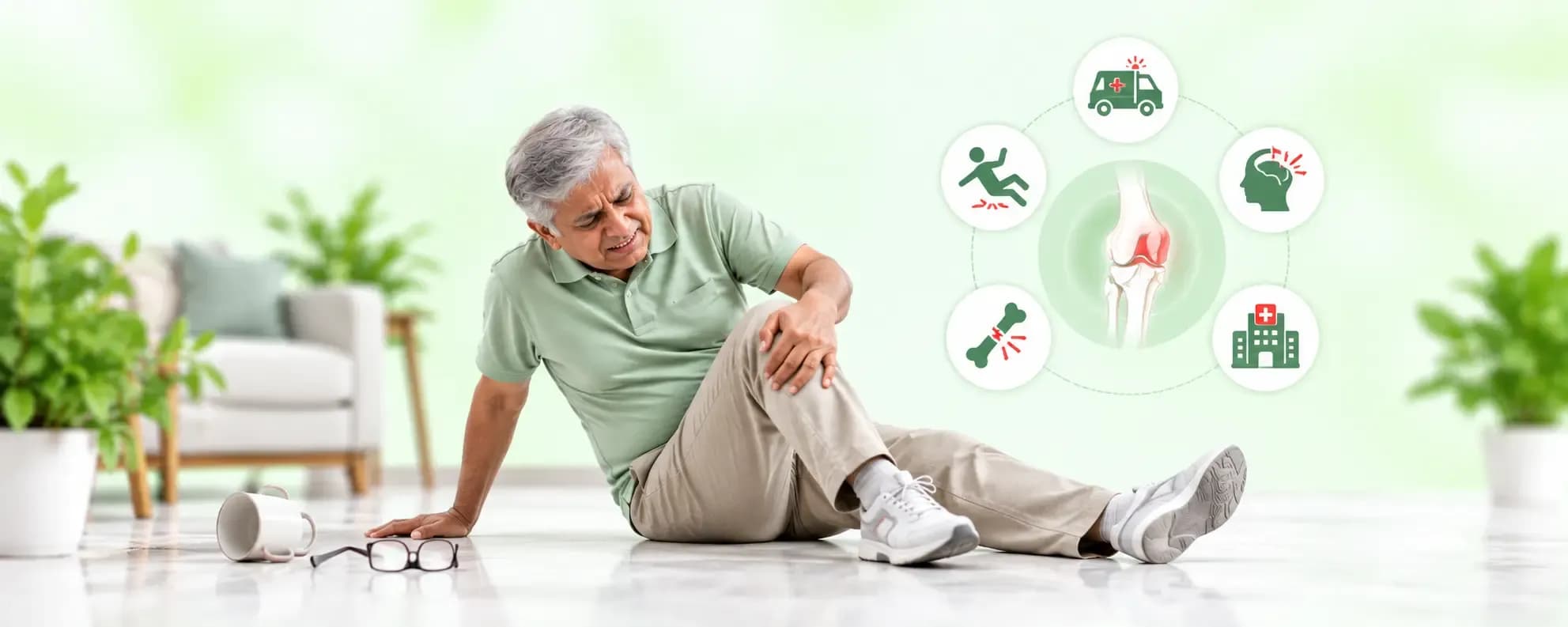

A fall can happen in an instant. You might slip on a wet floor, miss a step on the stairs, fall from a bicycle, or lose your balance while getting out of bed. Most falls result in nothing more than a bruise or a few days of soreness. But sometimes, a fall can cause a serious injury that isn't immediately obvious.
This is particularly important for older adults. As we age, balance, muscle strength, vision, and bone strength can change, making falls more likely and increasing the risk of injury. Good fall prevention elderly measures can reduce this risk, but knowing what to look for after a fall is just as important.
So, how do you know when a fall needs medical attention? And when to go to ER after a fall?
When Is a Fall More Concerning?
Not every fall requires an emergency department visit. The seriousness depends on factors such as how the fall happened, which part of the body was injured, the person's age and health, and whether symptoms develop afterwards.
A fall deserves prompt medical attention if there has been:
- A blow to the head
- Loss of consciousness
- Severe or worsening pain
- Difficulty standing or walking
- A suspected fracture
- Bleeding that doesn't stop
- New confusion or unusual behaviour
- Weakness or numbness
- Difficulty speaking or seeing
- Repeated vomiting
A person can sometimes appear fine immediately after a fall and develop symptoms later, especially following a head injury.
Head Injury After a Fall: What Should You Watch For?
A blow to the head can cause anything from a minor bump to a more serious traumatic brain injury. Not every head injury leads to complications, but certain head injury symptoms should never be ignored.
Watch for:
- A headache that gets worse
- Repeated vomiting
- Increasing drowsiness
- Confusion or unusual behaviour
- Problems with balance or coordination
- Weakness or numbness
- Slurred speech
- Seizures
- Loss of consciousness
- Changes in vision
These symptoms can indicate a more serious injury and require urgent medical assessment.
What About a Small Bump on the Head?
A small bump doesn't necessarily mean there is a serious injury. However, the size of an external injury doesn't always tell you what is happening underneath.
This is particularly important in older adults and people taking blood-thinning medicines. A seemingly minor fall can sometimes result in bleeding inside the skull, with symptoms developing later.
If there is any doubt after a significant head impact, it's safer to seek medical advice.
Could It Be a Concussion?
A concussion is a type of mild traumatic brain injury caused by a blow or jolt to the head or body that makes the brain move rapidly within the skull.
The concussion symptoms can be subtle. Someone may remain conscious and still have a concussion.
Symptoms may include:
- Headache
- Dizziness
- Nausea
- Feeling unusually tired
- Difficulty concentrating
- Memory problems
- Feeling slowed down or confused
- Sensitivity to light or noise
- Changes in sleep
Most concussions improve with appropriate care, but symptoms that worsen or new neurological symptoms require medical assessment.
When to Go to the ER After a Fall
Knowing when to go to ER can be difficult, especially when the person doesn't seem badly injured.
Seek emergency medicine care or emergency medical help if someone has:
- Lost consciousness, even briefly
- A seizure
- Difficulty staying awake or waking up
- A severe or worsening headache
- Repeated vomiting
- New confusion
- Weakness or numbness
- Difficulty speaking, walking, or maintaining balance
- Significant bleeding
- Difficulty breathing
- Severe neck or back pain
- A suspected fracture or major injury
After a significant fall, don't wait for every symptom to appear before getting help.
Falls in Older Adults Need Extra Attention
Falls are a major health concern for older adults. Recovery can also take longer, particularly when a fall causes a fracture, head injury, or loss of confidence.
Someone who falls may become afraid of falling again and start avoiding everyday activities. Over time, this can lead to less movement, muscle weakness, and an increased risk of future falls.
This is why fall prevention elderly strategies should focus on more than simply avoiding slippery floors.
Practical measures include:
- Keeping walkways clear of clutter
- Improving lighting around the home
- Using handrails on stairs
- Installing grab bars where appropriate
- Wearing well-fitting, supportive footwear
- Having vision checked regularly
- Reviewing medicines with a doctor if they may contribute to dizziness or drowsiness
- Maintaining strength and balance through appropriate physical activity
For someone who has already fallen, identifying why the fall happened can be just as important as treating the injury.
What Should You Do Immediately After a Fall?
If someone has fallen, resist the urge to pull them up immediately.
First, check whether they are conscious and breathing normally. Ask where they hurt and whether they can move their arms and legs.
If there is severe pain, a suspected fracture, neck or back pain, or a possible head injury, avoid unnecessary movement and seek medical assistance.
If they are able to move safely and there are no signs of serious injury, they can get up slowly with appropriate support.
If you're unsure, it's better to wait for professional help rather than risk making an injury worse.
Don't Ignore a Change After the Fall
One of the most important things to remember is that a fall isn't necessarily over once the person gets back on their feet.
Pay attention to changes over the following hours. A new headache, increasing sleepiness, repeated vomiting, confusion, dizziness, or difficulty walking may signal a problem that needs medical assessment.
This is particularly important when there was a blow to the head.
Conclusion
Most falls are not emergencies, but some can result in serious injuries that need immediate treatment. Head injuries, fractures, internal injuries, and complications such as concussion may not always be obvious straight away.
Knowing the head injury symptoms and concussion symptoms that require attention can help you act sooner. And when you're unsure when to go to ER, particularly after a significant fall or head impact, it's better to seek professional medical advice rather than wait for symptoms to become severe.
For older adults, prevention matters too. Simple fall prevention elderly measures around the home, combined with regular attention to strength, balance, vision, and medicines, can help reduce the risk of future falls.
How PB Health Can Support You
A fall can affect more than just one part of the body. At PB Health Hospital, IFFCO Chowk, Gurgaon our multidisciplinary teams can assess injuries, arrange diagnostic tests when needed, and coordinate care with the appropriate specialists. For older adults, we can also help identify factors that may increase the risk of future falls and support a safer recovery.