


A persistent cough, repeated chest infections, unexplained breathing problems, or an unusual finding on a chest scan can leave you worried about what is happening inside your lungs. Sometimes, a chest X-ray or CT scan provides doctors with useful information, but further testing is needed to understand the problem.
A bronchoscopy is one such test. It allows a doctor to look directly inside the airways and, when needed, collect samples for further testing. Knowing what the procedure involves can make it feel much less unfamiliar.
In this blog, let us understand what bronchoscopy is, why it may be recommended, how the procedure is performed, and what you can expect before and after the test.
What Is Bronchoscopy?
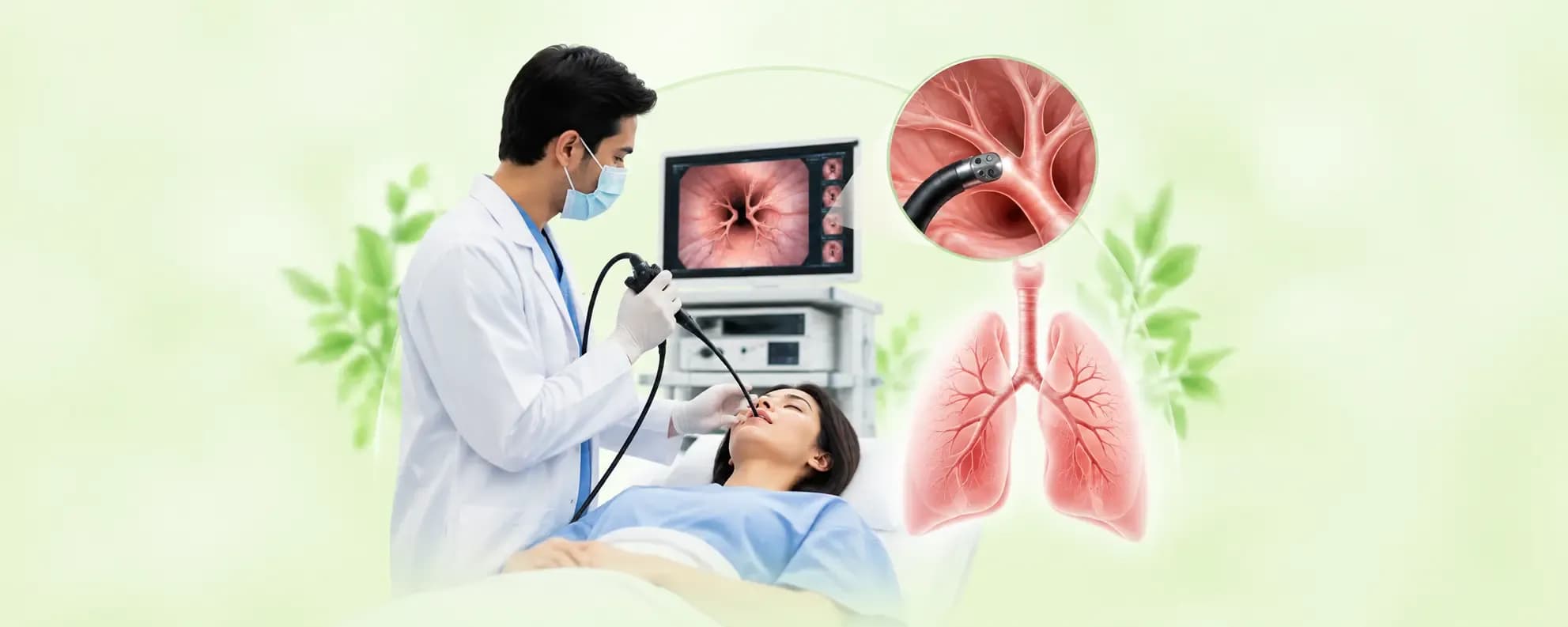
Bronchoscopy is a procedure that helps doctors look inside your airways and lungs. It is usually done by a pulmonologist, a doctor who specialises in lung conditions.
During the procedure, a thin tube called a bronchoscope is gently passed through your nose or mouth, down your throat, and into your airways.
Most bronchoscopies use a flexible bronchoscope. In some situations, such as heavy bleeding in the lungs or a large object blocking the airway, a rigid bronchoscope may be used instead.
A bronchoscopy can be used to:
- Look for abnormalities inside the airways
- Collect mucus, fluid, cells, or tissue samples
- Investigate an abnormal area seen on a scan
- Find the source of bleeding in the airways
- Remove mucus or a foreign object
- Examine certain lymph nodes using endobronchial ultrasound, or EBUS
Flexible bronchoscopy is used for both diagnosis and treatment of several lung and airway conditions. Indian guidelines also provide recommendations on when to use it, how patients should prepare, and how to collect samples safely.
When Do You Need a Bronchoscopy Test?
A doctor may recommend a bronchoscopy test when other investigations have not provided enough information or when a closer look at the airways is needed.
Some common reasons include:
A persistent cough: A cough that continues despite treatment may need further investigation, particularly when its cause is unclear.
An abnormal chest X-ray or CT scan: If imaging shows an unusual area in the lung or airway, a bronchoscopy may help the doctor examine it more closely and, if required, collect a sample.
Repeated lung infections: If lung infections keep returning or do not improve as expected, examining the airways and collecting samples may help identify the cause.
Suspected lung cancer: A bronchoscopy may be used to collect cells or tissue when lung cancer is suspected. In selected cases, EBUS can also help doctors examine and sample lymph nodes in the chest.
Importantly, being advised to have a bronchoscopy does not mean that you have cancer. The procedure can be recommended for many different reasons.
Blood in the airways: If you are coughing up blood and the source is unclear, this procedure may help doctors identify the source of the bleeding.
A blocked airway: A foreign object, thick mucus, or another blockage can sometimes interfere with breathing. In selected cases, the bronchoscope can also be used to remove the blockage.
How to Prepare for a Bronchoscopy
Your healthcare team will give you specific instructions before the procedure. These may include:
- Not eating or drinking for a certain period before the procedure
- Discussing all your medicines with your doctor
- Informing your doctor if you take blood-thinning medicines
- Mentioning any allergies or other medical conditions
- Arranging for someone to take you home if sedation is used
Do not stop blood thinners or any regular medicine on your own. Your doctor will tell you whether any medicine needs to be changed or stopped before the procedure. The exact preparation can vary depending on the type of bronchoscopy and whether a biopsy or another procedure is planned.
What Happens During a Bronchoscopy?
What Happens During a Bronchoscopy?
Before the procedure, your heart rate, blood pressure, and oxygen levels will usually be monitored.
You may receive a local anaesthetic to numb your nose and throat. You may also be given sedation to help you relax and feel sleepy during the procedure.
The doctor then gently passes the bronchoscope through your nose or mouth and into your airways. You may feel some pressure or have the urge to cough, but the procedure should not usually be painful.
If needed, the doctor can pass small instruments through the bronchoscope to collect mucus, fluid, cells, or a small tissue sample for further testing.
The bronchoscopy itself typically takes 30 to 60 minutes, although the entire hospital visit may take longer due to preparation and recovery.
Is Bronchoscopy Painful?
Most people find the procedure more uncomfortable than painful. The numbing medicine helps reduce discomfort, gagging, and coughing. Sedation may also make you feel more relaxed and sleepy.
Afterwards, you may have:
- A mild sore throat
- Hoarseness
- A mild cough
- Slight throat irritation
What Happens After Bronchoscopy?
After the procedure, you will usually spend some time in a recovery area while the effects of sedation and anaesthesia wear off.
Your throat may remain numb for a while. You may therefore be asked to wait before eating or drinking until your swallowing and cough reflex have returned to normal.
If sedation was used, you will generally need someone to take you home. You should follow your hospital's instructions about driving, work, and other activities after the procedure.
A mild cough, sore throat, or hoarseness can occur for a short time.
If tissue or fluid was collected, the results may take longer because the samples need to be examined in a laboratory.
What Are the Risks of Bronchoscopy?
Bronchoscopy is generally considered a safe procedure, and serious complications are uncommon. However, like any medical procedure, it has some risks.
Possible complications include:
- Mild bleeding, especially if a biopsy is taken
- Fever
- Temporary breathing or oxygen-level changes
- Reaction to sedation or local anaesthetic
- Infection
- Rarely, a collapsed lung
The risk can vary depending on your overall health and whether additional procedures, such as a biopsy, are performed.
How Much Does a Bronchoscopy Cost?
If you are searching for the bronchoscopy cost or bronchoscopy test price, it is important to know that there is no single price that applies to everyone.
The cost can vary based on:
- The hospital and location
- Type of bronchoscopy
- Sedation or anaesthesia
- Whether a biopsy is performed
- Whether EBUS is required
- Pathology or laboratory charges
- Doctor and hospital fees
Before scheduling the procedure, ask the hospital for an estimate that includes the procedure, sedation, biopsy, pathology, and any other expected charges.
When Should You Contact Your Doctor After Bronchoscopy?
Some mild throat irritation or coughing may occur. However, contact your healthcare team if you develop symptoms such as:
- Increasing difficulty breathing
- Significant or persistent bleeding
- Increasing chest pain
- Persistent or worsening fever
- Any other severe or concerning symptom
Your doctor or hospital may give you specific instructions about what to watch for after the procedure.
How PB Health Can Support You
PB Health can help you connect with the right specialist and understand why a bronchoscopy may be recommended. From preparing for the procedure to understanding your results and planning follow-up care, we can help make the process clearer and easier to navigate.
Conclusion
Bronchoscopy is a useful procedure that allows doctors to examine the airways and collect samples when needed. It can help investigate persistent cough, repeated infections, abnormal scans, bleeding, suspected lung cancer, and airway blockages.
If your doctor recommends this test, ask why you need it, what type of procedure is planned, whether a biopsy is needed, how you should prepare, and when you can expect the results.
Understanding the procedure beforehand can help you feel more prepared and less anxious.