

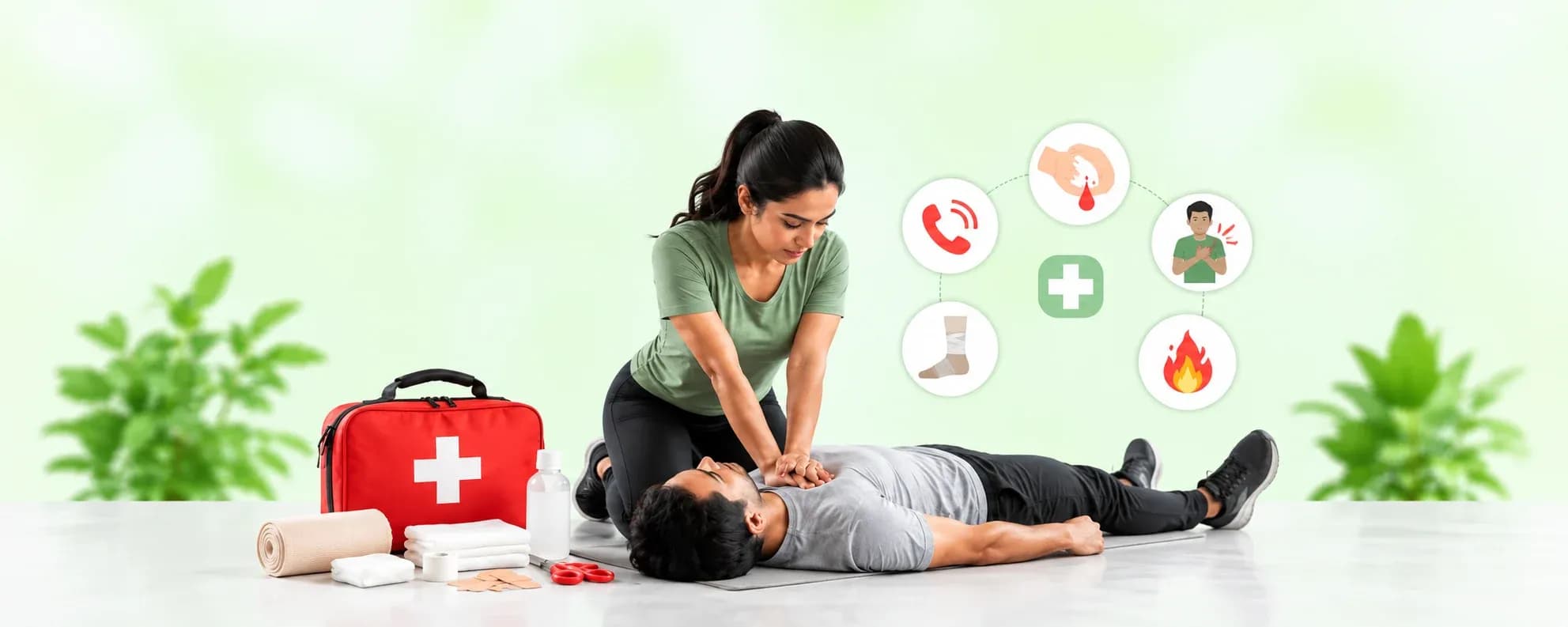

Accidents can happen at any time. A cut while cooking, a burn from hot water, a fall at home, or someone choking can happen in just a few seconds. Knowing some basic first aid can help prevent an injury from getting worse while you wait for medical help.
First aid is the immediate care given to someone who is injured or suddenly becomes unwell. It is not a replacement for medical treatment, but it can make a big difference in an emergency. Learning basic first aid also helps you feel more confident and prepared to handle common accidents.
What Is First Aid?
First aid is the immediate care given to someone who is injured or suddenly unwell. It can include controlling bleeding, cooling burns, helping someone who is choking, or starting CPR when a person is unresponsive and not breathing normally.
The first priority is always safety. Before helping someone:
- Check whether the area is safe for you and the injured person.
- Check if the person is responsive and breathing normally.
- Look for life-threatening bleeding or other obvious emergencies.
- Call your local emergency medical service when necessary.
- Provide care according to your level of training.
A First aid box is meant to buy you time until professional help arrives - not to replace a doctor or Emergency Department
First Aid Kit Essentials
A well-stocked first aid kit can be useful at home, in the car, at work and while travelling. You do not need to fill it with medicines for every possible illness. Focus on basic supplies that can help with common injuries.
Useful first aid box items include:
- Adhesive bandages in different sizes
- Sterile gauze pads
- Roller and triangular bandages
- Medical adhesive tape
- Antiseptic wipes
- Disposable gloves
- Small scissors
- Tweezers
- Safety pins
- Digital thermometer
- Instant cold pack
- Clean dressings
- Saline solution for cleaning minor wounds or rinsing the eyes
- A CPR or first aid reference card
- A torch
Check your medical kit regularly. Replace used or damaged supplies and check expiry dates where applicable. Keep it somewhere adults can easily find it, but out of the reach of young children.
Basic First Aid for Common Emergencies
1. Cuts and Minor Bleeding: For a small cut, wash your hands first if possible. Gently clean the wound with clean running water and cover it with a sterile dressing or bandage.
If bleeding is heavy:
- Apply firm, direct pressure over the wound using gauze or a clean cloth.
- Keep applying pressure until the bleeding stops or professional help takes over.
- Call emergency medical services if the bleeding is severe, does not stop, or the injury is serious.
Direct pressure is an important method of controlling life-threatening external bleeding.
2. Burns: Burns can happen from hot liquids, steam, flames, chemicals, electricity and other sources.
For a minor thermal burn, move away from the source of heat and cool the affected area under clean, cool running water. Remove jewellery or clothing near the burn if it is not stuck to the skin. Do not apply butter, toothpaste, oil or other household substances to a burn. These can interfere with proper treatment.
Seek medical attention for large or deep burns, burns involving the face, hands, feet, joints or genitals, chemical or electrical burns, or burns in very young children and older adults.
3. Choking: Choking occurs when an object blocks the airway. A person may be unable to speak, cough or breathe properly.
If the person can cough forcefully, encourage them to keep coughing and watch them closely.
If they cannot cough, speak or breathe normally, immediate first aid is needed. Choking care differs depending on the person's age and circumstances, so it is important to learn the correct technique through certified training.
WHO guidance and established first-aid organizations recommend age-appropriate back blows and thrusts for severe choking.
If the person becomes unresponsive, call for emergency help and begin CPR according to your training.
4. Fainting: If someone faints, help them lie down safely and check that they are breathing normally. Keep the area clear and monitor them as they recover.
Do not immediately make them stand up. If they remain unconscious, have difficulty breathing, suffer an injury during the fall, or do not recover promptly, seek urgent medical attention.
5. Sprains and Minor Injuries: For a minor sprain or soft-tissue injury, rest the affected area and use a cold pack wrapped in a cloth for short periods to help reduce pain and swelling.
Avoid putting ice directly on the skin. If there is severe pain, significant swelling, deformity, inability to bear weight, numbness or suspected fracture, medical assessment is needed.
6. When Someone Is Unresponsive: If a person does not respond, is not breathing normally, or is only gasping, this is a medical emergency.
Call emergency medical services, ask someone to bring an AED (Automated External Defibrillator), if one is available, and begin CPR according to your training. Early CPR and access to an AED can be critical while waiting for professional help.
If the person is unconscious but breathing normally, place them in the recovery position if there is no reason to suspect a spinal injury, and continue monitoring their breathing.
What Not to Do During an Emergency
Good intentions can sometimes cause harm. Avoid:
- Giving food or drink to someone who is unconscious or seriously injured
- Applying toothpaste, butter or oil to burns
- Removing an object deeply embedded in a wound
- Moving someone unnecessarily after a serious fall or suspected spinal injury
- Putting your fingers into the mouth of a choking person when you cannot see the object
- Giving medicines to an unconscious person
- Delaying professional medical help because the injury appears manageable
- No Antibiotic without medical advice.
- No tourniquet unless trained and dealing with life threatening limb bleeding.
- Don’t delay calling Emergency services while trying to manage a serious injury yourself.
First aid should support medical care, not replace it.
When Should You Seek Medical Help?
Call for emergency services if someone:
- Is unconscious or difficult to wake
- Is not breathing normally
- Has severe or uncontrolled bleeding
- Has serious breathing difficulty
- Has a severe burn or electrical or chemical burn
- Has a suspected major fracture or spinal injury
- Has severe chest pain
- Develops sudden weakness, difficulty speaking or other possible stroke symptoms
- Has a serious allergic reaction
- Has suffered a significant head injury
Why First Aid Training Matters
Having a first aid box at home is useful but knowing how to use it is even more important. Studies have found that structured first aid training can improve knowledge and practical skills among non-healthcare professionals.
Consider taking a recognized first aid, CPR or basic life support course. Practical training can make it easier to stay calm and act appropriately when an emergency actually happens.
How PB Health Can Support You
PB Health, MG Road, Gurgaon can help you understand common health concerns, preventive care and when a symptom or injury needs professional medical attention. If you are unsure about an injury or need guidance on the next step, consulting a qualified healthcare professional is always the safer choice.
Conclusion
First aid starts with staying calm, checking for danger and knowing what needs immediate attention. Simple actions such as applying pressure to serious bleeding, cooling a burn with clean running water and recognising when CPR or emergency medical care is needed can make a meaningful difference.
Keep your first aid kit stocked, learn basic emergency skills and make sure your family members know where the supplies are. Being prepared before an emergency happens can help you respond with greater confidence when every second matters.