
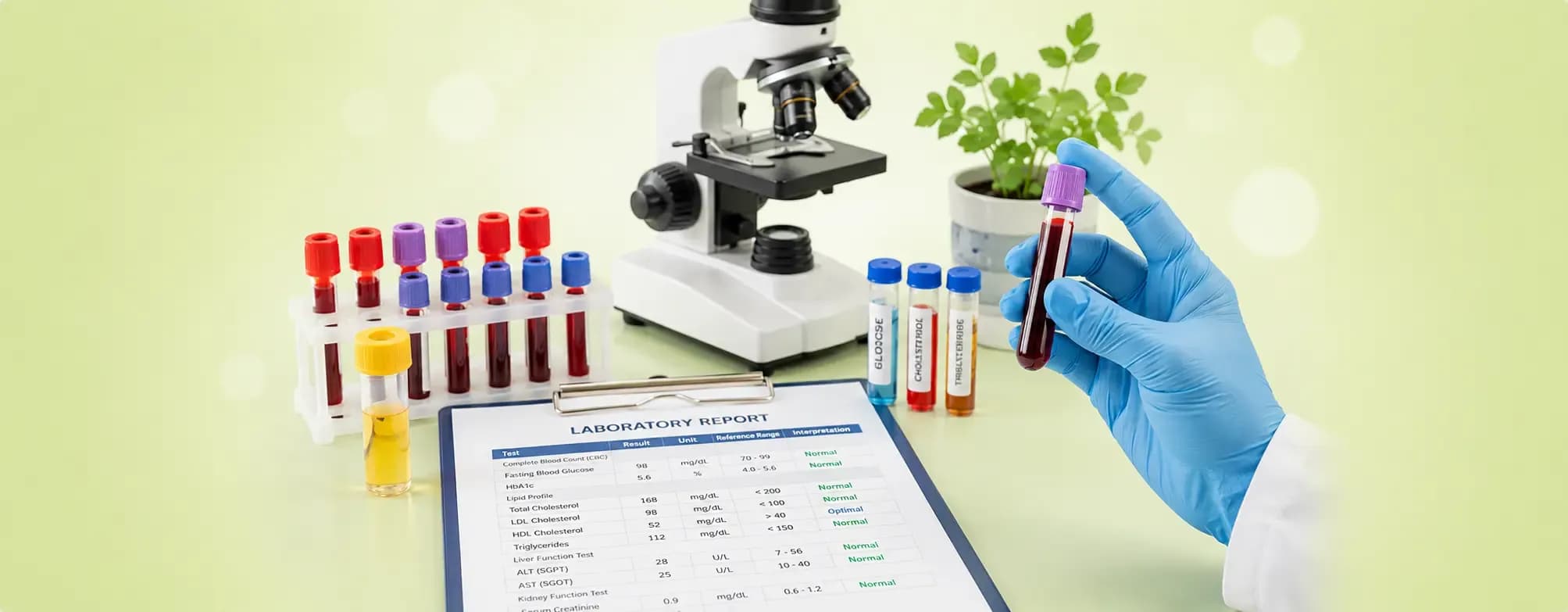

Many people get routine blood work without fully understanding what the tests measure or why they are important. Whether you are going for an annual health check-up, managing a chronic condition, or investigating new symptoms, knowing the purpose of common lab tests can help you understand your health better and have more informed conversations with your doctor.
In this blog, let us know about the basic lab tests you are most likely to encounter, what they look for, and why your doctor may recommend them.
Why Basic Lab Tests Matter More Than You Think
A simple blood or urine test can help detect health problems that may not cause symptoms at first, including:
- Diabetes and prediabetes
- High cholesterol
- Kidney and liver problems
- Thyroid disorders
- Nutritional deficiencies
- Infections and inflammation
Complete Blood Count (CBC)
A Complete Blood Count, or CBC, is one of the most common lab tests ordered during routine check-ups, hospital visits, and health screenings. It measures the different types of cells circulating in your blood, which include:
- Red blood cells carry oxygen throughout the body
- White blood cells, which help fight infections
- Platelets, which help your blood clot
- Haemoglobin and hematocrit, which show how efficiently oxygen is being transported
What can a CBC detect?
A CBC helps doctors identify several health conditions, such as anaemia, bacterial or viral infections, certain blood disorders, inflammation, and vitamin deficiencies.
Metabolic Panel: Looking Beyond Blood Cells
Unlike a CBC, which focuses on blood cells, a metabolic panel evaluates how well your organs are functioning. There are two commonly ordered versions.
Basic Metabolic Panel (BMP)
A Basic Metabolic Panel measures important substances in your blood, including:
- Blood glucose
- Calcium
- Sodium
- Potassium
- Chloride
- Bicarbonate
- Blood urea nitrogen (BUN)
- Creatinine
These markers help assess kidney function, fluid balance, electrolyte levels, and blood sugar. A BMP may be recommended during routine check-ups, before surgery, or when evaluating conditions such as dehydration, kidney disease, or diabetes.
Comprehensive Metabolic Panel (CMP)
A Comprehensive Metabolic Panel includes everything in a BMP while adding tests that evaluate liver health and protein levels.
A CMP includes liver enzymes and proteins in addition to the markers measured in a BMP. Together, these provide a broader picture of your liver and kidney function, blood sugar, electrolyte balance, and also protein levels.
Lipid Profile: A Check on Your Heart Health
A lipid profile, also known as a cholesterol test, measures the different types of fats in your blood. A lipid profile usually measures:
- Total cholesterol
- LDL cholesterol, often called "bad" cholesterol
- HDL cholesterol, known as "good" cholesterol
- Triglycerides
Why is it important?
High cholesterol rarely causes symptoms in its early stages, but it can gradually lead to plaque buildup in the arteries, increasing the risk of heart attack and stroke.
Your doctor may recommend this test if you:
- Have diabetes or high blood pressure
- Are overweight or obese
- Smoke
- Have a family history of heart disease
- Are over the age of 30 to 40 years
Tip: Some laboratories may ask you to fast for 8 to 12 hours before the test, depending on the type of lipid profile being performed.
HbA1c: Looking at Your Blood Sugar Over Time
Unlike a regular blood sugar test, which shows your glucose level at a single point in time, the HbA1c test provides a much bigger picture. It measures the average amount of sugar attached to your red blood cells over the past two to three months.
Because of this, HbA1c is widely used to diagnose and monitor diabetes.
Why might your doctor order it?
This test helps identify:
- Prediabetes
- Type 2 diabetes
- How well diabetes treatment is working
Thyroid Function Test (TSH): Checking Your Body's Metabolism
The thyroid is a small gland in the neck, but it has a major influence on how your body functions. It helps regulate metabolism, energy production, heart rate, and body temperature.
The most commonly ordered thyroid test measures Thyroid Stimulating Hormone (TSH). Depending on your symptoms, your doctor may also request Free T4 and Free T3 levels.
What can this test reveal?
Thyroid testing can help diagnose:
- Hypothyroidism (underactive thyroid)
- Hyperthyroidism (overactive thyroid)
- Thyroid inflammation
- Response to thyroid medication
Your doctor may recommend this test if you experience:
- Unexplained fatigue
- Weight gain or weight loss
- Hair loss
- Feeling unusually cold or hot
- Changes in menstrual cycles
Kidney Function Tests: How Well Are Your Kidneys Working?
Your kidneys continuously filter waste products from your blood while maintaining the right balance of fluids and minerals in the body.
Kidney function tests commonly include:
- Serum creatinine
- Blood urea nitrogen (BUN)
- Estimated Glomerular Filtration Rate (eGFR)
- Electrolytes
Why are these tests important?
They help doctors evaluate:
- Chronic kidney disease
- Acute kidney injury
- Dehydration
- Reduced kidney function caused by diabetes or high blood pressure.
Liver Function Tests: Understanding Your Liver Health
The liver performs hundreds of essential tasks every day, including processing nutrients, removing toxins, producing proteins, and supporting digestion.
Liver Function Tests (LFTs) measure enzymes and proteins such as:
- ALT
- AST
- Alkaline phosphatase (ALP)
- Bilirubin
- Albumin
Why would your doctor recommend them?
LFTs can help detect:
- Fatty liver disease
- Hepatitis
- Liver inflammation
- Medication-related liver damage
- Bile duct disorders
Urinalysis: A Simple Test That Reveals More Than You Think
A urinalysis is one of the easiest yet most informative investigations. It involves testing a small urine sample to look for substances that should or should not be present.
The test can detect:
- Protein
- Glucose
- Blood
- Ketones
- Signs of infection
- Changes in urine concentration
What can a urinalysis help identify?
Doctors commonly use it to detect:
- Urinary tract infections (UTIs)
- Kidney disease
- Diabetes
- Dehydration
- Certain bladder conditions
Common Hospital Lab Tests You May Come Across
If you're visiting the emergency department, admitted to a hospital, or being evaluated for a serious illness, your doctor may recommend additional tests beyond routine blood work. These common hospital lab tests help identify infections, inflammation, bleeding disorders, or other urgent medical conditions.
Some of the tests you may come across include:
C-reactive Protein (CRP): CRP is a marker of inflammation in the body. Higher levels may indicate an infection, autoimmune disease, or other inflammatory condition. While it cannot diagnose a specific illness, it helps doctors understand whether inflammation is present and monitor your response to treatment.
Erythrocyte Sedimentation Rate (ESR): an additional test used to detect inflammation. It is often ordered when autoimmune diseases, chronic infections, or inflammatory conditions are suspected.
D-dimer: A D-dimer test may help assess the possibility of a blood clot, particularly when symptoms suggest one.
Coagulation Profile: Tests such as Prothrombin Time (PT), International Normalised Ratio (INR), and Activated Partial Thromboplastin Time (aPTT) measure how well your blood clots. These are commonly performed before surgery, while monitoring blood-thinning medications, or if there is unusual bleeding.
Blood Cultures: When a serious bloodstream infection is suspected, blood cultures help identify the bacteria causing the infection so that the most effective antibiotic can be prescribed.
Not everyone will need these tests. Your doctor will order them based on your symptoms and medical condition.
How to Prepare for Lab Tests
- Follow the fasting instructions provided by your doctor or laboratory.
- Stay well hydrated unless advised otherwise.
- Tell your doctor about any prescription medicines, supplements, or herbal products you're taking.
- Avoid doing strenuous exercise before the test, unless advised otherwise.
Understanding Your Results
A value outside the reference range does not always mean something is wrong. Your doctor will interpret your results alongside your symptoms, medical history, medications, age, and previous test results, as factors such as dehydration, stress, or recent illness can affect certain values. So, discuss your complete report with your healthcare provider rather than focusing on individual numbers.
Also Read: Understanding Your Annual Health Check-up
Conclusion
Routine lab tests can provide valuable insights into your health and may help identify certain problems early. Understanding what these tests measure can help you have more informed conversations with your doctor and make better decisions about your health.
How PB Health Can Support You
At PB Health, our doctors interpret your lab results alongside your symptoms, medical history, and overall health. Whether your tests indicate diabetes, thyroid disorders, high cholesterol, kidney or liver concerns, or nutritional deficiencies, our team provides personalised guidance, treatment plans, and ongoing support.